
American Rubyspot Identification Guide
A copper-red damselfly with a vivid ruby patch at the base of each wing, usually seen perched over flowing streams.
Read the full American Rubyspot encyclopedia entry →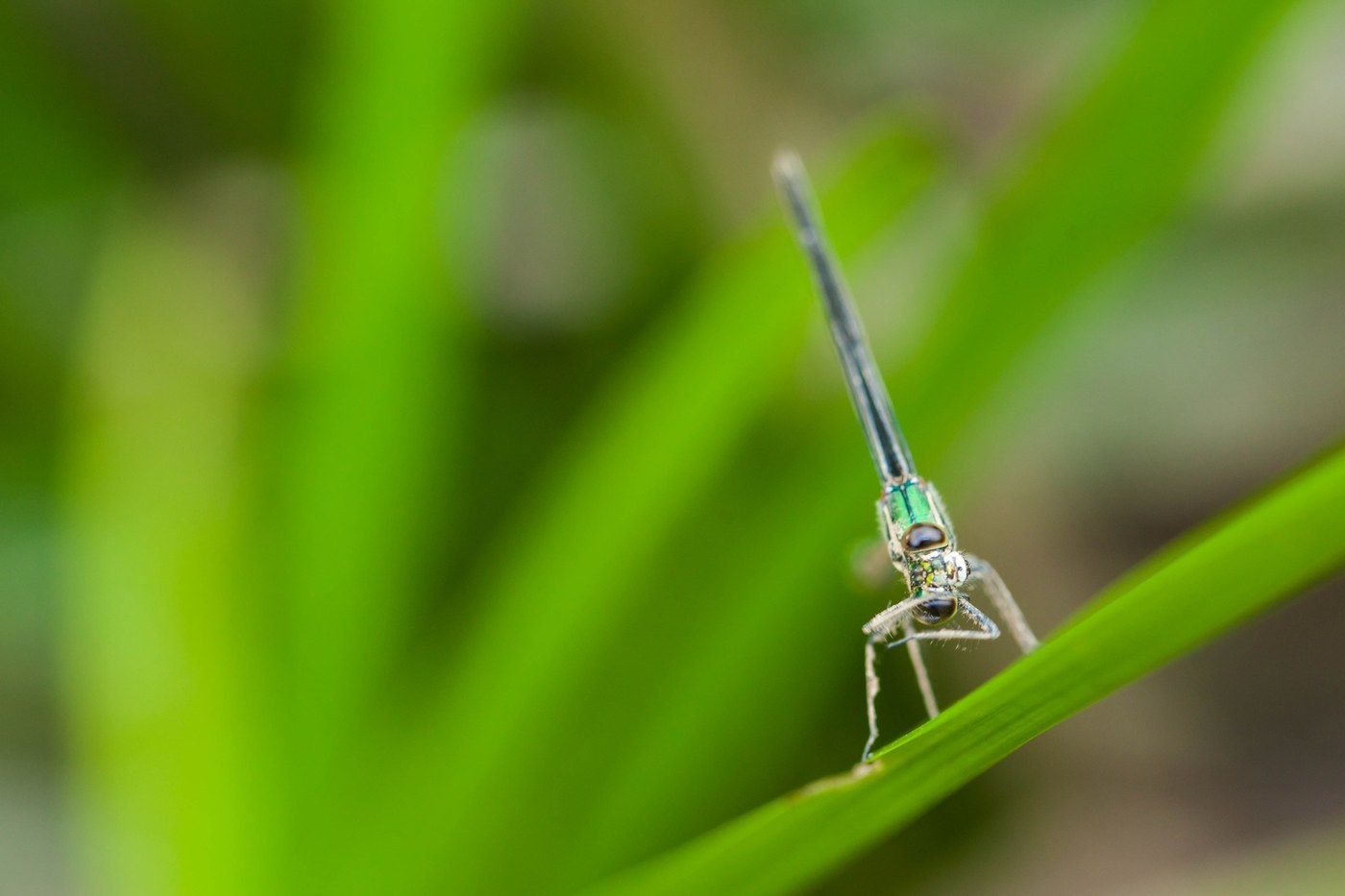
Key Visual Features
The American Rubyspot is a broad-winged damselfly, about 1.5 to 1.8 inches (38-45 mm) long, named for the bright red patch at the base of its wings.
- Wings: Each wing carries a vivid ruby-red to orange-red patch at the base, fading into a clear or lightly smoky area toward the tip; the intensity of red is strongest in mature males.
- Body color: Males have a metallic copper-red to bronze thorax and a dark reddish-bronze abdomen that can flash brilliantly in sunlight. Females are duller, with a bronzy-green to brown body and a less vivid, more amber-toned wing base patch.
- Body shape: Slender abdomen typical of damselflies, with wings held together over the back at rest.
- Eyes: Reddish to reddish-brown in mature males, browner in females.
- Legs: Dark and thin, used mainly for perching on streamside rocks and vegetation.
Where and When You'll See It
This species is closely associated with flowing water — rivers and streams with at least moderate current — where males perch conspicuously on rocks, snags, or overhanging vegetation right at the water's edge, often in loose groups. They are active through summer, generally from late spring into early fall, and are most visible on sunny days when the red wing patches catch the light.
Similar-Looking Species
- Ebony Jewelwing: Has entirely black wings rather than a red basal patch, and a green (not copper-red) body.
- Smoky Rubyspot: Very similar but with a duskier, less sharply defined wing base patch and a more restricted range; close comparison of wing patch extent is often needed.
- Other bronze-bodied damselflies: Generally lack the bright red wing-base patch entirely, making that feature the quickest way to confirm a rubyspot.
Because the red patch fades gradually rather than stopping at a sharp line, backlit views can make it look duller than it is; try to view a perched individual with the sun behind you for the truest color read.
Quick ID Checklist
- Bright ruby-red to orange-red patch at the base of each wing
- Metallic copper-red to bronze body in males
- Duller, amber-patched wings in females
- Perches on rocks or vegetation right at the edge of flowing streams
- Most visible on sunny days along rivers with current
Frequently asked questions
What is the key feature that gives this damselfly its name?
A bright ruby-red to orange-red patch at the base of each wing, most vivid in mature males, which stands out against the otherwise clear wingtips.
Do females have the same red wing patches as males?
Females show a duller, more amber-toned version of the wing base patch and have a bronzy-green to brown body rather than the male's coppery red.
What habitat is best for finding an American Rubyspot?
Flowing streams and rivers with at least moderate current, where it perches on rocks or overhanging vegetation right at the water's edge.
How is it different from the Ebony Jewelwing?
The Ebony Jewelwing has entirely black wings and a green body, while the American Rubyspot has clear wings with a red base patch and a copper-red body.