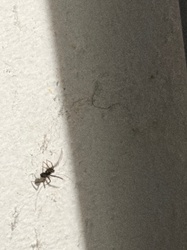
Ant-mimicking Mantis Identification Guide
Discover how to distinguish this tiny mantis nymph from the ants it so cleverly imitates.
Read the full Ant-mimicking Mantis encyclopedia entry →Key Visual Features
The ant-mimicking mantis refers to the nymph stage of certain small mantis species (such as those in the genus Odontomantis) that closely resemble ants for protection. Key features include:
- Small size, usually under 1 cm (0.4 inches) in the earliest nymph stages
- Dark brown to black coloring, matching the typical color of many ant species
- A narrowed "waist"-like constriction between the thorax and abdomen that echoes an ant's pinched body segments
- Raptorial front legs, folded and held close to the body to resemble an ant's shorter front legs when at rest
- Large compound eyes and a triangular head, which are more mantis-like than ant-like on close inspection
- Straight, simple antennae rather than the sharply elbowed antennae found on true ants
Where and When You'd See It
These nymphs are found in tropical and subtropical regions of Asia, typically in leaf litter, low shrubs, and grassy ground cover where ants are common. They mimic ant movement by walking with quick, jerky steps and twitching their abdomens, blending into ant trails to avoid predators that steer clear of ants. As the mantis matures through successive molts, it gradually loses the ant-like resemblance and takes on the more typical elongated body and proportions of an adult mantis.
Similar-Looking Bugs
- True ants: have distinctly elbowed (bent) antennae and a narrow, three-segmented waist, while the mimicking mantis has straight antennae and folded raptorial forelegs
- Ant-mimicking spiders and bugs: many other invertebrates also mimic ants; check for the mantis's characteristic large eyes and hooked front legs, which most other mimics lack
- Adult mantises: adults lose the ant-like waist and coloring, developing longer wings and a more elongated, typical mantis silhouette
- Termites: some termite castes are also dark and soft-bodied, but they lack the mantis's large eyes and raptorial forelegs entirely
Because the resemblance is strongest only in the earliest life stages, correctly timing an observation matters as much as checking physical features when trying to confirm this species.
Quick ID Checklist
- Very small, dark-bodied nymph found near or among ants
- Pinched, ant-like waist between thorax and abdomen
- Straight (not elbowed) antennae
- Raptorial front legs folded close to the body
- Jerky, quick walking movements mimicking ant behavior
Frequently asked questions
How do you tell an ant-mimicking mantis from a real ant?
Look at the antennae and front legs — the mantis has straight antennae and folded raptorial forelegs, while true ants have elbowed antennae and no grasping front legs.
Does the ant-mimicking mantis stay ant-like as an adult?
No, the ant-like appearance is mostly seen in early nymph stages; as it molts and grows, it develops the more typical elongated body and wings of an adult mantis.
Where would I likely find one?
In leaf litter, low vegetation, or grassy areas in tropical and subtropical Asia, often near or within trails of the ants it resembles.
Why does its walking style matter for identification?
The mantis moves with a quick, jerky gait and twitching abdomen to imitate ant movement, which is a useful behavioral clue alongside its physical features.
Ant-mimicking Mantis identified by the community
Recent Ant-mimicking Mantis finds identified with Bug Identifier.