
Antheraea Silkmoth Identification Guide
A large, richly colored silkmoth with a translucent eyespot on every wing, among the biggest moths you're likely to encounter.
Read the full Antheraea Silkmoth encyclopedia entry →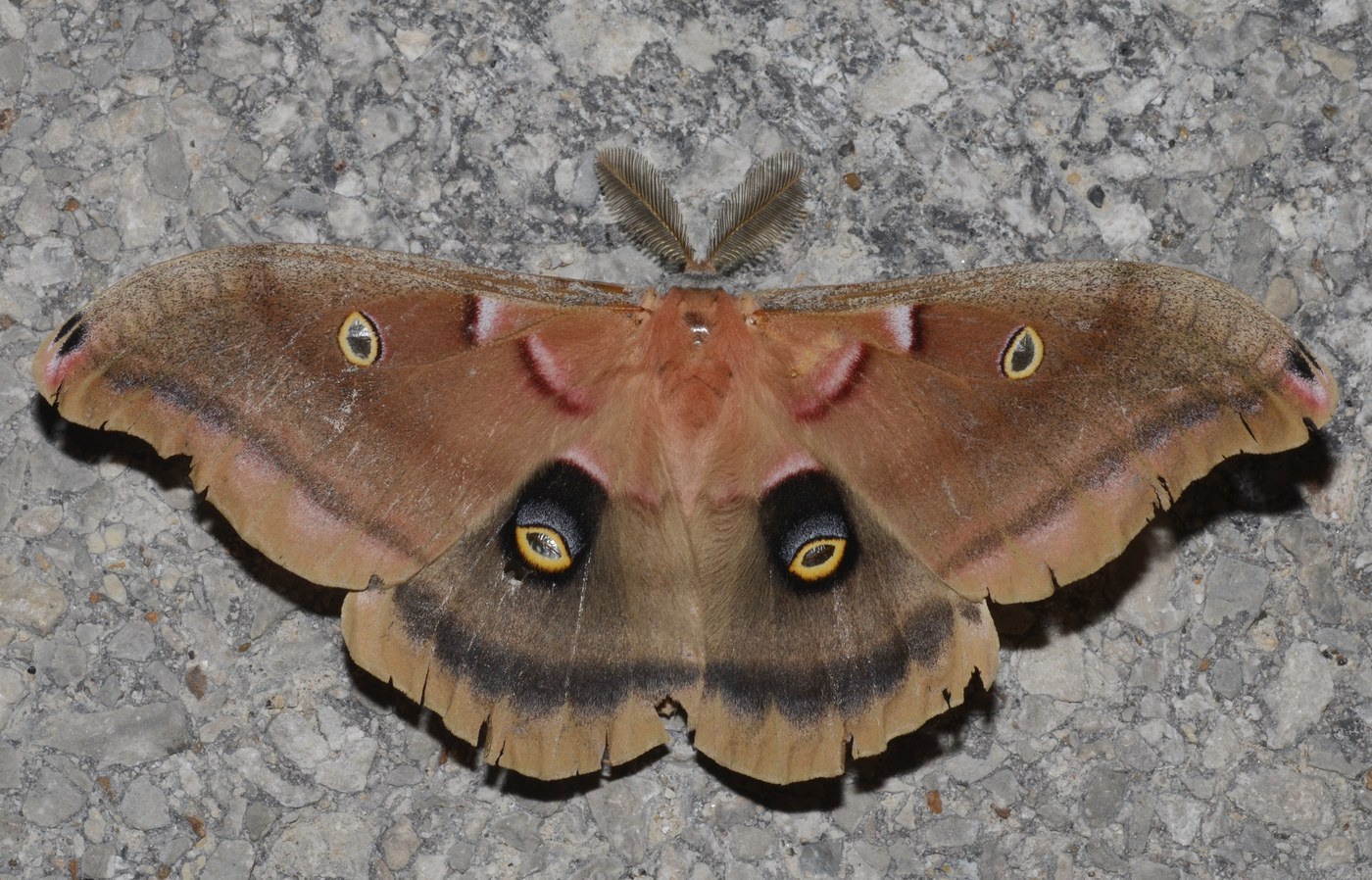
Key Visual Features
Antheraea silkmoths are among the largest and most impressive moths in the world, with wingspans commonly ranging from 10-15cm.
- Wings: Broad and rounded, ranging in color from golden-tan to reddish-brown, often with a soft, velvety texture.
- Eyespots: Each of the four wings bears a translucent, eye-like spot (ocellus) ringed in black and yellow - a hallmark feature of the genus that lets light pass through when the moth is held up to a bright source.
- Wing pattern: A wavy, pale transverse line often crosses the outer portion of each wing, adding to the camouflaged, leaf-like appearance.
- Body: Robust, densely furry, tapering abdomen.
- Antennae: Broadly feathery, especially in males, used to detect female pheromones from long distances; the mouthparts are reduced since adults do not feed.
Where and When You'll See It
Antheraea silkmoths inhabit forests and woodland edges across Asia, where their caterpillars feed on the leaves of various broadleaf trees. Adults are strictly nocturnal and short-lived, emerging to mate and lay eggs before dying within about a week or two. They are strongly attracted to artificial lights at night and are most often encountered resting on tree trunks, walls, or under porch lights during the warmer months.
Similar-Looking Species
- Luna Moth and other saturniids with tails - typically pale green with long trailing hindwing tails, lacking the bold ocellus on every wing.
- Io Moth - much smaller, with a single large eyespot only on the hindwings rather than on all four wings.
- Polyphemus Moth - a close relative in a different genus, sharing the large eyespot pattern but generally grayer-brown with a more oval eyespot shape.
Life Cycle & Behavior
Caterpillars are large, plump, and typically green, feeding on the leaves of various broadleaf trees before spinning a tough, papery cocoon from which the silk associated with this genus is traditionally produced. Depending on the species and climate, there may be one or more generations per year. Adult silkmoths do not feed at all, living only long enough to mate and lay eggs before dying.
Quick ID Checklist
- Very large moth, wingspan often exceeding 10cm
- Tan to reddish-brown wings with a translucent eyespot on each of the four wings
- Broadly feathery antennae, especially prominent in males
- Robust, furry body with a tapered abdomen
- Nocturnal, strongly drawn to lights, found near forested areas
Frequently asked questions
What is the most distinctive feature of an Antheraea silkmoth?
The translucent, eye-like spot found on each of the four wings is the clearest identifying feature, visible as a clear window when light shines through the wing.
How big can Antheraea silkmoths get?
Many species in this genus have wingspans of 10-15cm, making them among the largest moths encountered in their range.
Why are these moths often seen near lights at night?
Like many large nocturnal moths, Antheraea silkmoths are strongly attracted to artificial light sources, which is why they're commonly spotted resting near porch lights or streetlamps.
How do I tell males from females?
Males typically have more broadly feathery antennae than females, which helps them detect female pheromones over long distances; body size and wing color are otherwise similar between sexes.