Aphid Midge Identification Guide
Identify the tiny orange-larvae, mosquito-like adult midge whose larvae feed among aphid colonies.
Read the full Aphid Midge encyclopedia entry →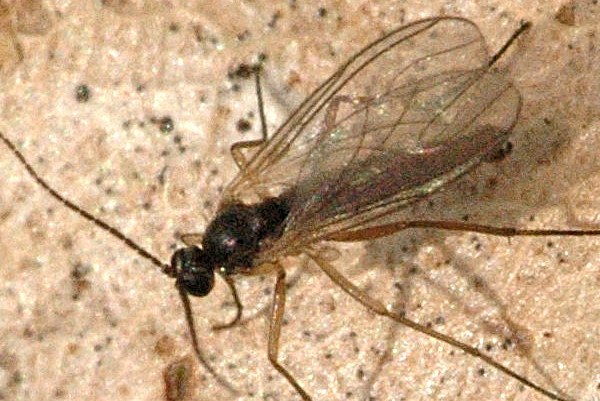
Key Visual Features
The aphid midge (best known by its larval stage) has two very different looks depending on life stage. The adult is a delicate, mosquito-like fly, while the larva is a small, bright maggot found tucked inside aphid clusters.
- Adult size: About 2 to 3 millimeters long, very small and delicate.
- Adult body shape: Slender, long-legged, and mosquito-like, with a humped thorax typical of midges (family Cecidomyiidae).
- Adult color: Tan to orange-brown body with long, thin, pale legs and long beaded antennae.
- Adult wings: A single pair of narrow, faintly hairy wings held roof-like over the body at rest; adults are weak, fluttery fliers.
- Larva: Legless, spindle-shaped maggot around 2–3 millimeters long, ranging from pale yellow to bright orange-red as it matures.
Where and When You'd See Them
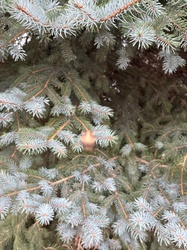
Adult aphid midges are most active at dusk and after dark from spring through fall, when females seek out aphid colonies on which to lay eggs. They favor gardens, greenhouses, and farm crops with heavy aphid infestations — roses, vegetables, and ornamental shrubs are common hosts. During the day, look for the orange larvae themselves rather than the adults; they are usually found moving slowly among clusters of aphids on the undersides of leaves and along stems.
Similar-Looking Bugs
- Fungus gnats: Similar size and shape as adults, but fungus gnat larvae are translucent white or gray, not orange, and live in soil rather than among aphids.
- Mosquitoes: Larger overall, with a more prominent proboscis and scaled wings; aphid midge adults lack the piercing mouthparts of a mosquito.
- Hover fly larvae: Also prey among aphid colonies and can be a similar size, but hover fly larvae are typically green or brownish and more slug-like, tapering to a point at the head rather than being uniformly spindle-shaped and orange.
- Ladybird beetle larvae: Larger, with a distinctly segmented, alligator-like body and short legs, unlike the legless midge larva.
Quick ID Checklist
- Adult: 2–3 mm, slender tan-orange midge with long legs and beaded antennae
- Larva: legless, spindle-shaped, bright orange-red maggot
- Larvae found directly within aphid colonies on leaf undersides
- Adults most active at dusk and at night
- Weak, fluttery flight distinguishes adults from sturdier flies
Frequently asked questions
How can I tell an aphid midge larva from a hover fly larva?
Aphid midge larvae are uniformly spindle-shaped and bright orange, while hover fly larvae are green or brown, more slug-like, and taper noticeably toward the head.
What time of day are adult aphid midges active?
Adults are most active around dusk and after dark, which is when they can most often be seen fluttering weakly near aphid-infested plants.
Do aphid midge larvae have legs?
No, the larvae are legless, spindle-shaped maggots that move by flexing their bodies among the aphids.
Where should I look for aphid midges in a garden?
Check the undersides of leaves and along stems wherever aphid colonies are clustered, since that is where both the eggs and larvae are found.
Aphid Midge identified by the community
Recent Aphid Midge finds identified with Bug Identifier.