
Arizona Bark Scorpion Identification Guide
Find out how to identify the Arizona bark scorpion by its slender, uniformly tan body and desert habitat.
Read the full Arizona Bark Scorpion encyclopedia entry →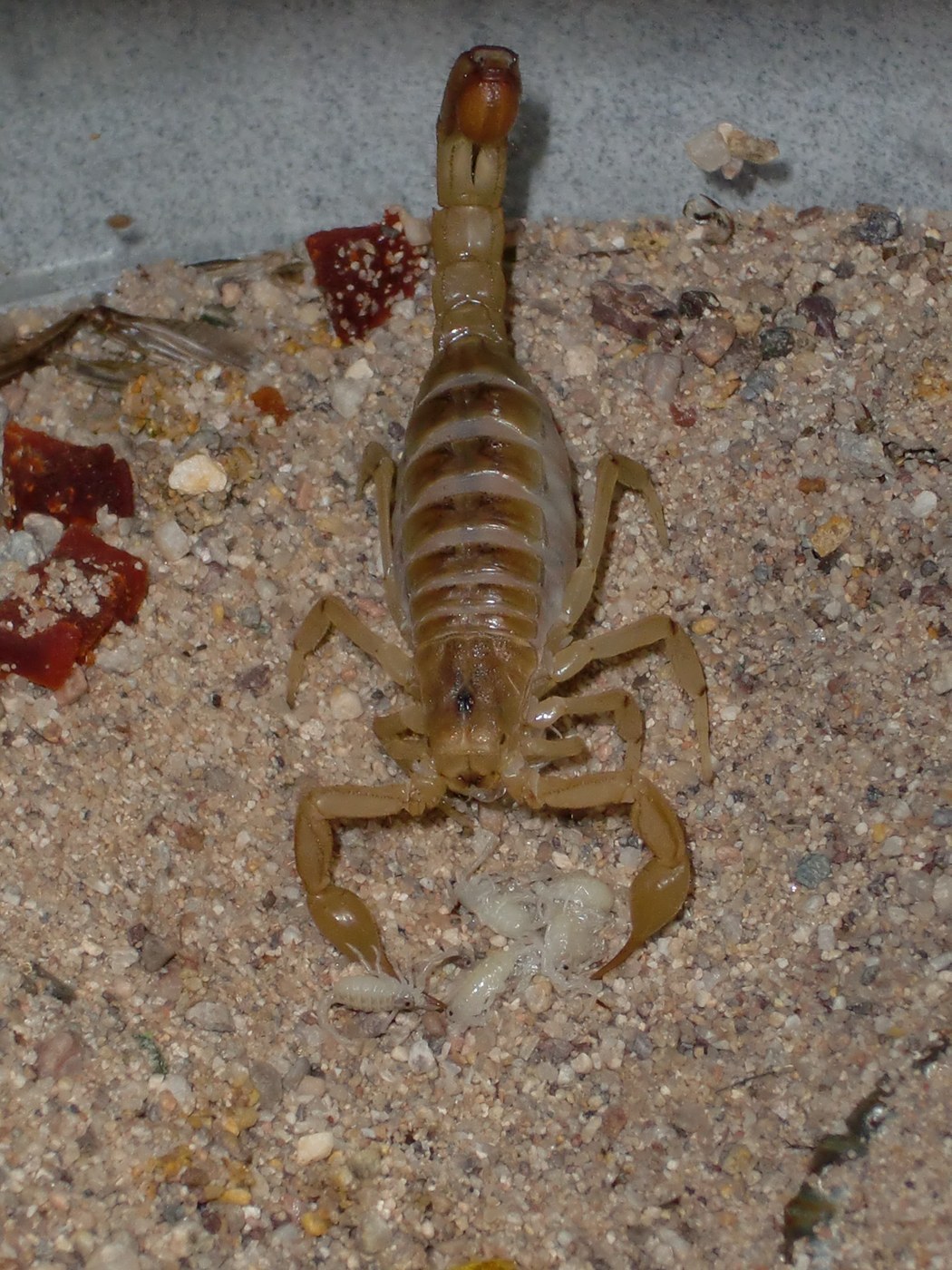
Key Visual Features
The Arizona bark scorpion (Centruroides sculpturatus) is a slender desert species known for its plain, uniform coloring.
- Size: Adults typically range from 2 to 3 inches (5-8 cm) in length, with a notably thin, elongated build.
- Color: Light tan to yellowish-brown overall, generally without the bold paired stripes seen in some related species, though faint striping can occasionally appear.
- Body shape: Slim and elongated body with a narrow, whip-like tail that is often held curled to one side rather than tightly coiled.
- Pincers (pedipalps): Notably slender and elongated compared to many other scorpions, giving the front of the body a delicate, wiry look.
- Legs: Eight thin, pale legs proportionate to the slender body.
- Markings: Largely uniform in color with minimal patterning, which helps distinguish it from more boldly marked relatives.
Where and When You'd See It
This species is closely associated with arid and semi-arid desert habitats, often found under rocks, tree bark, and in crevices of block walls or debris. It is an excellent climber thanks to its slender build and is sometimes found on vertical surfaces such as tree trunks, walls, or rock faces. Arizona bark scorpions are nocturnal, staying hidden in cool, sheltered spots during the day and becoming active at night, particularly in warm months. Like other scorpions, they fluoresce a pale blue-green under ultraviolet light, which aids nighttime identification.
Similar-Looking Bugs
- Striped bark scorpion: Displays two bold dark stripes down its back, whereas the Arizona bark scorpion is typically a more uniform tan.
- Yellow scorpion: Often stockier in build with a thicker tail and pincers compared to the notably slender Arizona bark scorpion.
- Flat rock scorpion: Has a distinctly flattened body adapted for squeezing into narrow rock crevices, unlike the more rounded cross-section of the Arizona bark scorpion.
Quick ID Checklist
- Slender, uniformly light tan to yellowish-brown body
- Thin, elongated pincers and a narrow, curled tail
- Excellent climber, sometimes seen on walls or tree bark
- Found in arid desert habitats, sheltering under rocks or bark by day
- Nocturnal, most active on warm nights
Frequently asked questions
What color is the Arizona bark scorpion?
It is typically a light tan to yellowish-brown, mostly uniform in color without the bold contrasting stripes seen in some related scorpion species.
Is the Arizona bark scorpion a good climber?
Yes, its slender build allows it to climb well, and it is sometimes found on vertical surfaces like tree bark, walls, or rock faces.
What habitat is this scorpion associated with?
It is closely tied to arid and semi-arid desert environments, sheltering under rocks, bark, and debris during the day.
How does its body shape compare to other scorpions?
It has a notably slim, elongated body with thin pincers and a narrow tail, giving it a more delicate appearance than stockier scorpion species.