
Armyworm Moth Identification Guide
A plain grayish-brown moth with a small white dot on each forewing, often seen swarming around lights on warm nights.
Read the full Armyworm Moth encyclopedia entry →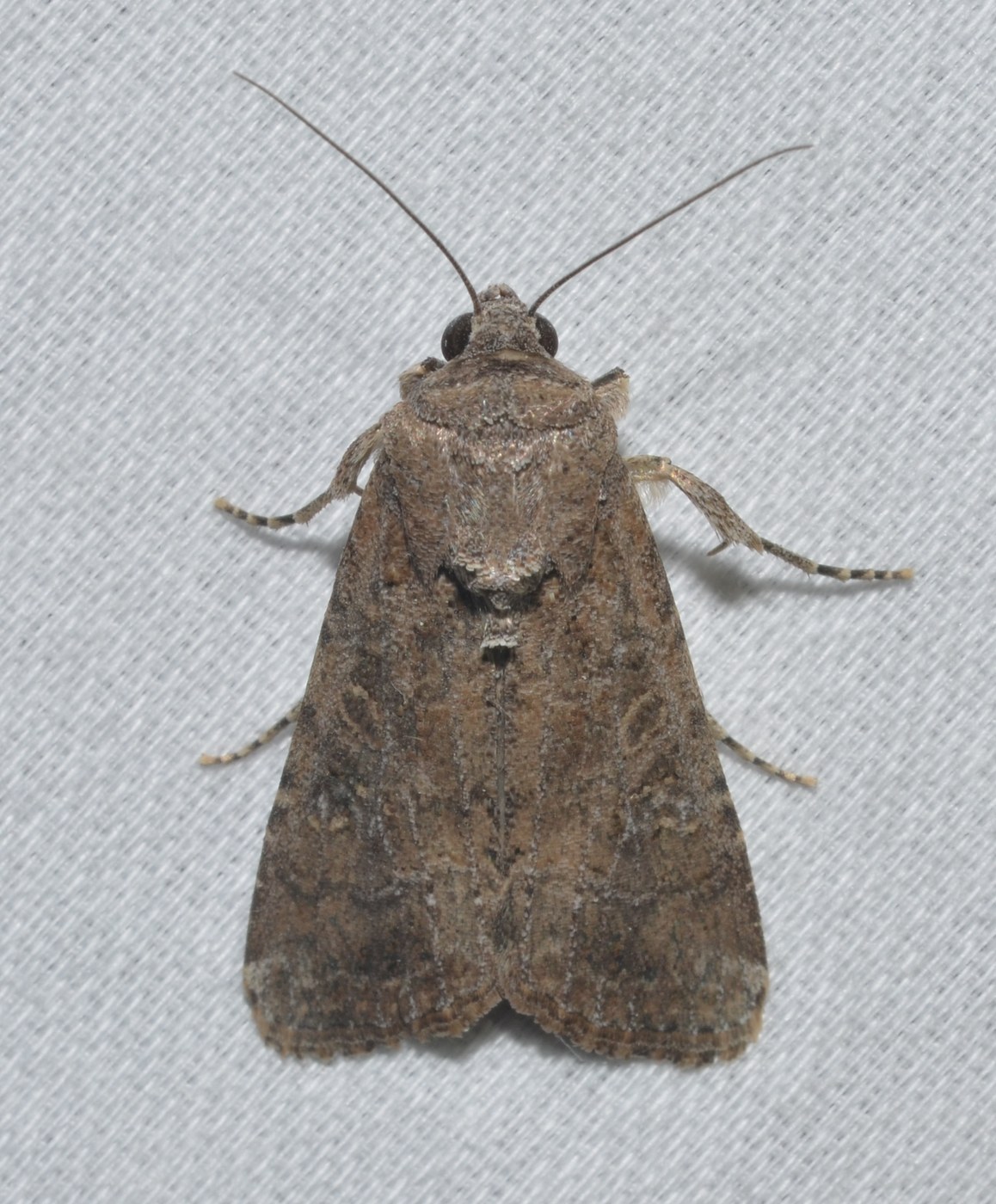
Key Visual Features
Armyworm moths are modestly patterned but have a few useful field marks:
- Size: Medium moth, wingspan around 3.2-4 cm (1.3-1.6 in).
- Color: Uniform grayish-brown to tawny-brown forewings, sometimes with a slight reddish or orange tint.
- Markings: A small, distinct white spot near the center of each forewing, along with faint darker wavy lines running across the wing.
- Hindwings: Pale gray to off-white, generally unmarked, and mostly concealed under the forewings at rest.
- Body: Slender, covered in fine scales that match the forewing color, tapering toward the tip of the abdomen.
- Wing posture: Wings folded in a shallow, elongated tent shape when at rest, giving the moth a streamlined outline.
Where and When You're Likely to See It
Armyworm moths are common in grasslands, pastures, lawns, and agricultural fields. Adults fly at night and are strongly attracted to artificial lighting, often appearing in large numbers around porch lights, streetlights, and light traps during warm, humid evenings. They are most abundant from late spring through fall, with population surges frequently following periods of heavy rain or in years with mild winters. By day, adults rest low in grass or under foliage, relying on their dull coloring for camouflage.
Similar-Looking Moths
- Cutworm moths: Very similar in overall shape and dull coloring, but usually lack the small central white spot seen on armyworm moths.
- Corn earworm moth: Has a more defined dark kidney-shaped mark rather than a simple white dot, and tends to show more olive or tan tones.
- Fall armyworm moth: Closely related and visually similar; males of some armyworm species show slightly more contrasting wing patterns, but confident separation often needs close comparison.
Quick ID Checklist
- Plain grayish-brown to tawny forewings
- Small white dot near center of each forewing
- Pale, mostly unmarked hindwings
- Nocturnal, often swarms at lights
- Rests low in grass or foliage by day
Frequently asked questions
What is the clearest field mark for an armyworm moth?
A small, well-defined white spot near the middle of each forewing is the most useful identifying feature against the otherwise plain brown wing.
Why do armyworm moths sometimes appear in large numbers at once?
Population booms often follow favorable weather conditions such as warm, humid spells or mild winters, leading to synchronized mass emergences of adults.
Are armyworm moths active during the day?
They are primarily nocturnal and spend daylight hours resting motionless in grass, leaf litter, or dense foliage.
How can I tell an armyworm moth from a cutworm moth?
Both are plain brownish moths, but armyworm moths typically show a distinct small white spot on the forewing that most cutworm moths lack.