Asian Giant Hornet Identification Guide
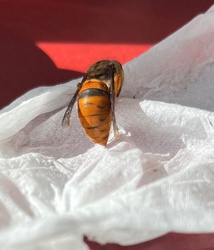
Identify the Asian giant hornet by its exceptionally large size, broad orange head, and banded orange-and-black abdomen.
Read the full Asian Giant Hornet encyclopedia entry →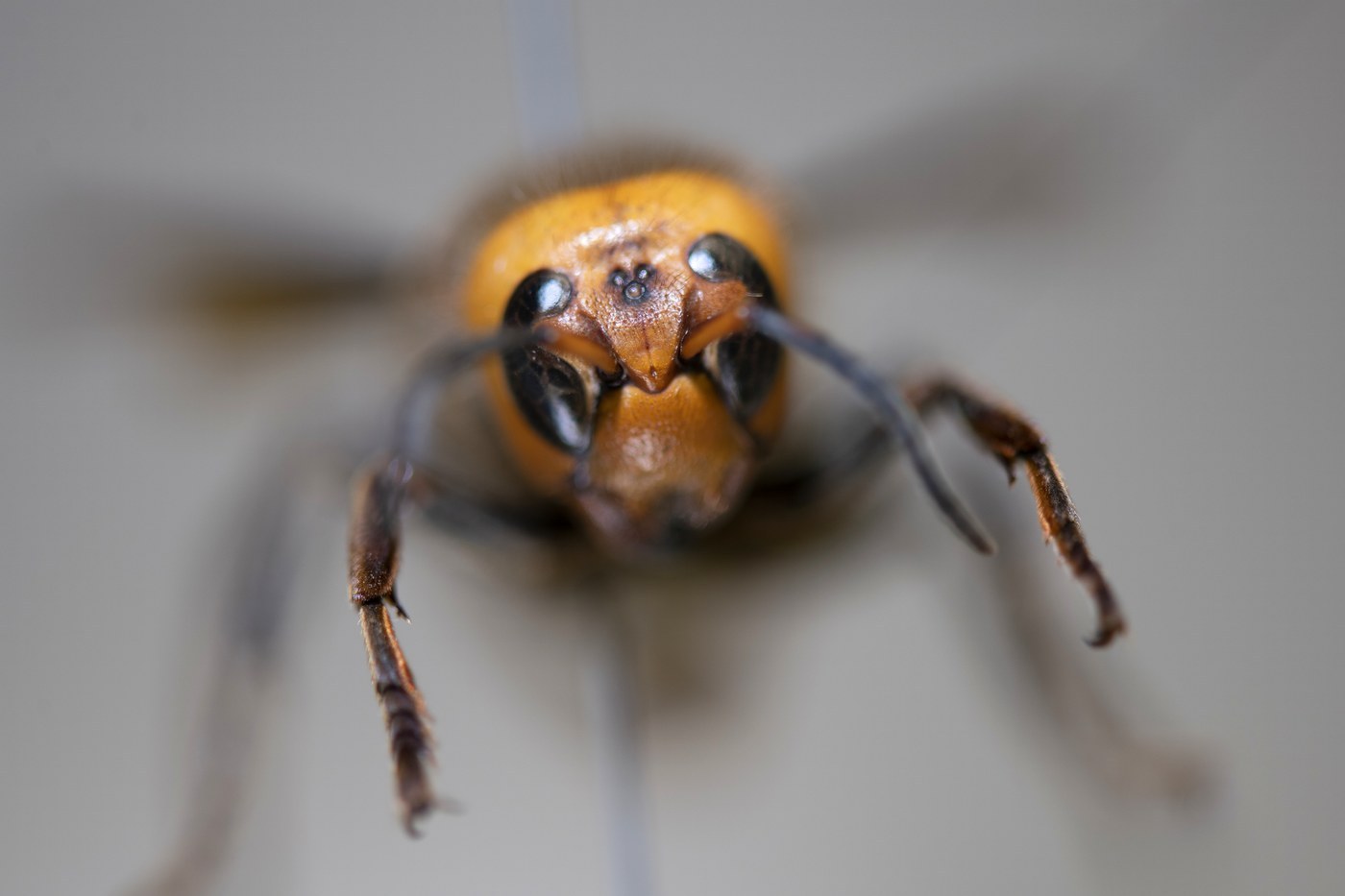
Key Visual Features
The Asian giant hornet (Vespa mandarinia) is the world's largest hornet species, and its size alone sets it apart from nearly everything else in the yard:
- Very large body length, typically 3.5-5cm, with queens reaching up to 5.5cm
- A broad, distinctly orange-yellow head with large, prominent dark eyes
- Dark brown to black thorax
- Abdomen marked with alternating orange-yellow and brown-black bands
- Smoky brown, semi-transparent wings
- A robust, thick-bodied build overall compared to smaller wasps
Where and When You'll See Them
This species is native to forested and mountainous areas of East and Southeast Asia, where it nests underground, often in abandoned rodent burrows or cavities at the base of trees, and colonies can grow substantially larger as the season progresses. In North America, isolated detections have occurred in the Pacific Northwest, where monitoring and eradication efforts have been ongoing, and confirmed sightings remain rare outside that region. Activity peaks from late spring through fall, with hornets most visible in late summer and early autumn as colonies reach their largest size and workers range further from the nest in search of food.
Similar-Looking Bugs
- European hornet is noticeably smaller (about 2.5-3.5cm), with a more reddish-brown head and less vivid orange coloring overall.
- Cicada killer wasp is similar in overall size but has a rustier brown body marked with pale yellow spots rather than the bold orange-and-black banding of the Asian giant hornet.
- Common yellowjackets are much smaller, typically under 2cm, with a slimmer build and brighter, more uniform yellow-and-black striping.
- Overall body bulk is a useful clue: the Asian giant hornet is thicker-bodied and heavier-looking in flight than any of these look-alikes, with a slower, more deliberate wingbeat.
Quick ID Checklist
- Exceptionally large, 3.5-5.5cm body length
- Broad orange-yellow head with large dark eyes
- Banded orange-yellow and brown-black abdomen
- Dark thorax, smoky-tinted wings
- Nests underground in forested or mountainous terrain
Frequently asked questions
How big is an Asian giant hornet compared to other hornets?
It's the largest hornet species in the world, typically 3.5-5cm long, noticeably bigger than the European hornet or common yellowjackets.
What color is the Asian giant hornet's head?
It has a broad, distinctly orange-yellow head, which is one of its most recognizable features alongside its large dark eyes.
How is it different from a European hornet?
The European hornet is smaller overall and has a more reddish-brown head, while the Asian giant hornet is larger with a brighter orange-yellow head.
Where does the Asian giant hornet build its nest?
It typically nests underground, often using abandoned rodent burrows or natural cavities near tree bases, in forested or mountainous terrain.
Asian Giant Hornet identified by the community
Recent Asian Giant Hornet finds identified with Bug Identifier.