
Asparagus Beetle Identification Guide
Spot the asparagus beetle's boxy blue-black body with cream squares along its back, a pattern unique among garden beetles.
Read the full Asparagus Beetle encyclopedia entry →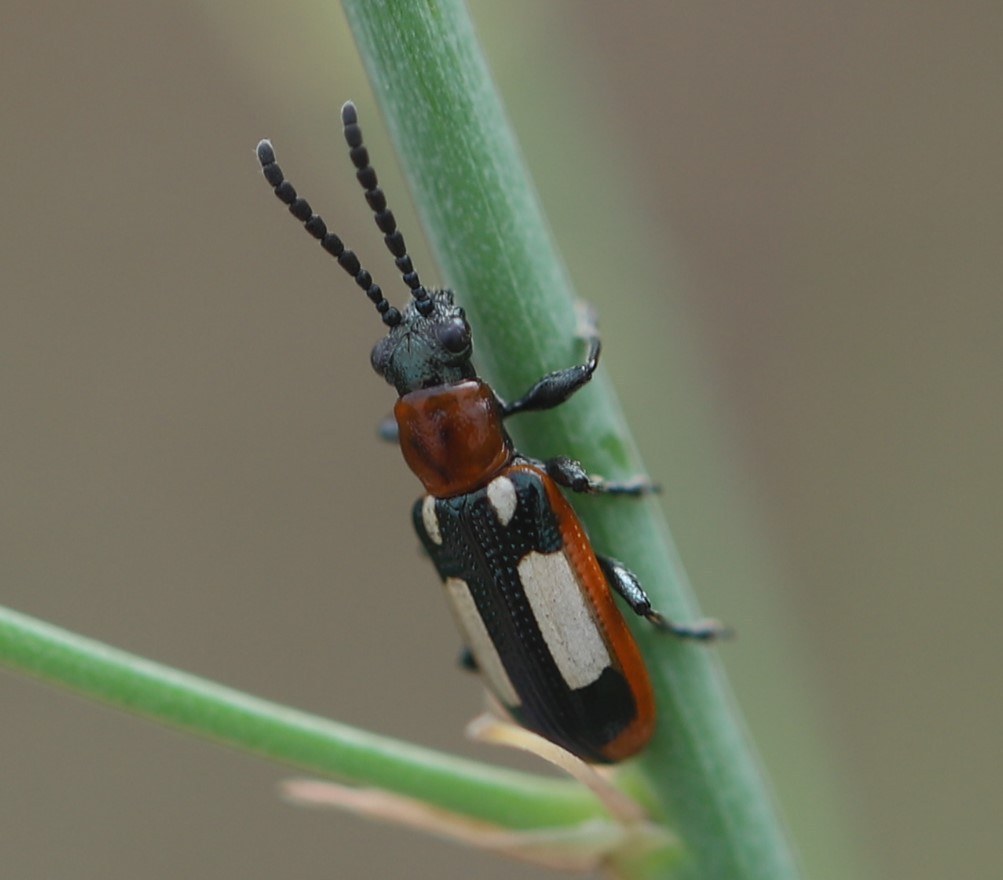
Key Visual Features
The common asparagus beetle (Crioceris asparagi) is a small, brightly patterned beetle closely tied to asparagus plants for identification purposes.
- Size: Adults measure about 6-9 mm long, an elongated, somewhat rectangular body shape.
- Color & pattern: Metallic blue-black body with distinctive cream to yellowish squares or blotches along the wing covers, bordered by a reddish-orange margin around the edges of the thorax and wing covers — a bold, checkerboard-like pattern that is quite distinctive.
- Body shape: Elongated and somewhat cylindrical to slightly flattened, with a noticeably narrower head and thorax compared to the wider wing covers.
- Legs & antennae: Legs are dark and relatively short; antennae are thread-like and moderate in length, held forward when the beetle is active.
- Related species (spotted asparagus beetle): A close relative, Crioceris duodecimpunctata, is instead orange-red with twelve black spots arranged across the wing covers, a very different pattern from the checkered blue-black common asparagus beetle.
- Larvae: Soft-bodied, plump grubs that are dull gray-green to olive with a dark head, found feeding openly on foliage and stems rather than hidden inside plant tissue.
Where and When You'd See It
This beetle is found specifically on and around asparagus plants in gardens and agricultural fields, making host plant association one of the strongest identification clues. Adults emerge in spring as asparagus spears begin to grow and remain active through the growing season into summer, with activity generally highest during warm daylight hours when beetles are visibly feeding and moving on the plant's spears, ferny foliage, and stems.
Similar-Looking Bugs
- Spotted asparagus beetle: Also found on asparagus, but distinguished by its orange-red base color and twelve black spots, rather than the checkered cream-and-blue-black pattern of the common asparagus beetle.
- Ladybird beetles: Similarly rounded and sometimes spotted, but generally more domed in shape and lack the elongated, rectangular body and cream-and-blue-black checkering of the asparagus beetle.
- Cucumber beetles: Have a more yellow-green base color with black stripes or spots, and are associated with a different set of host plants.
Quick ID Checklist
- Elongated body, about 6-9 mm, metallic blue-black with cream squares
- Reddish-orange border along the thorax and wing cover edges
- Found specifically on or near asparagus plants
- Active in spring through summer, most visible during warm daylight
- Spotted relative species has orange-red base with twelve black spots instead of checkering
Frequently asked questions
What is the clearest way to identify a common asparagus beetle?
Its bold, checkerboard-like pattern of cream squares set against a metallic blue-black body, bordered by a reddish-orange edge, is quite distinctive and not commonly seen on other garden beetles.
How is the common asparagus beetle different from the spotted asparagus beetle?
The common asparagus beetle has a blue-black body with cream squares and a reddish border, while the spotted asparagus beetle is orange-red with twelve black spots — a clearly different color pattern despite both sharing the same host plant.
Where would I expect to find an asparagus beetle?
Look directly on asparagus plants, including the spears and ferny foliage, since this beetle's presence is closely tied to that specific host plant.
When in the year are asparagus beetles most active?
They typically emerge in spring as asparagus spears begin growing and stay active through the summer growing season, most visible during warm daylight hours.