
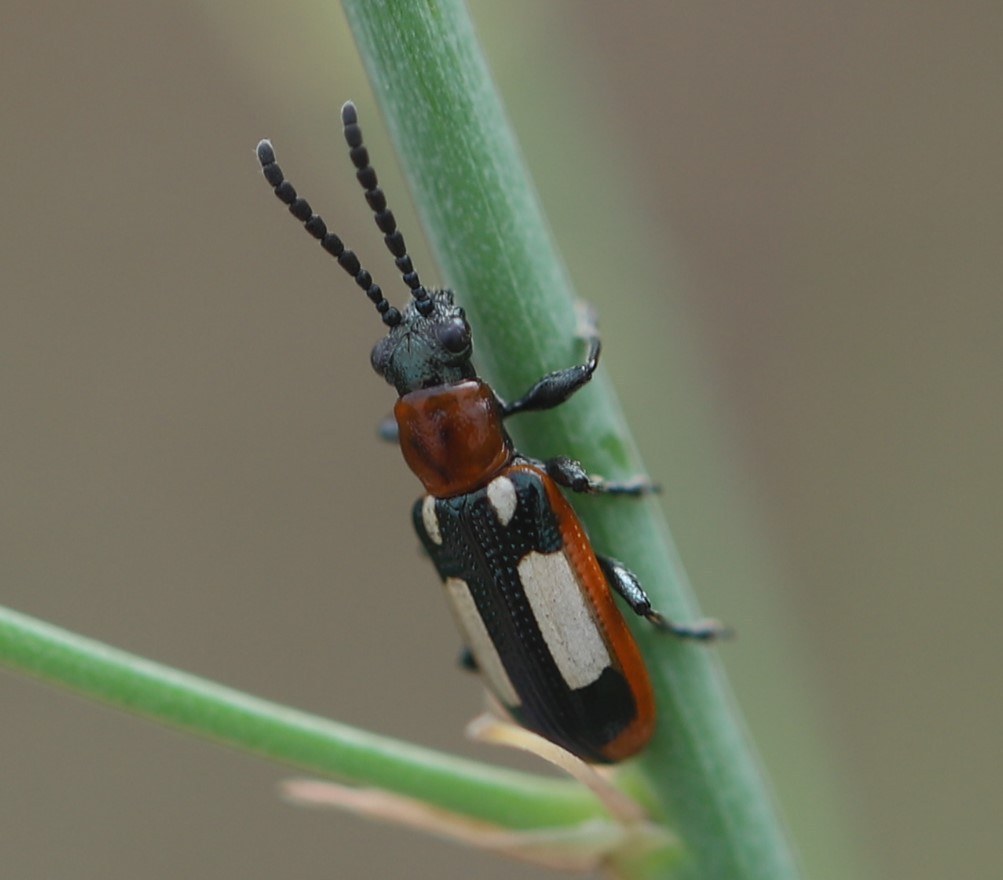
Asparagus Beetle
Crioceris asparagi
A small, boldly patterned blue-black beetle with cream and orange-red markings that clusters on emerging asparagus spears in spring.
- Size
- 1/4–3/8 in (6–9 mm)
- Habitat
- Asparagus patches, gardens, and farm fields
- Danger
- Nuisance pest
Spotted a bug like this?
Identify any bug or insect from a photo, free.
Overview
The asparagus beetle is a small leaf beetle specialized almost entirely on asparagus, where both adults and larvae feed on spears, ferny foliage, and berries. Its striking coloration, a dark metallic body set off with pale cream squares and a reddish margin, makes it one of the more easily recognized garden beetles once spotted.
Adults overwinter in plant debris and become active as soon as asparagus spears begin emerging in spring, often being one of the first visible pests in an asparagus bed each season. Feeding scars and blackened, scarred spear tips are frequently the first sign of activity before the beetles themselves are noticed.
A related species, the spotted asparagus beetle (Crioceris duodecimpunctata), is orange with black spots and often found alongside the common asparagus beetle, though its larvae feed mainly inside the berries rather than on foliage.
How to Identify
- Body elongate-oval, about 1/4–3/8 in (6–9 mm) long, with a metallic blue-black head and wing covers
- Wing covers marked with cream to yellowish squares bordered by a reddish-orange margin
- Thorax reddish and narrower than the wing covers, giving a distinct waisted appearance
- Antennae short and thread-like
- Larva is a soft, plump, dark gray to olive grub with a black head, often seen feeding openly on ferny asparagus foliage
- Lookalike: the spotted asparagus beetle, which is orange-red with twelve black spots rather than cream squares
Habitat & Range
Found wherever asparagus is grown as a garden or farm crop, primarily across temperate North America and Europe. Adults become active in spring as soon as asparagus spears emerge and remain present through the growing season into the fern stage, overwintering as adults in hollow stems, mulch, or garden debris.
Behavior & Diet
Both adults and larvae feed on asparagus tissue: adults chew on spear tips, stems, and the feathery foliage that develops after harvest, while larvae feed mainly on the ferny growth. Adults also lay dark, cigar-shaped eggs standing on end along spears and stems. As a specialist herbivore, the species has little ecological role outside of asparagus plantings but is preyed upon by various generalist predators such as lady beetles and predatory bugs that target its eggs and larvae.
Life Cycle
Development is complete metamorphosis, with several generations possible in a single growing season in warmer climates. Eggs are laid in rows on spears and foliage and hatch within about a week; larvae feed for roughly two weeks before dropping to the soil to pupate in a small earthen cell. Adults emerge in one to two weeks and continue feeding and laying eggs, with the final generation of adults overwintering in sheltered plant debris until the following spring.
Frequently asked questions
How can I tell asparagus beetle eggs from other insect eggs?
The eggs are small, dark, and cigar-shaped, laid standing upright in short rows along asparagus spears and stems, which is fairly distinctive among garden insects.
What is the difference between the common and spotted asparagus beetle?
The common asparagus beetle is metallic blue-black with cream squares and a reddish margin, while the spotted asparagus beetle is orange-red with twelve black spots and its larvae develop mainly inside the berries.
When do asparagus beetles first appear each year?
Overwintered adults become active in spring as soon as asparagus spears begin to emerge from the ground, making them one of the earliest beetles seen in a vegetable garden.
Where do asparagus beetle larvae feed?
Larvae of the common asparagus beetle feed mainly on the soft, ferny foliage that develops after spears are allowed to grow, rather than on the woody spear itself.
Asparagus Beetle guides
In-depth guides for identifying, understanding, and living alongside Asparagus Beetle.
Other bugs you may enjoy
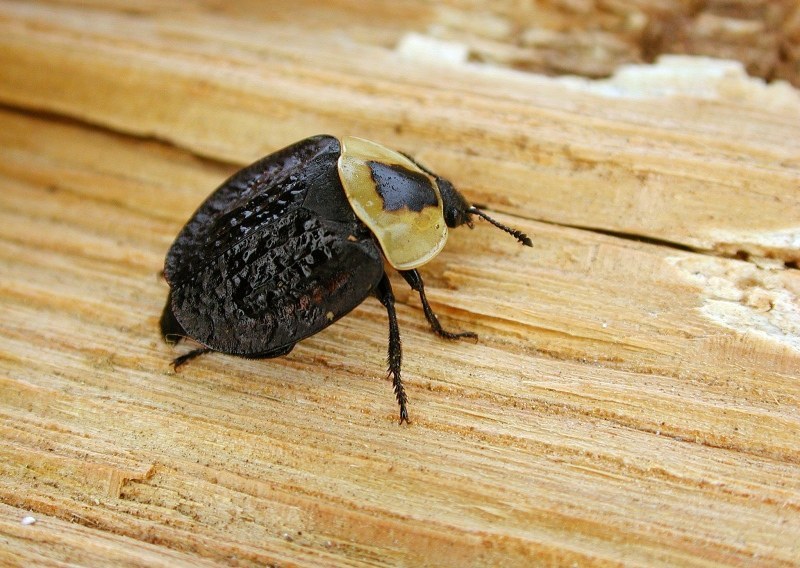
American Carrion Beetle
Forests, fields, and roadsides across North America, near decaying animal carcasses
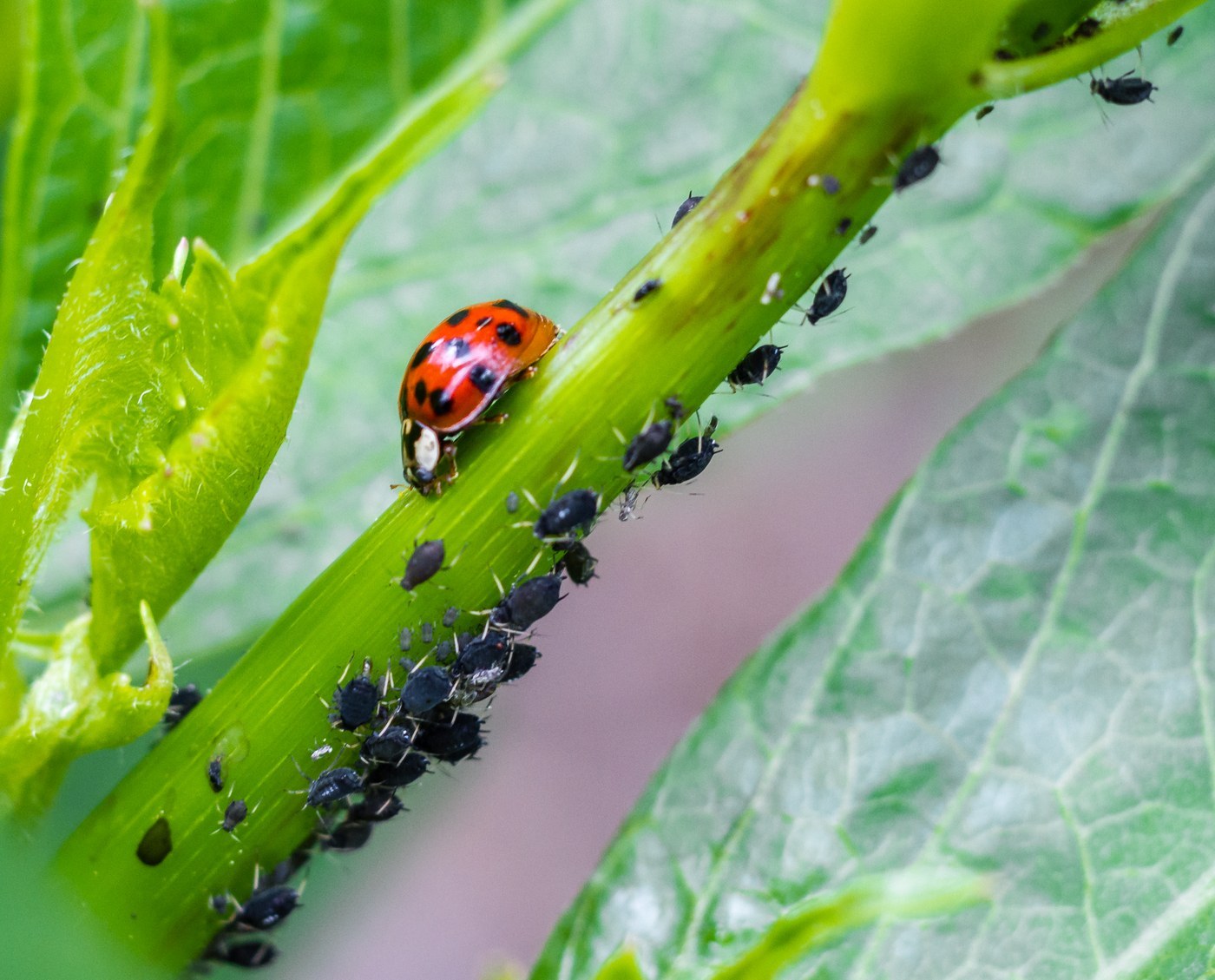
Asian Lady Beetle
Gardens, crop fields, woodlands, buildings
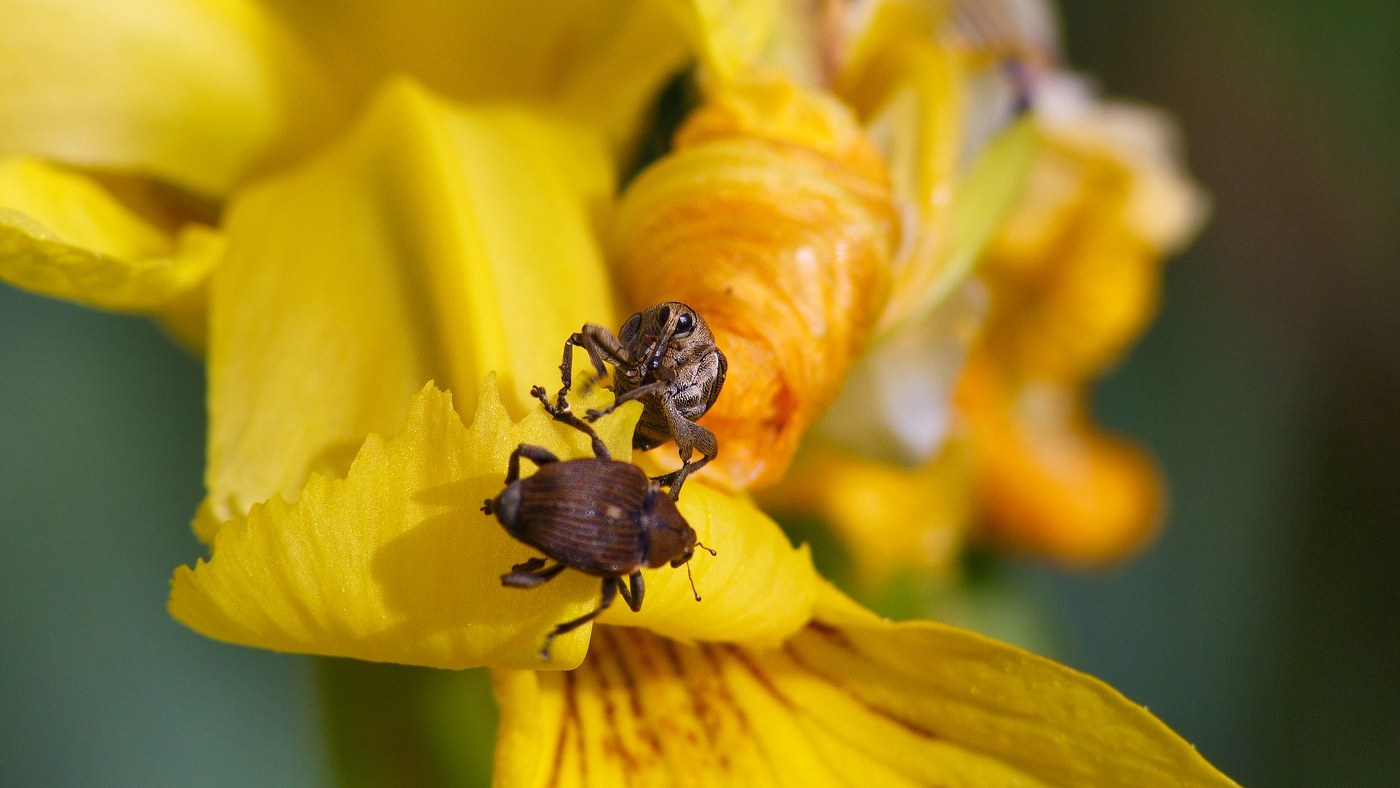
Acorn Weevil
Oak woodlands and forests, on and beneath oak trees
Wireworm
Soil of grasslands, gardens, and cultivated fields worldwide
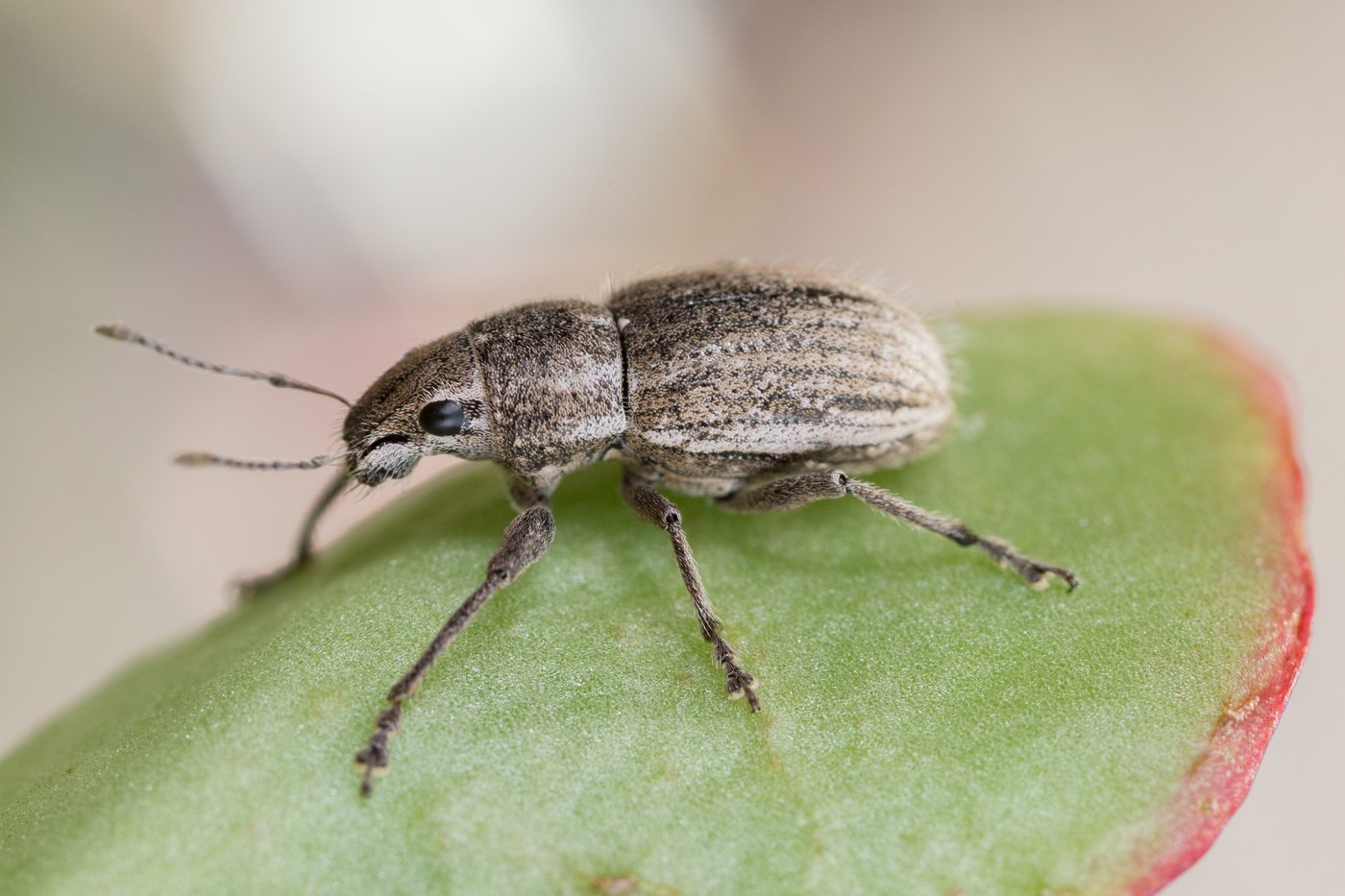
Whitefringed Beetle
Pastures, row crops, lawns, disturbed soils
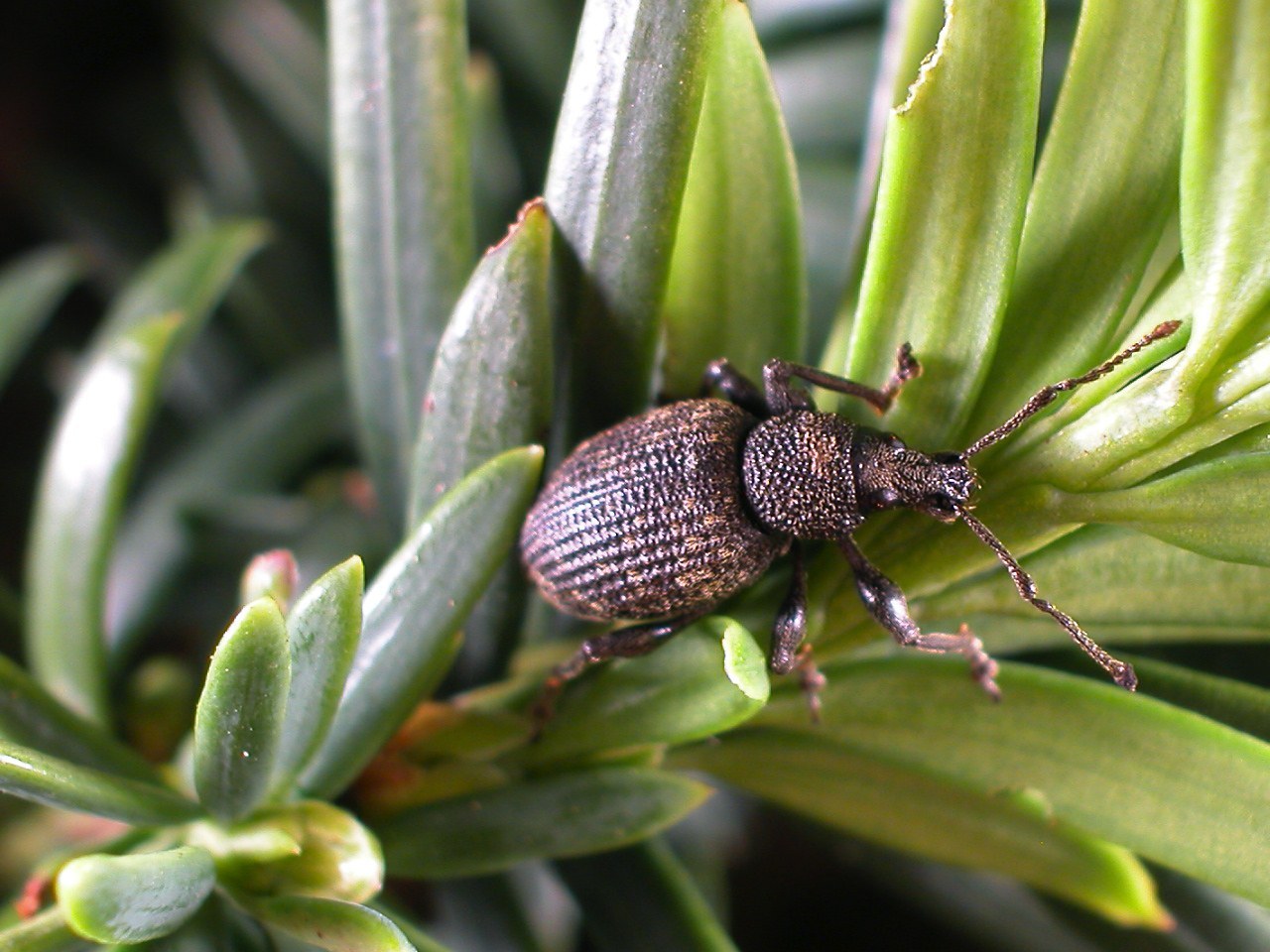
Vine Weevil
Gardens, nurseries, greenhouses, and container plantings
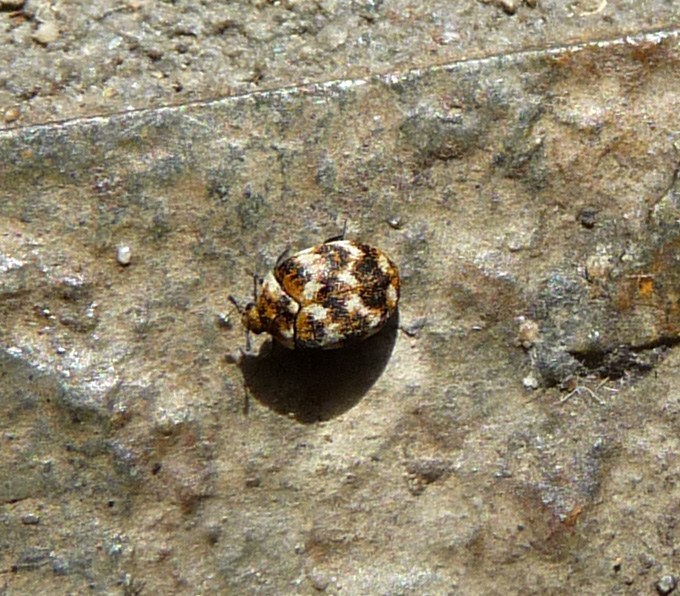
Varied Carpet Beetle
Homes, nests of birds and mammals, and flowers outdoors
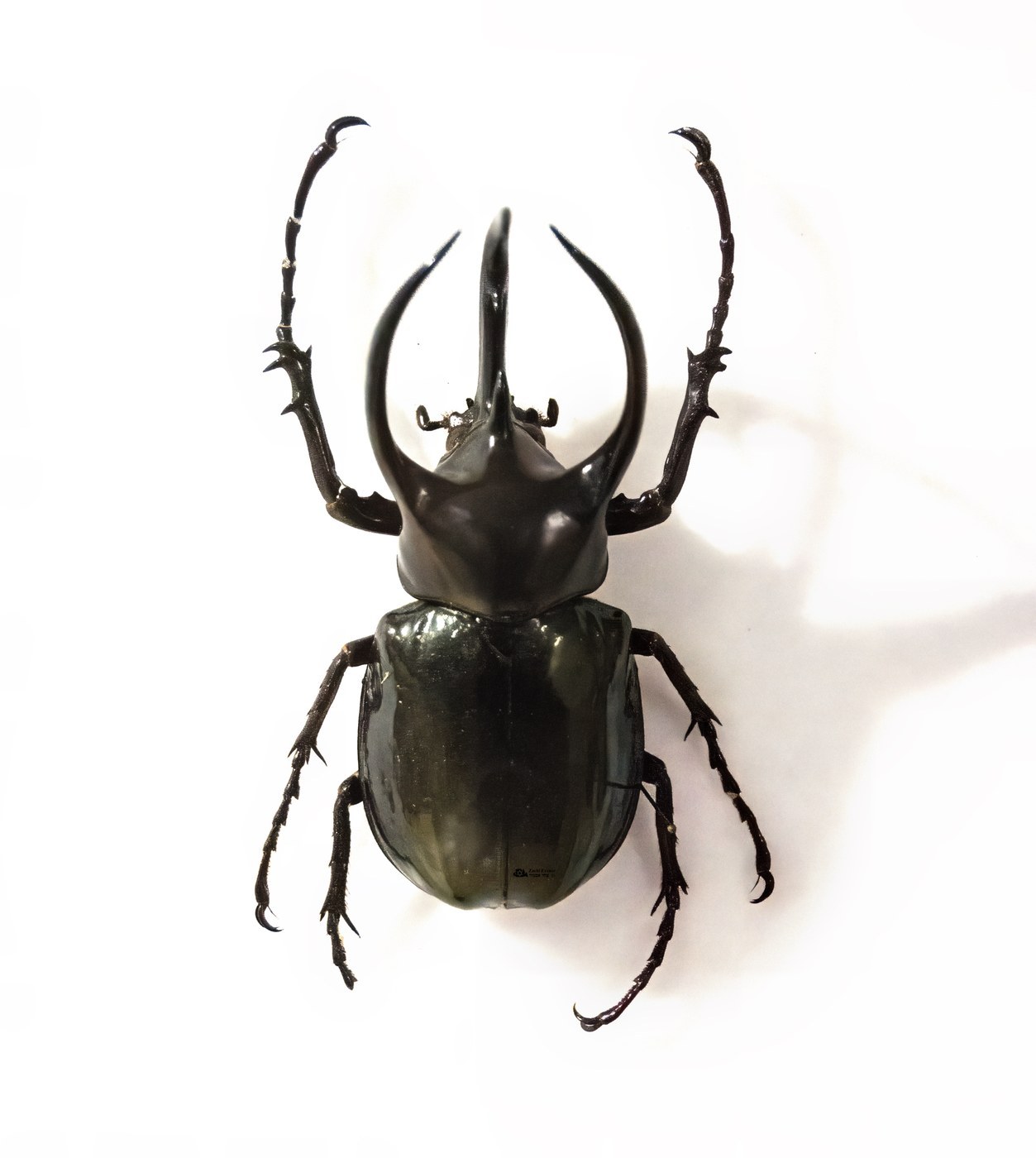
Atlas Beetle
Tropical forests of Southeast Asia
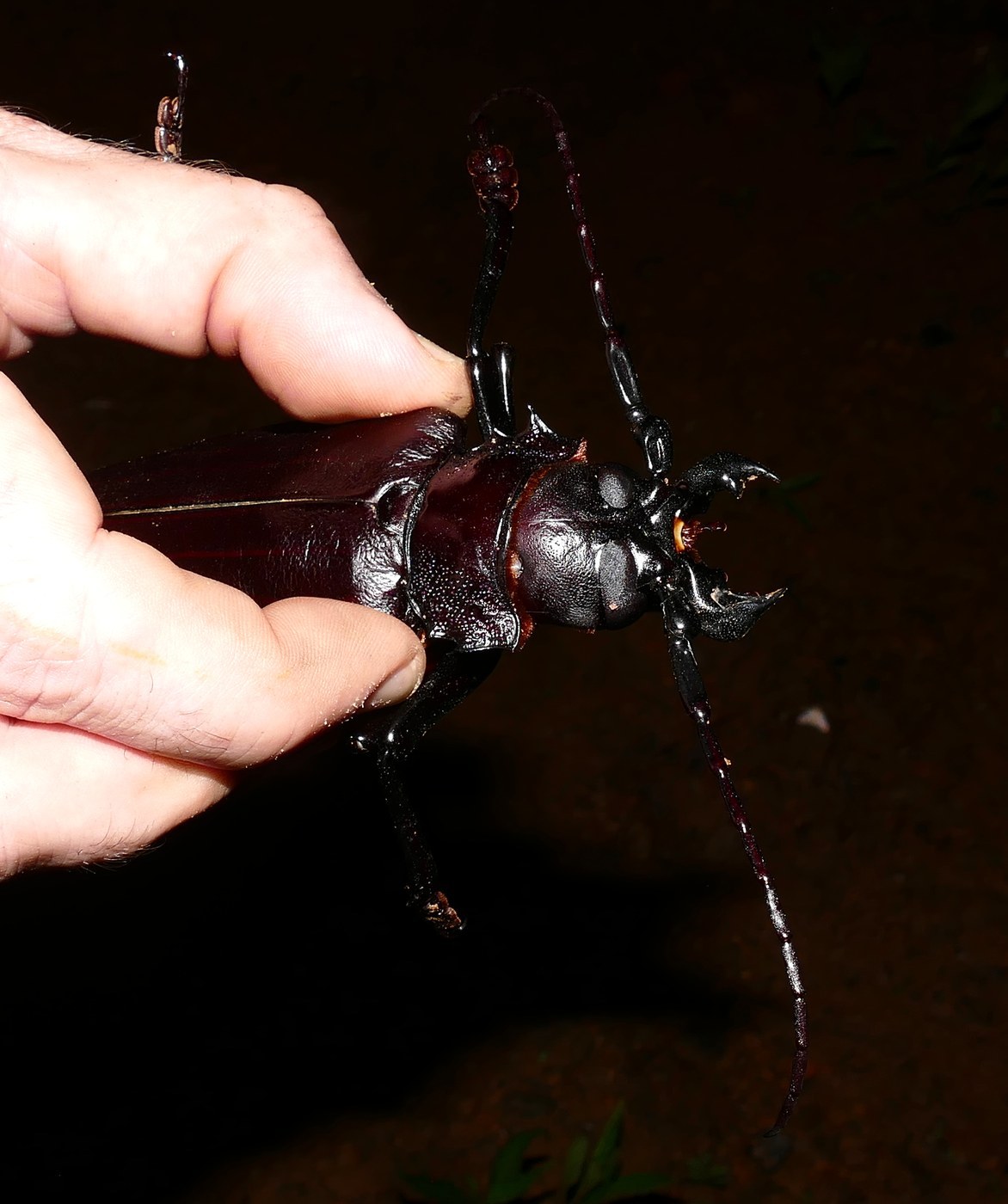
Titan Beetle
Amazon rainforest of South America
Ten-lined June Beetle
Sandy soils, pine forests, and orchards of western North America
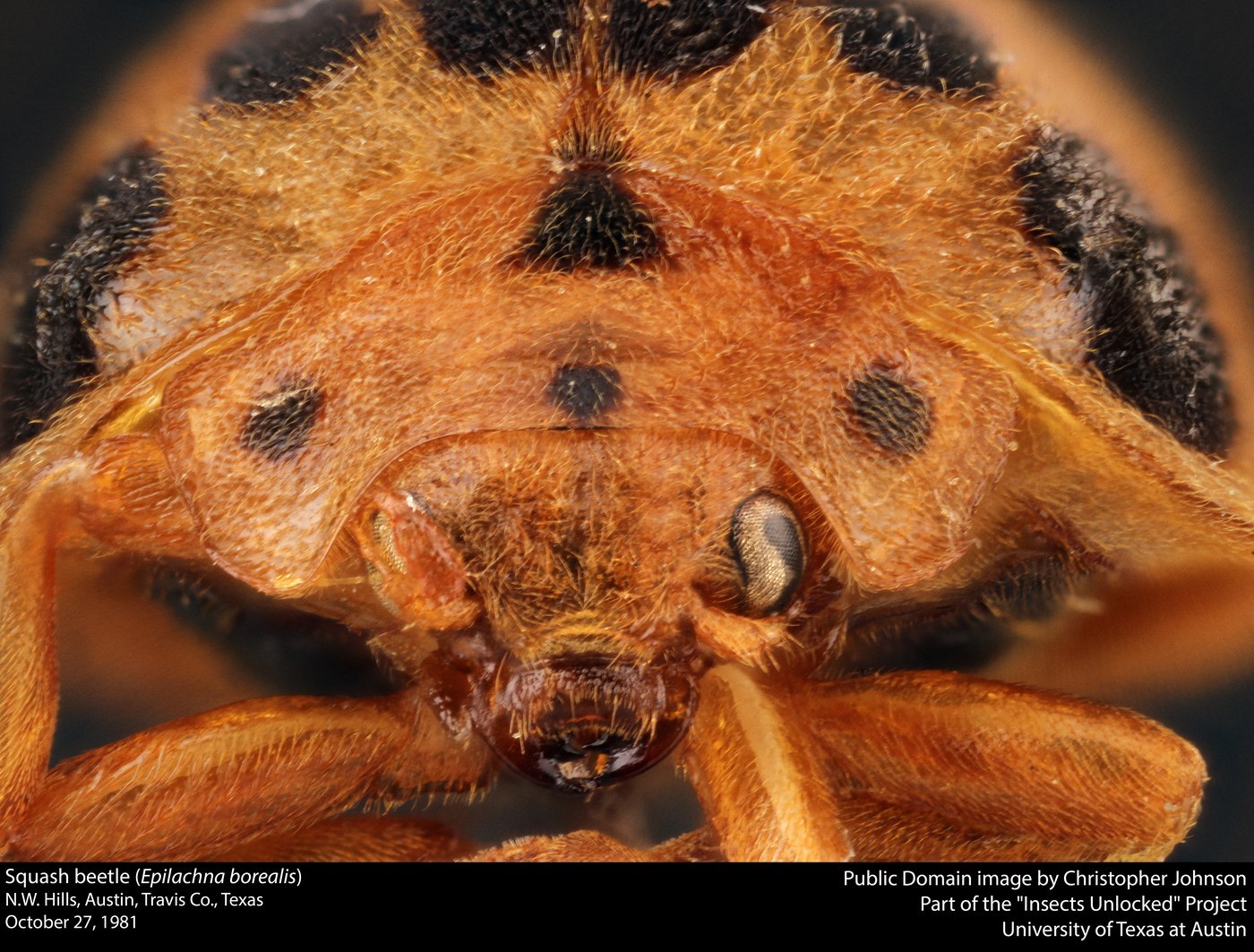
Squash Beetle
Vegetable gardens and fields growing squash, pumpkin, and other cucurbits
Red Flour Beetle
Stored grain, flour, and dry food products in mills, warehouses, and pantries worldwide