
Atlas Moth Identification Guide
Learn to recognize the world's largest moth by its snake-head wingtips and vast reddish-brown wings.
Read the full Atlas Moth encyclopedia entry →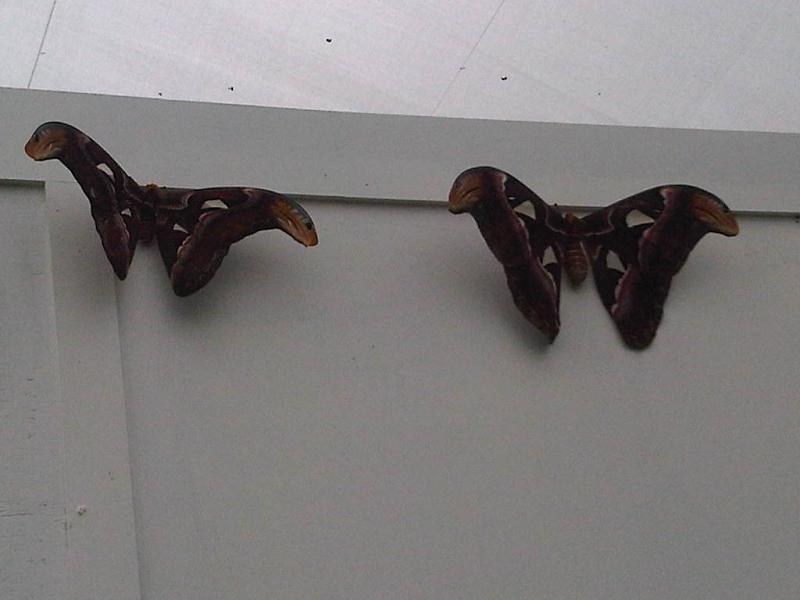
Key Features
- One of the largest moths in the world by wing surface area, with a wingspan that can exceed 24–27 cm (9.5–10.5 inches) in large females
- Wings are broad, angular, and reddish-brown to rusty orange, patterned with black, white, and pink lines and large triangular transparent "windows" near the wingtips that let light pass through
- Forewing tips are elongated and curved, each resembling the head of a snake, complete with a dark eye-like marking — a feature thought to startle or deter predators when the moth is at rest
- Thick, furry brown-orange body and legs; feathery, comb-like antennae, especially broad and plume-like in males, used to detect female pheromones from long distances
- No functional mouthparts as adults, so the moth does not feed at this life stage and relies entirely on fat reserves built up as a caterpillar
- Females are generally larger and heavier-bodied than males, with a broader abdomen for egg-laying
Where & When to Spot One
- Native to tropical and subtropical forests of Southeast Asia, including India, China, and Indonesia
- Adults are night-active but are sometimes seen resting on tree trunks or walls during the day, especially near lights after dusk the previous evening
- Adult flight period is brief, generally just one to two weeks, since adults live only to mate and lay eggs before dying
- Multiple generations may occur per year in warm, humid climates, so sightings can happen across most of the warmer and wetter months
Similar Species
- Other giant silk moths, such as the Atlas Moth's close relatives in the genus Attacus, share the huge size and snake-head wingtip pattern, and can be difficult to separate without close inspection of the wing markings
- Cecropia and Polyphemus moths are similarly large but have rounder wings, different color patterns, and are native to North America rather than Asia
- Owl moths in the genus Erebus can rival it in wingspan but have a darker, more mottled gray-brown pattern without the reddish tone or transparent windows
- The combination of extreme wingspan, triangular transparent windows, and curved snake-head wingtips is distinctive among moths worldwide
Quick ID Checklist
- Enormous wingspan (often 20+ cm)
- Reddish-brown wings with triangular clear "windows"
- Curved, snake-head-shaped forewing tips
- Broad, feathery antennae
- Found resting on trees or walls near lights at night in tropical Asia
Frequently asked questions
Why is the Atlas Moth's forewing tip shaped like a snake head?
It's a wing pattern believed to mimic a snake's head, which may startle or deter potential predators.
Do Atlas Moths eat as adults?
No, adults lack functional mouthparts and rely entirely on energy stored from the caterpillar stage.
How long do adult Atlas Moths live?
Typically only about one to two weeks, since their sole purpose as adults is to mate and reproduce.
Where are Atlas Moths found?
They're native to tropical and subtropical forests across Southeast Asia.