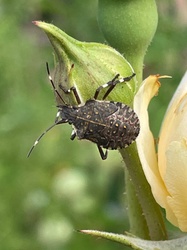
Bagrada Bug Identification Guide
Recognize the bagrada bug by its small size and fine black, orange, and white shield pattern on cabbage-family plants.
Read the full Bagrada Bug encyclopedia entry →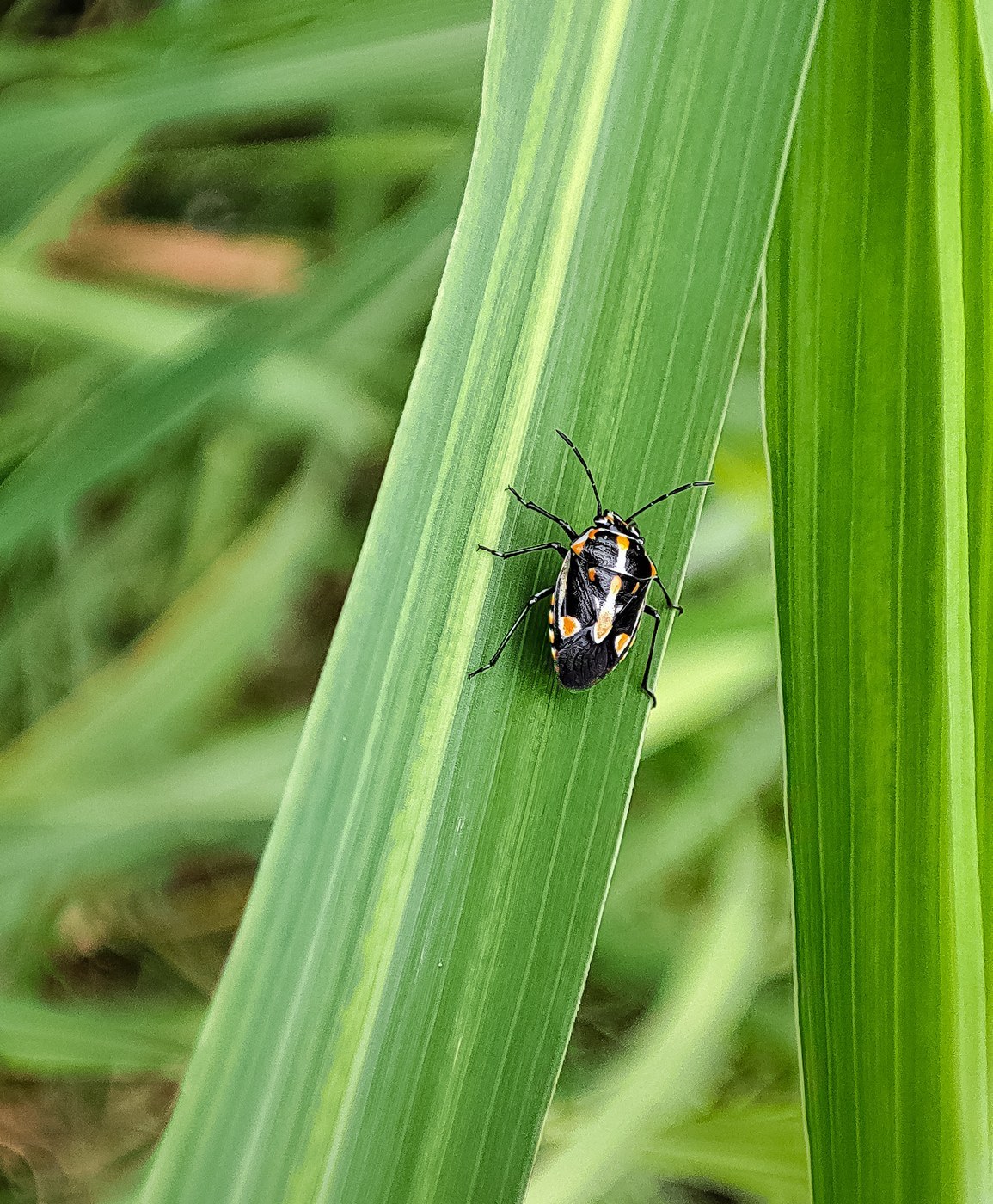
Key Visual Features
The bagrada bug (Bagrada hilaris) is a small shield-shaped true bug with an intricate, finely detailed color pattern that sets it apart from larger stink bug relatives.
- Size: About 5-7 mm (roughly 1/5 to 1/4 inch) long, noticeably smaller than many other shield bugs
- Color: Black background with orange, red, and white markings arranged in fine spots and short stripes
- Body shape: Broad, rounded shield shape, compact and small compared to related species
- Wings: Leathery forewing bases with clear membranous tips, patterned to match the body's spotted theme
- Legs: Dark, slender legs
- Antennae: Five-segmented, dark
- Markings: A pale, often orange or white, X- or shield-shaped marking is frequently visible on the pronotum, along with scattered small white or orange spots across the back
Where and When You'd See It
Bagrada bugs favor cabbage-family plants and related weeds, often gathering in clusters on leaves, stems, and flower heads. They are most active in warm, dry conditions and can be seen throughout the growing season in gardens, fields, and disturbed or weedy ground. Because of their small size, they are often noticed first as a moving cluster of tiny dark spots on a plant rather than as individual insects.
Similar-Looking Bugs
- Harlequin bug: Larger with bold, irregular orange-and-black blotches rather than the fine, small-scale spotting of the bagrada bug.
- Cabbage bug (Eurydema species): Similar coloring and host plants but generally larger, with a more regularly striped or banded pattern rather than fine scattered spots.
- Southern green stink bug nymphs: Patterned with red, black, and white, but rounder and lacking the fine, dense spotting typical of bagrada bugs.
- Small milkweed bug: Similar small size and orange-and-black coloring, but found on milkweed rather than cabbage-family plants, with a more symmetrical geometric pattern.
The bagrada bug's notably small size combined with fine, densely packed spotting and a pale marking on the pronotum are the most useful identifying clues.
Quick ID Checklist
- Small (5-7 mm), compact, rounded shield-shaped body
- Black background with fine orange, red, and white spots
- Pale X- or shield-shaped mark often visible on the pronotum
- Found in clusters on cabbage-family plants and weeds
- Active in warm, dry, sunny conditions
Frequently asked questions
How can I tell a bagrada bug from a harlequin bug?
Size and pattern scale are the key clues: bagrada bugs are notably smaller with fine, densely packed spots, while harlequin bugs are larger with bold, irregular blotches.
What is the typical size of a bagrada bug?
Adults are quite small, usually only 5-7 mm long, making them noticeably smaller than many other shield-shaped bugs.
Where would I find bagrada bugs?
They are commonly found in clusters on cabbage-family plants and related weeds, especially in warm, dry, sunny growing conditions.
Is there a specific marking that helps identify a bagrada bug?
Look for a pale orange or white X- or shield-shaped marking on the pronotum along with fine scattered spots across the rest of the body.
Bagrada Bug identified by the community
Recent Bagrada Bug finds identified with Bug Identifier.