Bark Beetle Identification Guide
Learn to identify bark beetles by their tiny cylindrical bodies and the tunnel galleries they leave under tree bark.
Read the full Bark Beetle encyclopedia entry →Key Visual Features
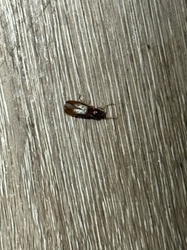
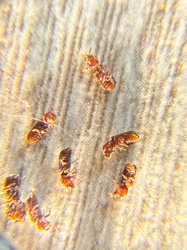
- Size: Very small, typically 1/8 to 1/4 inch long, making individual beetles easy to overlook.
- Body shape: Compact, cylindrical, and hard-shelled, resembling a small grain of rice standing on end.
- Color: Usually dark brown, reddish-brown, or black, with a somewhat glossy or matte finish.
- Head: Often tucked downward beneath the pronotum, giving the beetle a hooded appearance from above.
- Antennae: Short, elbowed, and clubbed at the tip.
- Legs: Short, sturdy legs suited to crawling within tight spaces under bark rather than open surfaces.
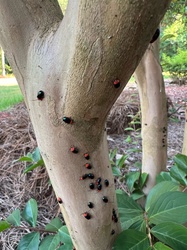
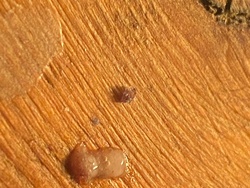
- Sign of presence: Even when the beetle itself isn't visible, distinctive winding tunnel patterns (galleries) etched into wood or visible through removed bark, along with small round exit holes and fine boring dust, are strong identification clues.
Where and When You'd See One
Bark beetles live beneath the bark of trees, particularly stressed, dying, or recently cut trees and logs. Adults are most active during the warmer months when they emerge to disperse and colonize new trees, while larvae develop in tunnels beneath the bark year-round. They are more often identified by their tunnel galleries and tiny exit holes in bark than by seeing the beetle itself, since much of their life is spent hidden within wood.
Similar-Looking Creatures
- Weevils: Similar small size but have an elongated snout that bark beetles lack.
- Ambrosia beetles: Closely related and similarly sized, but tend to bore straighter tunnels deeper into the wood rather than the winding patterns typical of many bark beetles.
- Powderpost beetles: Similar tiny cylindrical shape, but their damage appears as fine, powdery dust in structural or dried wood rather than under living bark.
- Small ground beetles: Generally larger, more flattened, and found on the ground rather than tunneling under bark.
Quick ID Checklist
- Tiny, cylindrical, hard-shelled body, about 1/8-1/4 inch long.
- Dark brown to black coloring with a hooded head.
- Short, clubbed, elbowed antennae.
- Found under bark or associated with winding tunnel galleries and small round exit holes.
- Most active and dispersing during warmer months.
Frequently asked questions
How can I identify a bark beetle if I only see its damage?
Look for winding tunnel patterns (galleries) etched into the wood beneath bark, along with small round exit holes and fine sawdust-like debris, all of which are characteristic signs left by bark beetles.
What does a bark beetle look like up close?
It is a very small, cylindrical, hard-shelled insect, usually dark brown to black, with short clubbed antennae and a head that tucks downward beneath the body, giving it a compact, rice-grain-like shape.
How do bark beetles differ from ambrosia beetles?
Both are small and similarly shaped, but bark beetles typically create winding tunnel galleries close to the bark surface, while ambrosia beetles tend to bore straighter tunnels deeper into the wood.
When are bark beetles most active?
Adults are most active and visible during the warmer months when they disperse to find new trees, though their larvae can be developing under bark throughout the year.
Bark Beetle identified by the community
Recent Bark Beetle finds identified with Bug Identifier.