Bess Beetle Identification Guide
Identify the large, shiny black beetle famous for the squeaking sounds it makes when handled.
Read the full Bess Beetle encyclopedia entry →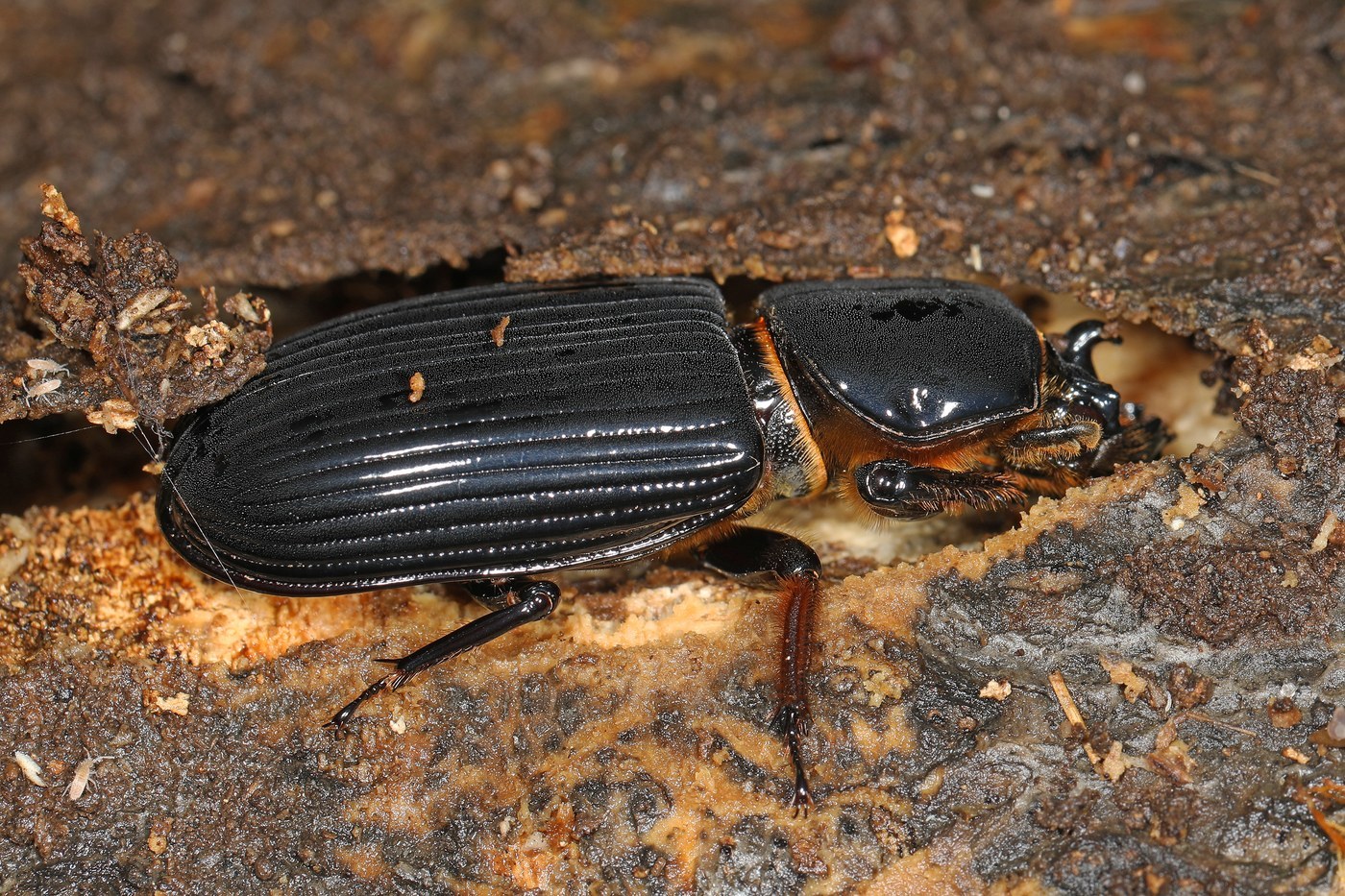
Key Visual Features
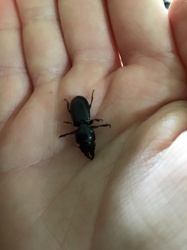
The bess beetle, also called the patent leather beetle, is a large, robust beetle around 3-4 cm (roughly 1.2-1.5 inches) long, with a smooth, glossy black body that has a distinctive polished, patent-leather sheen. The body is broad and somewhat flattened, with a well-defined head bearing a short horn-like projection in some individuals, and grooved, ridged wing covers (elytra) running lengthwise. The legs are short and strong, adapted for digging through decayed wood, and the antennae are short and slightly clubbed with a bent or elbowed shape. A key identifying behavior is sound: bess beetles can produce audible squeaking or chirping noises by rubbing body parts together, especially when handled or disturbed.
Where and When You're Likely to See Them
Bess beetles live inside and beneath rotting logs and decaying wood in forests, most often in moist, shaded woodland habitats. They are active year-round in suitable climates but are most commonly encountered when logs are turned over or broken apart, revealing tunnels and galleries where adults and larvae live together in small colonies. Unlike many beetles, bess beetles show a degree of social behavior, with adults and larvae often found together caring for young within the same log system.
Similar-Looking Bugs
The glossy black body and grooved elytra can lead to confusion with certain ground beetles or stag beetles, but bess beetles are generally more uniformly cylindrical and lack the prominent mandibles seen in male stag beetles. Some scarab beetles found in decaying wood are also dark and shiny, but scarabs typically have a more oval, humped body shape and lamellate (fan-like) antennal tips, whereas the bess beetle's antennae are short with a gentle elbow bend rather than a fan. The squeaking sound produced when handled is one of the most reliable ways to confirm a bess beetle in the field.
Quick ID Checklist
- Large, glossy black, patent-leather-like body, about 3-4 cm long
- Grooved, ridged wing covers running lengthwise
- Short, slightly elbowed antennae
- Found inside or under rotting logs in moist forest habitats
- Produces an audible squeaking sound when disturbed or handled
Frequently asked questions
Why does a bess beetle make a squeaking noise?
It produces sound by rubbing certain body parts together, a behavior most noticeable when the beetle is picked up or disturbed, and it serves as a useful identification clue in the field.
Where is the best place to look for bess beetles?
Check inside and underneath rotting logs and decaying wood in moist, shaded forest areas, where adults and larvae live together in tunnel systems.
How is a bess beetle different from a stag beetle?
Bess beetles have a more uniformly cylindrical, glossy black body and lack the large, branching mandibles that male stag beetles display.
Do bess beetles live alone or in groups?
They show unusual social behavior for beetles, often found in small groups within the same decaying log, with adults and larvae sharing the same tunnel system.
Bess Beetle identified by the community
Recent Bess Beetle finds identified with Bug Identifier.