Bird-dropping Spider Identification Guide
A lumpy, white-and-brown spider that mimics fresh bird droppings to avoid detection while resting motionless on leaves.
Read the full Bird-dropping Spider encyclopedia entry →Key Visual Features
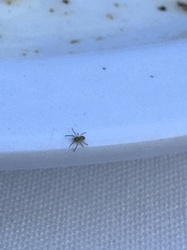
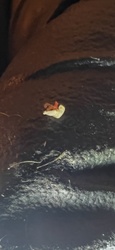
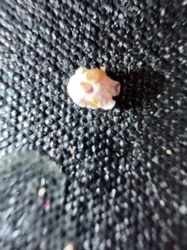
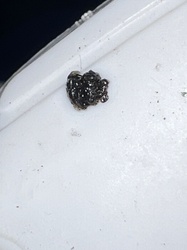
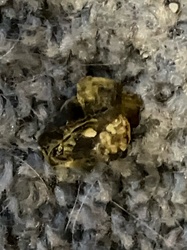
Bird-dropping spiders (several genera, including Celaenia and Phrynarachne) are camouflage specialists whose body shape and coloring closely mimic bird droppings.
- Size: Small to medium, generally around 0.3–0.6 inches (8–15 mm) in body length depending on species.
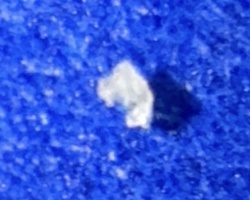
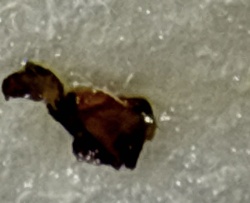
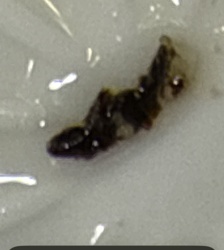
- Color: A blotchy mix of white, cream, and brown or black patches, closely resembling a splash of bird droppings on a leaf, sometimes with a glossy, wet-looking sheen.
- Body shape: Lumpy, irregular, asymmetrical outline rather than the smooth oval or round abdomen typical of most spiders — an important part of the disguise.
- Legs: Often held tucked in close to the body or folded beneath it, further obscuring the typical spider silhouette and enhancing the dropping-like appearance.
- Texture: Some species have a slightly shiny or wrinkled surface texture that mimics the glossy look of a fresh dropping.
Where and When You'd See It
Bird-dropping spiders are found in various warm regions worldwide, including parts of Asia, Australia, and the Americas depending on species, typically resting on the upper surface of leaves in gardens, shrubs, and forest understory. They are most active hunting at night, using the daytime disguise as a defense against predators while remaining still on foliage. During the day they remain motionless, relying entirely on their dropping-like camouflage rather than fleeing, making them easiest to notice when something out of place (an unusually lumpy or symmetrical "dropping") catches the eye on a leaf.
Similar-Looking Species
- Actual bird droppings: The primary point of confusion by design; look closely for leg outlines, a faint body segmentation, or slight movement to distinguish the spider from a genuine dropping.
- Bird-dropping moths and caterpillars: Some moth and caterpillar species mimic droppings similarly; these have six legs and a segmented insect body rather than eight spider legs.
- Crab spiders on flowers: Also ambush predators relying on camouflage, but crab spiders mimic flower colors and textures rather than bird droppings, and have a smoother, more symmetrical body.
- Orb weavers at rest: Some pale or mottled orb weavers can look blotchy, but lack the specific lumpy, irregular "splatter" shape of true bird-dropping mimics.
Quick ID Checklist
- Blotchy white-cream-and-brown pattern resembling a bird dropping
- Irregular, lumpy body outline rather than a smooth oval abdomen
- Legs tucked in close to the body, further hiding the spider shape
- Motionless on the upper surface of leaves during the day
- Found in gardens, shrubs, and forest understory in warm climates
Frequently asked questions
How can I tell a bird-dropping spider from an actual bird dropping?
Look closely for subtle signs like tucked leg outlines, a faint body segmentation, or slow movement — true droppings are static and lack any internal structure.
Why does the bird-dropping spider stay so still during the day?
Remaining motionless is central to its camouflage strategy, allowing it to blend in as an unappetizing bird dropping rather than fleeing from potential predators.
Are bird-dropping spiders active at night?
Yes, many species are more active after dark, using their daytime disguise primarily as a resting camouflage strategy rather than for hunting.
Where on a plant would I most likely spot one?
Check the upper surface of broad leaves in gardens or forest understory, where the lumpy white-and-brown pattern can look just like a fresh dropping until you look closely.
Bird-dropping Spider identified by the community
Recent Bird-dropping Spider finds identified with Bug Identifier.