Black Fly Identification Guide
Small, humpbacked black flies with a dark stout body and short, clear wings gather near flowing streams in warmer months.
Read the full Black Fly encyclopedia entry →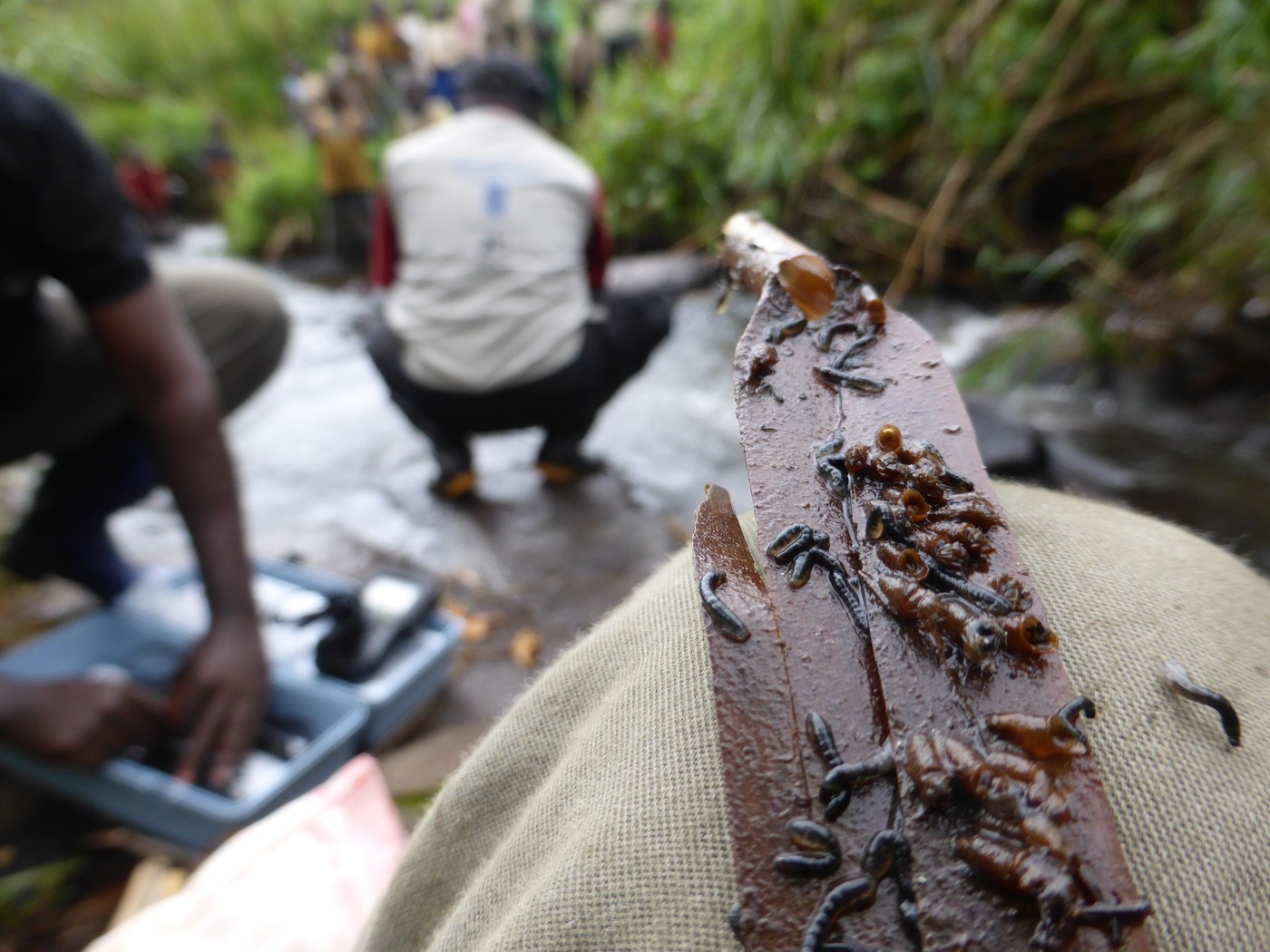
Key Visual Features
Black flies (family Simuliidae) are small, stocky flies with a distinctive silhouette that sets them apart from typical house flies.
- Size: Small, usually 2-6 mm long.
- Body shape: Compact and robust with a strongly arched, humpbacked thorax, giving a hunched profile from the side.
- Color: Most commonly dark gray to black, though some species show yellow, orange, or metallic tints on the thorax.
- Wings: Broad, clear, unmarked wings that are noticeably larger than the body and held flat, slightly overlapping, over the back at rest.
- Legs: Short and stout compared to body size, sometimes with pale banding near the joints in certain species.
- Antennae: Short, thick, and beaded (segmented), lacking the long thread-like antennae of mosquitoes.
Where and When You'll See It
- Found near clean, fast-flowing streams and rivers, since larvae attach to rocks and debris in moving water.
- Most abundant in spring and early summer, coinciding with peak larval development in cool running water.
- Adults are active outdoors during the day, often in wooded areas, fields, and campsites near waterways.
- Tends to fly around the head and ears in swarms, especially in humid, still air near water.
Similar-Looking Bugs
- House fly: Larger, flatter body without the humpbacked profile, and longer legs relative to body size.
- Fruit fly: Much smaller, often with red eyes and a tan-and-black body, lacking the stout humpbacked shape.
- Midge: More slender and elongated body, with feathery antennae in males, versus the compact, stocky build of a black fly.
Behavior Notes
Black flies are strong, persistent daytime fliers that often circle a person's head and shoulders repeatedly rather than settling in one spot. They tend to travel in loose groups near their breeding stream and are usually absent on cool, cloudy, or windy days, becoming most noticeable during calm, warm, humid weather. Because larvae require oxygen-rich flowing water, their presence is often a sign of a nearby clean stream rather than stagnant water.
Quick ID Checklist
- Small, stocky body with a humpbacked thorax profile
- Dark gray to black coloring
- Broad, clear wings larger than the body
- Short, beaded antennae
- Found near fast-flowing streams, especially in spring
Frequently asked questions
What makes the black fly's body shape so distinctive?
Its strongly arched, humpbacked thorax gives it a hunched profile when viewed from the side, which is a quick way to separate it from flatter-bodied flies.
Why are black flies so common near streams?
Their larvae live attached to rocks and submerged debris in clean, fast-flowing water, so adult populations peak near these habitats.
Do black flies fly far from water?
Adults can disperse a good distance from their breeding streams, but they tend to remain most concentrated in wooded and open areas close to running water.
How do black fly antennae differ from a mosquito's?
Black flies have short, thick, beaded antennae, while mosquitoes have long, slender, thread-like antennae that are often feathery in males.
Black Fly identified by the community
Recent Black Fly finds identified with Bug Identifier.