Black Saddlebags Identification Guide
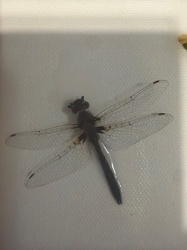
A dark, broad-winged glider named for the bold black patch at the base of each hindwing, often seen soaring high over open areas.
Read the full Black Saddlebags encyclopedia entry →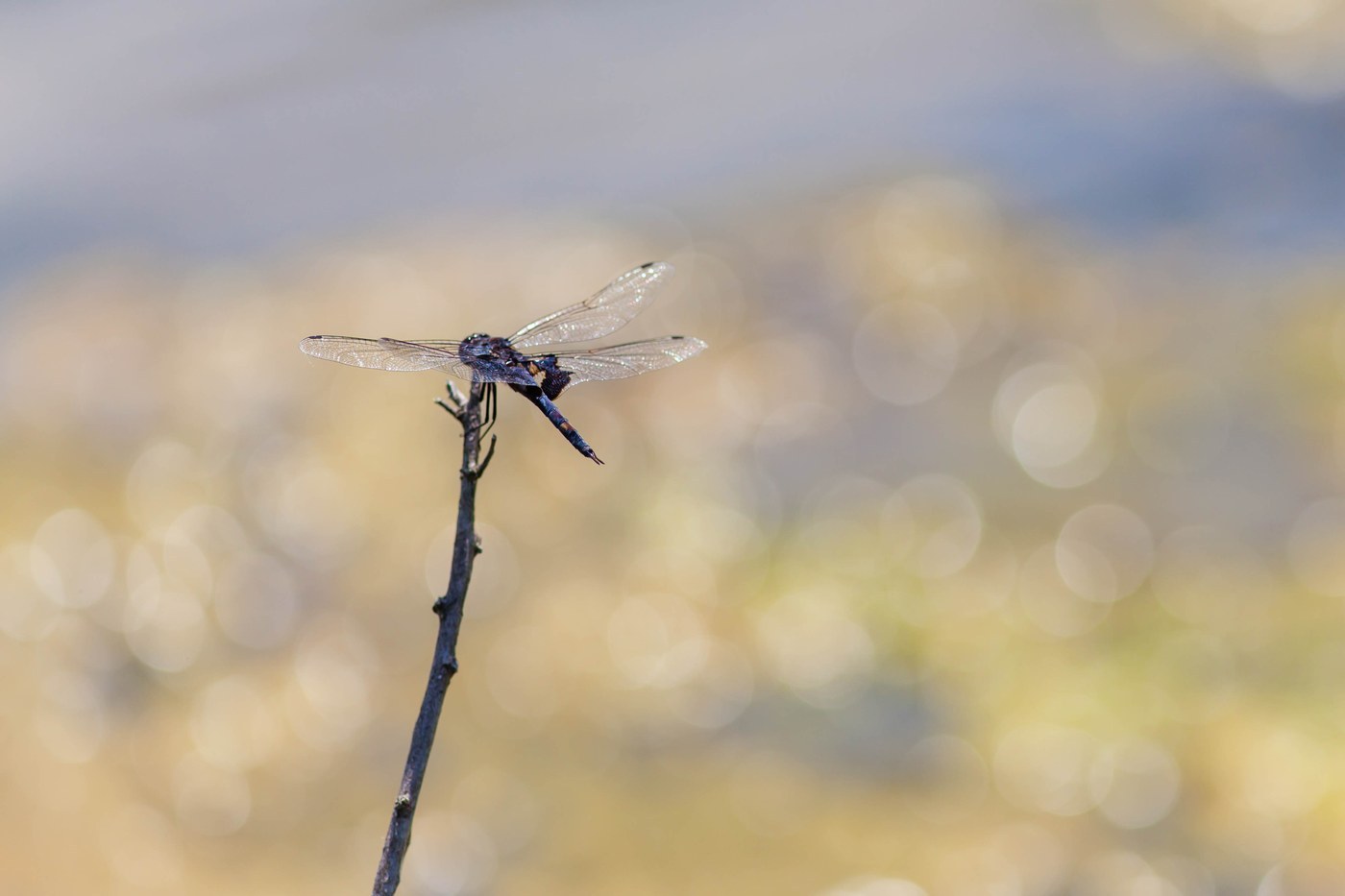
Key Visual Features
- Size: Large dragonfly, about 2 to 2.2 inches (51–56 mm) long, with notably broad hindwings.
- Color: Body is mostly blackish-brown, sometimes with a faint blue or purple sheen on the abdomen in certain light, and lacking bright patterning.
- Wings: The signature feature is a large, dark "saddlebag" patch at the base of each hindwing, which stands out clearly against the otherwise clear wing and gives the species its name.
- Body shape: Broad-winged with a moderately stout abdomen, built for the same soaring, gliding flight style as other saddlebags and gliders.
- Flight style: Frequently seen flying high and fast, gliding for long stretches on set wings rather than perching often.
Where and When You'll See It
Black Saddlebags range widely across North America and are often seen far from water, patrolling open fields, parking lots, and even urban areas at considerable height. They breed in ponds and marshes, including temporary or fish-free waters, but adults wander broadly in search of food. They're most commonly observed from summer into fall, sometimes in loose migratory groups moving with other glider species. Watch the sky above open, unshaded areas on warm afternoons, since this species often flies too high to notice unless you specifically scan upward, and it rarely comes down to perch for long, close looks.
Similar-Looking Species
- Carolina Saddlebags: Has a reddish-brown rather than black body and a smaller, more orange-tinted hindwing patch.
- Wandering Glider: Golden-amber overall with no dark hindwing patch, easily separated by its uniform light coloring.
- Spot-winged Glider: Amber-bodied with only a small dark spot at the wing base rather than the large, bold black patch of the Black Saddlebags.
Quick ID Checklist
- Large, dark blackish-brown body
- Bold black patch at the base of each hindwing ("saddlebags")
- Broad wings suited for high, gliding flight
- Often seen soaring well away from water, over open fields
- Most common from summer through fall
Frequently asked questions
Where does the name 'saddlebags' come from?
It refers to the large dark patches at the base of the hindwings, which resemble saddlebags draped over the wing bases.
How is it different from the Carolina Saddlebags?
Black Saddlebags has an overall blackish-brown body and larger black hindwing patches, while Carolina Saddlebags is reddish-brown with smaller, more orange-toned patches.
Why might I see this dragonfly far from any pond?
Adults are strong, wide-ranging fliers that often forage high over open fields and urban areas well away from the water where they breed.
What flight pattern should I look for?
Watch for high, sustained gliding flight on outstretched wings rather than frequent perching, which is typical of this and other saddlebags species.
Black Saddlebags identified by the community
Recent Black Saddlebags finds identified with Bug Identifier.