
Black Vine Weevil Identification Guide
Recognize this dull black, flightless weevil with fine speckled patches, active mainly after dark.
Read the full Black Vine Weevil encyclopedia entry →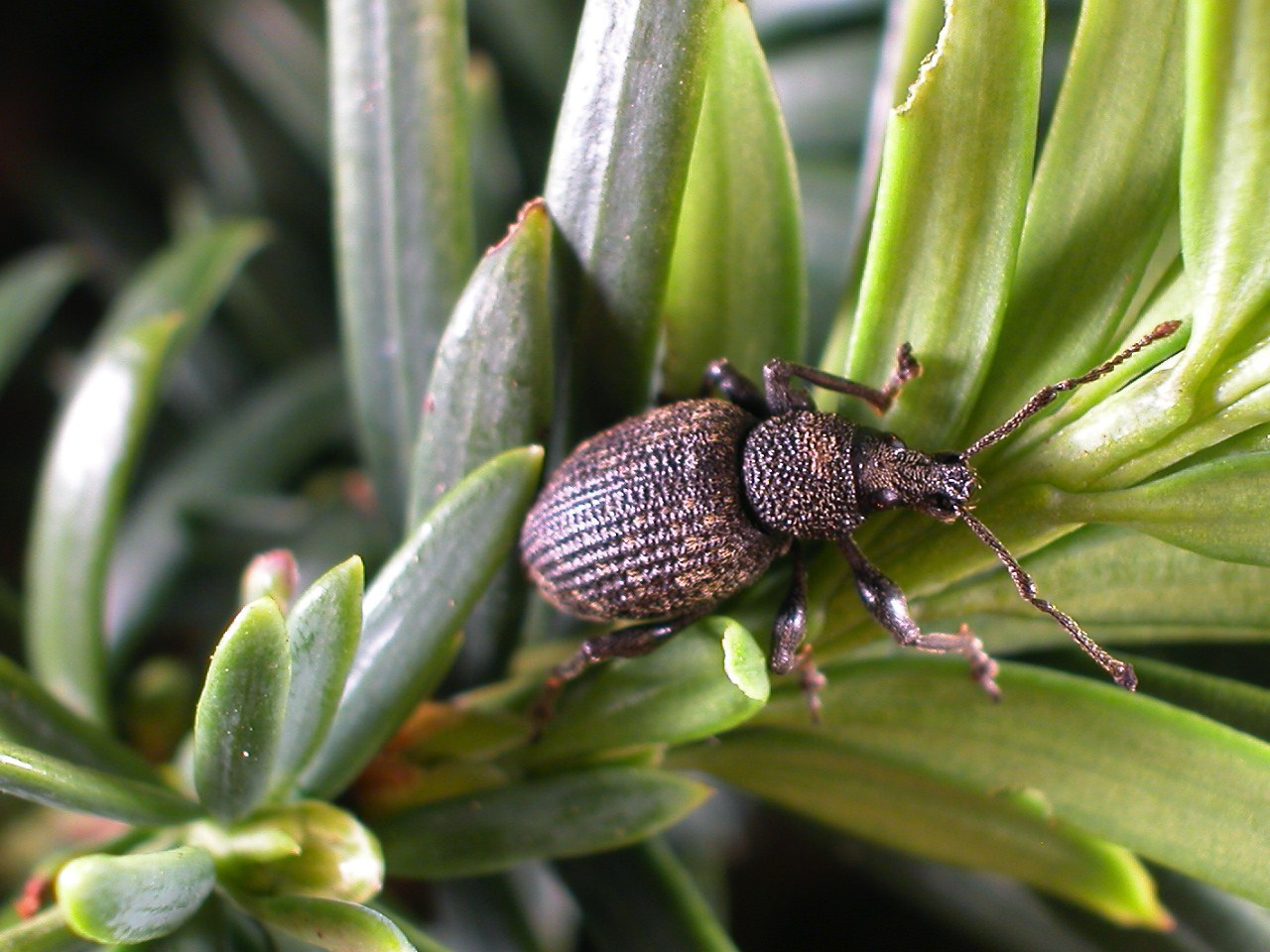
Key Visual Features
The black vine weevil is a medium-sized beetle, about 8-11 mm long, with a dull, matte black body rather than a glossy one. Close inspection reveals small patches of fine, short golden or yellowish hairs scattered across the wing covers, giving a subtly speckled texture rather than a solid uniform black. The wing covers are fused together, and like other true weevils, it has no functional hind wings, meaning it cannot fly. The snout is short and broad compared to some other weevils, and the antennae are elbowed and clubbed at the tip. The body is oval, with a somewhat rough, pitted texture, and the legs are relatively long, ending in claws suited for climbing plant stems.
Where and When You're Likely to See Them
Black vine weevils are found in gardens, nurseries, and greenhouses, particularly around broadleaf evergreen shrubs, ornamental plants, and various perennials. Because they are entirely nocturnal, adults are rarely seen during the day, when they hide in soil, mulch, or leaf litter near the base of host plants. After dark, especially on warm nights from late spring through summer, adults climb onto foliage to feed, leaving distinctive notched or scalloped edges along leaves, which can be a helpful clue to search nearby surfaces with a flashlight after sunset.
Similar-Looking Bugs
The black vine weevil can be confused with other dark-colored ground-dwelling weevils, but its combination of dull matte black color, small patches of golden speckling, and complete inability to fly helps distinguish it. It differs from ground beetles, which often share a dark coloring but move quickly, have visible strong mandibles, and lack an elongated snout. Its slow, deliberate crawling gait and nighttime foliage climbing, combined with a weevil snout, are useful behavioral confirmations alongside its appearance.
Quick ID Checklist
- Medium beetle, 8-11 mm long, dull matte black body
- Small patches of fine golden or yellowish hairs on the elytra
- Short, broad snout with elbowed, clubbed antennae
- Cannot fly due to fused wing covers and no functional hind wings
- Nocturnal, found on foliage of shrubs and ornamentals after dark
Frequently asked questions
Why do I only see black vine weevils at night?
They are strictly nocturnal, hiding in soil, mulch, or leaf litter during the day and climbing onto plant foliage to feed only after dark.
Can black vine weevils fly to reach my plants?
No, they cannot fly because their wing covers are fused and they lack functional hind wings, so they get around entirely by crawling.
What features help confirm a black vine weevil versus a ground beetle?
Look for the elongated weevil snout and elbowed antennae, along with a dull matte black color and small golden hair patches, which ground beetles lack.
What plants are black vine weevils typically found on?
They favor broadleaf evergreen shrubs, ornamental plants, and various perennials commonly grown in gardens, nurseries, and greenhouses.