
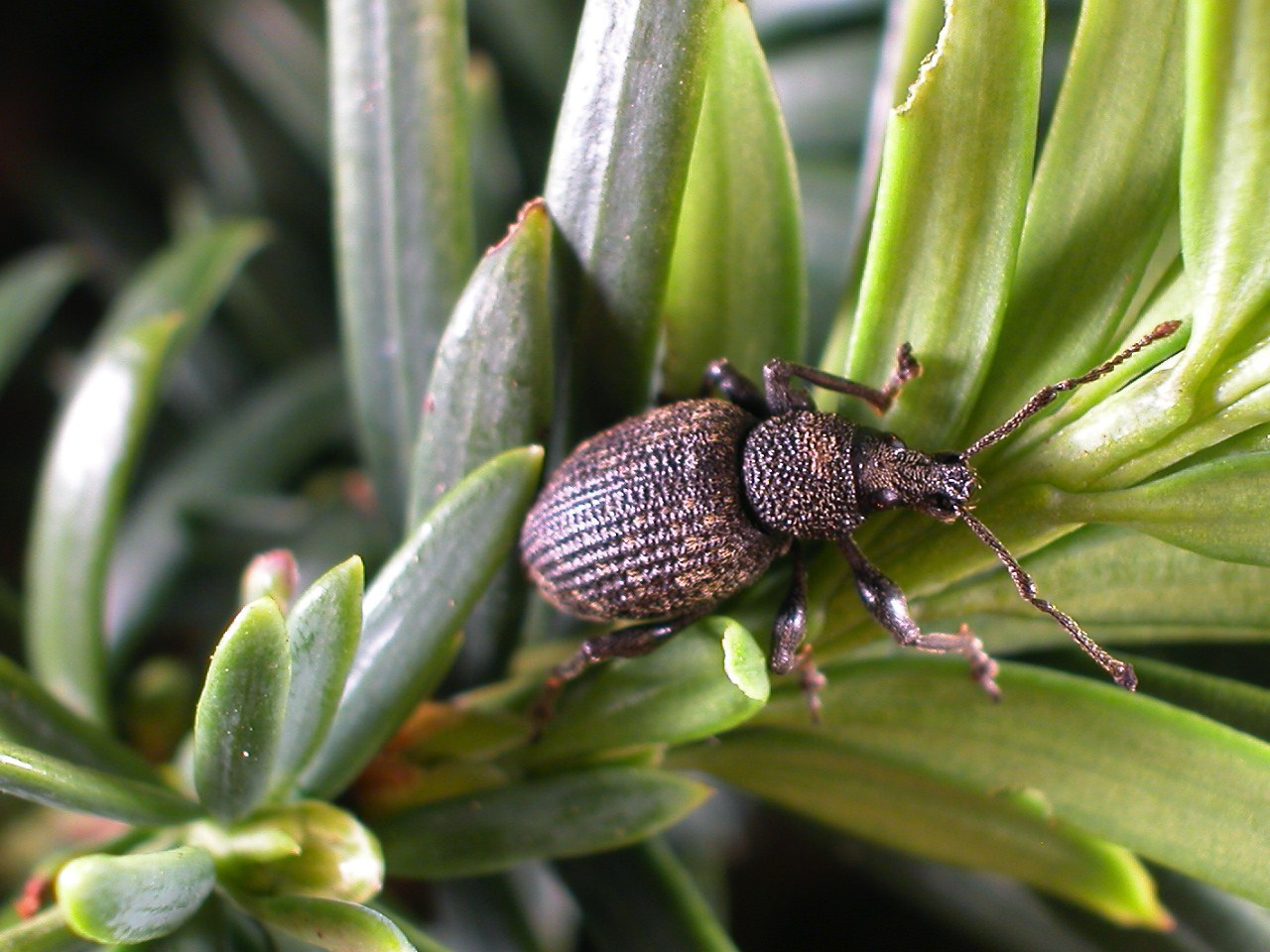
Black Vine Weevil
Otiorhynchus sulcatus
A flightless, all-black snout beetle notorious for notching the edges of leaves at night while its underground larvae feed on plant roots and crowns.
- Size
- 8–14 mm
- Habitat
- Gardens, nurseries, greenhouses, ornamental plantings
- Danger
- Harmless
Spotted a bug like this?
Identify any bug or insect from a photo, free.
Overview
The black vine weevil is a flightless beetle in the weevil family (Curculionidae), order Coleoptera, best known as a pest of ornamental shrubs, strawberries, and container-grown nursery stock. Adults in most populations are all female, reproducing by parthenogenesis without the need for males, which lets a single individual establish an infestation. It is active almost entirely at night, hiding by day in mulch, soil cracks, or under leaf litter.
Its larvae live below ground and chew on plant roots and crowns, while adults are foliage feeders that leave characteristic notches along leaf margins. This split lifestyle—root-feeding grub, leaf-feeding adult—means the insect can be present and damaging at two different life stages, in two different places on the plant, at different times of year.
Because it has been spread widely through the nursery trade, the black vine weevil now occurs across much of the Northern Hemisphere and in some temperate regions of the Southern Hemisphere, making it one of the more cosmopolitan weevils encountered in home gardens and commercial greenhouses alike.
How to Identify
- Adult: 8–14 mm long, dull black to charcoal-gray body covered in fine, short golden-brown hairs and small scale-like flecks on the wing covers, giving a slightly mottled look.
- A short, broad snout typical of weevils, with elbowed antennae tipped in small clubs.
- Elytra are fused and roughened with rows of pits; the hind wings underneath are non-functional, so this weevil cannot fly.
- Legs are relatively long and spiny, useful for climbing plant stems at night.
- Lookalikes: other Otiorhynchus weevils look nearly identical and are best told apart by host plant and range; the strawberry root weevil is smaller and more oval.
Habitat & Range
Found in gardens, nurseries, greenhouses, and landscaped beds wherever host shrubs such as yew, rhododendron, azalea, hemlock, and strawberry are grown. Adults hide during the day in soil, mulch, or leaf litter near the base of host plants and climb up to feed after dark, especially in spring and summer. Larvae remain in the soil profile close to plant roots and crowns year-round.
Behavior & Diet
Adults are nocturnal leaf-notchers, chewing crescent-shaped notches from leaf margins without eating through major veins; being flightless, they disperse mainly by walking or through the movement of infested nursery stock and soil. Larvae are subterranean and feed on fine roots, then progress to girdling larger roots and crowns as they grow, which is the more consequential stage of the insect's life cycle for the plant. Populations are typically all-female, reproducing without mating. The species overwinters as larvae in the soil.
Life Cycle
Complete metamorphosis (egg, larva, pupa, adult). Adults emerge in late spring to early summer, feed for several weeks, then lay eggs in the soil near host plants; a single female can lay hundreds of eggs over her lifetime. Eggs hatch into small, legless, C-shaped white grubs with tan heads that feed on roots through summer and fall, then move deeper into the soil to overwinter as larvae. Pupation occurs in the soil the following spring, with new adults emerging in late spring—one generation per year in most climates.
Frequently asked questions
Why do my shrub leaves have notches cut into the edges but no insect is ever visible?
Black vine weevil adults feed only at night and hide in soil or mulch by day, so notched leaf margins with no daytime feeder present are a classic sign of this species.
Can black vine weevils fly?
No, their wing covers are fused and the hind wings are non-functional, so they can only walk or be moved by humans, which is why they spread slowly on their own.
Are the leaf notches or the root feeding worse for the plant?
The larval root and crown feeding underground is generally considered the more consequential stage, since notched leaves are mostly a cosmetic sign of adult activity.
What plants are most associated with this weevil?
Yew, rhododendron, azalea, hemlock, euonymus, and strawberry are among its most frequently reported hosts.
Black Vine Weevil guides
In-depth guides for identifying, understanding, and living alongside Black Vine Weevil.
Other bugs you may enjoy
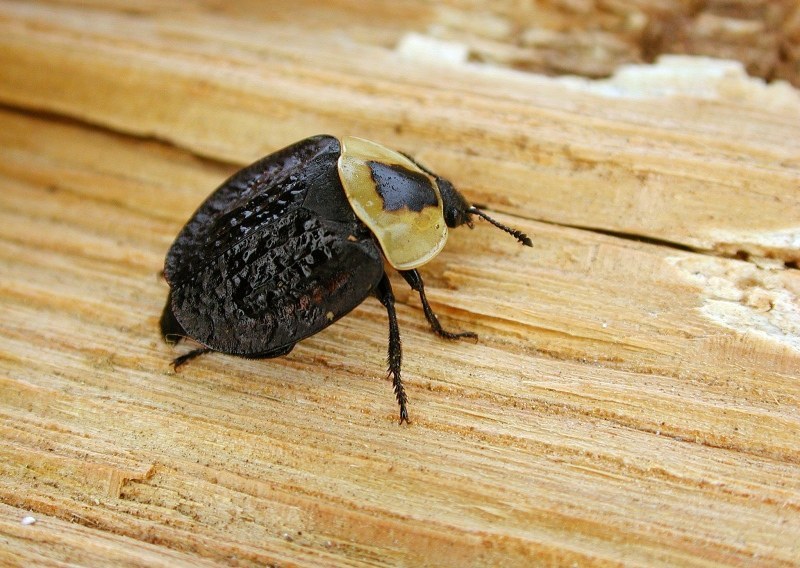
American Carrion Beetle
Forests, fields, and roadsides across North America, near decaying animal carcasses
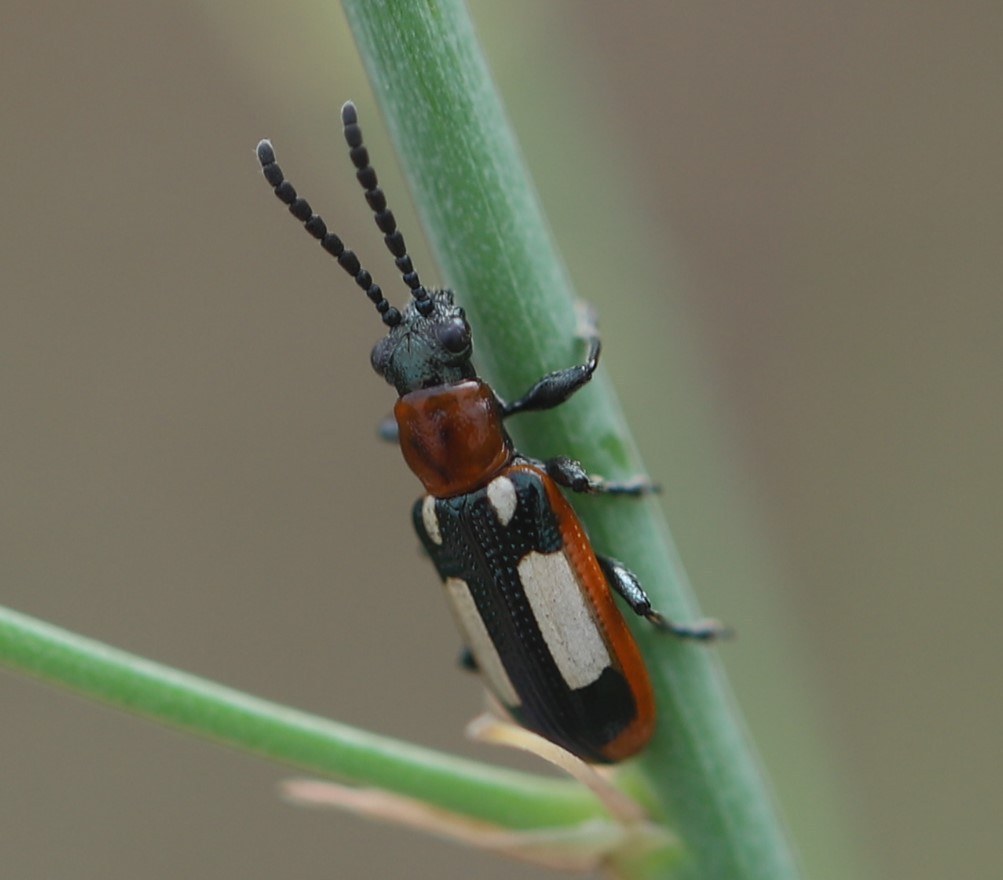
Asparagus Beetle
Asparagus patches, gardens, and farm fields
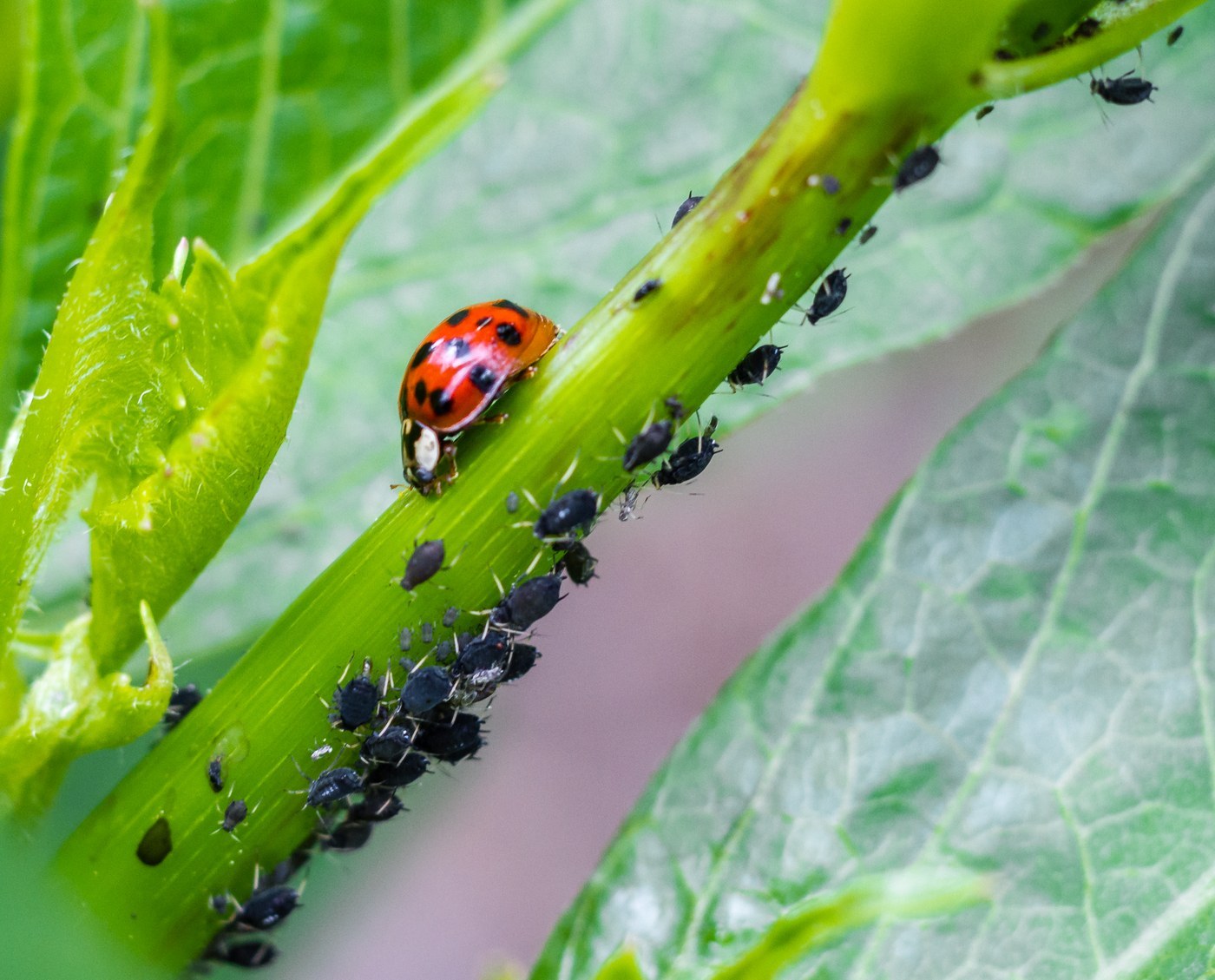
Asian Lady Beetle
Gardens, crop fields, woodlands, buildings
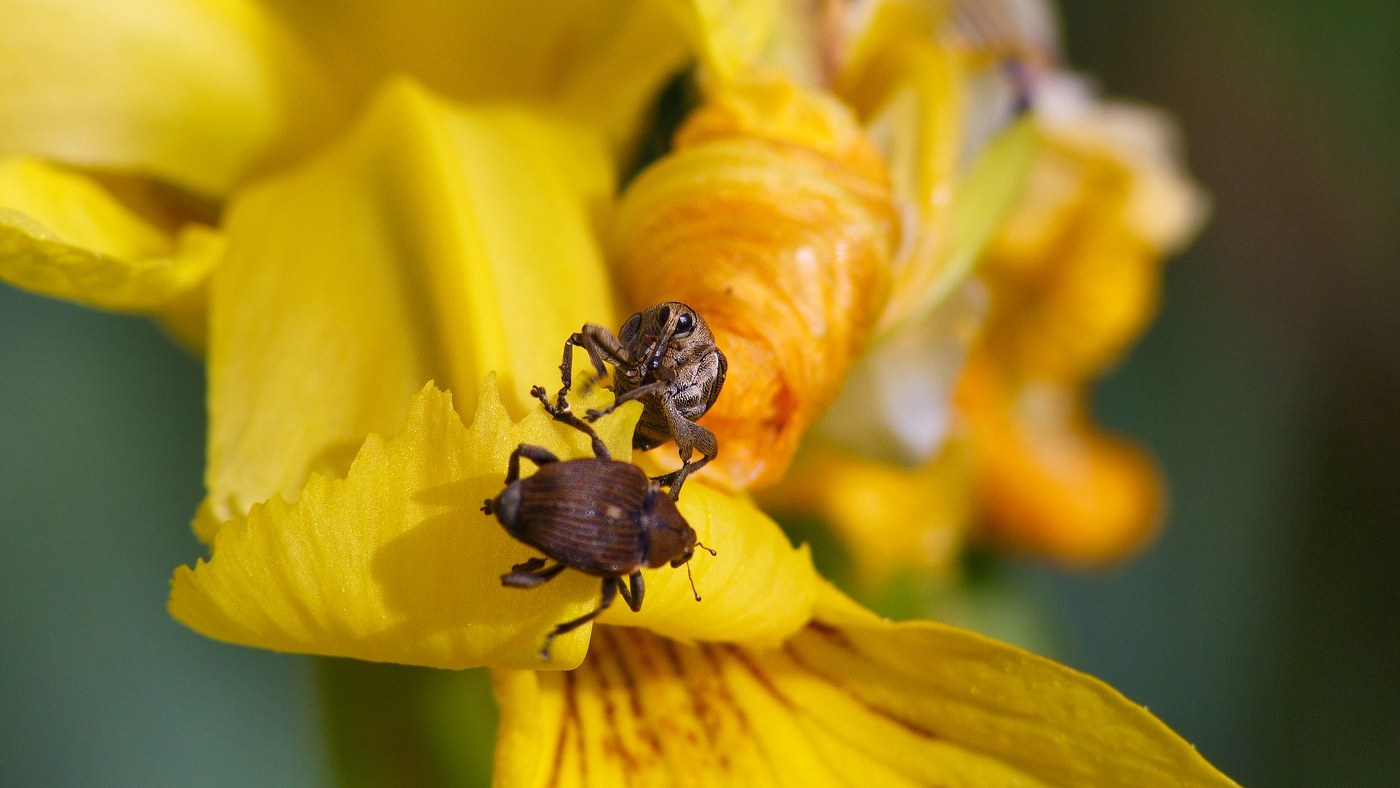
Acorn Weevil
Oak woodlands and forests, on and beneath oak trees
Wireworm
Soil of grasslands, gardens, and cultivated fields worldwide
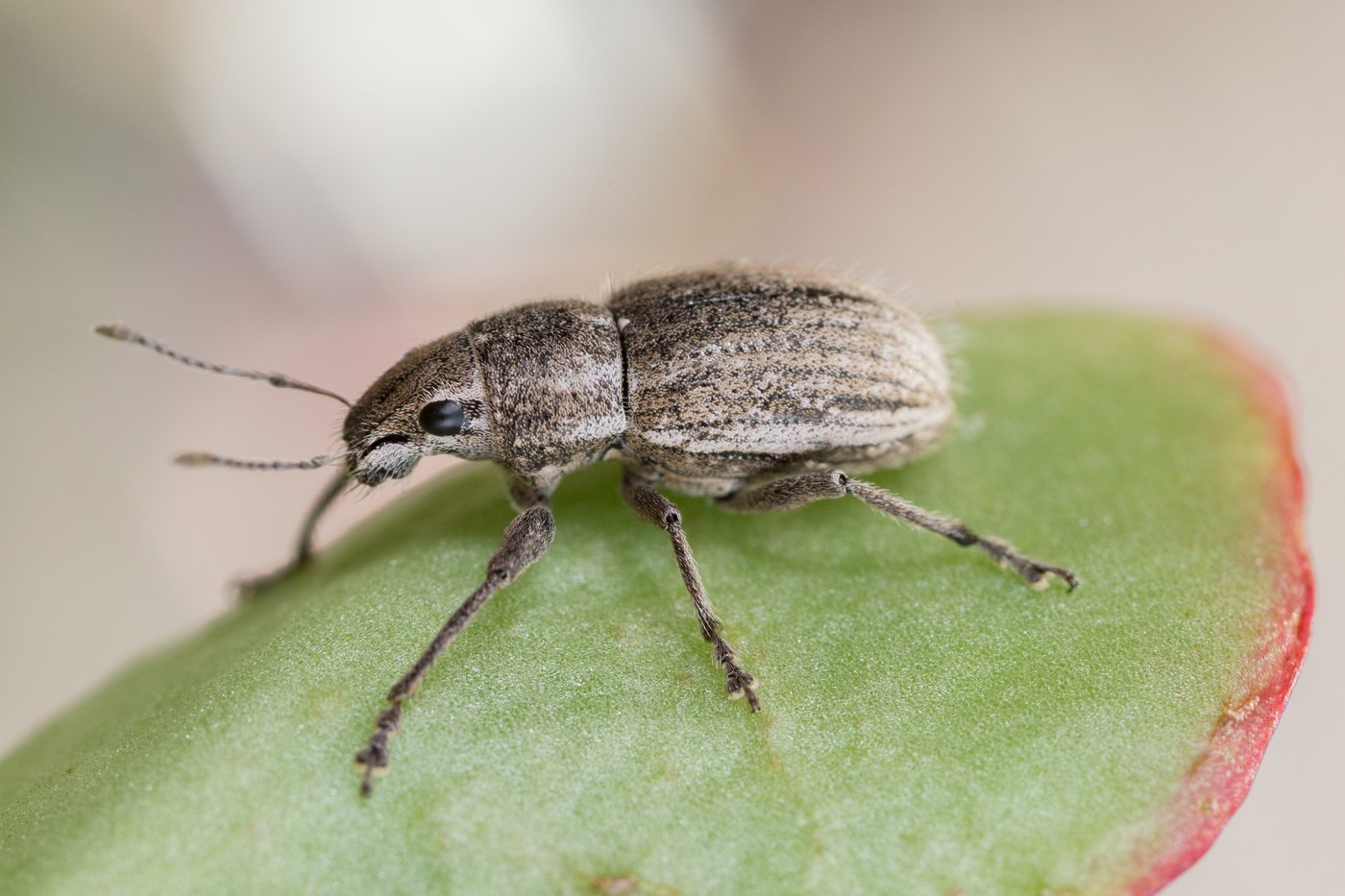
Whitefringed Beetle
Pastures, row crops, lawns, disturbed soils
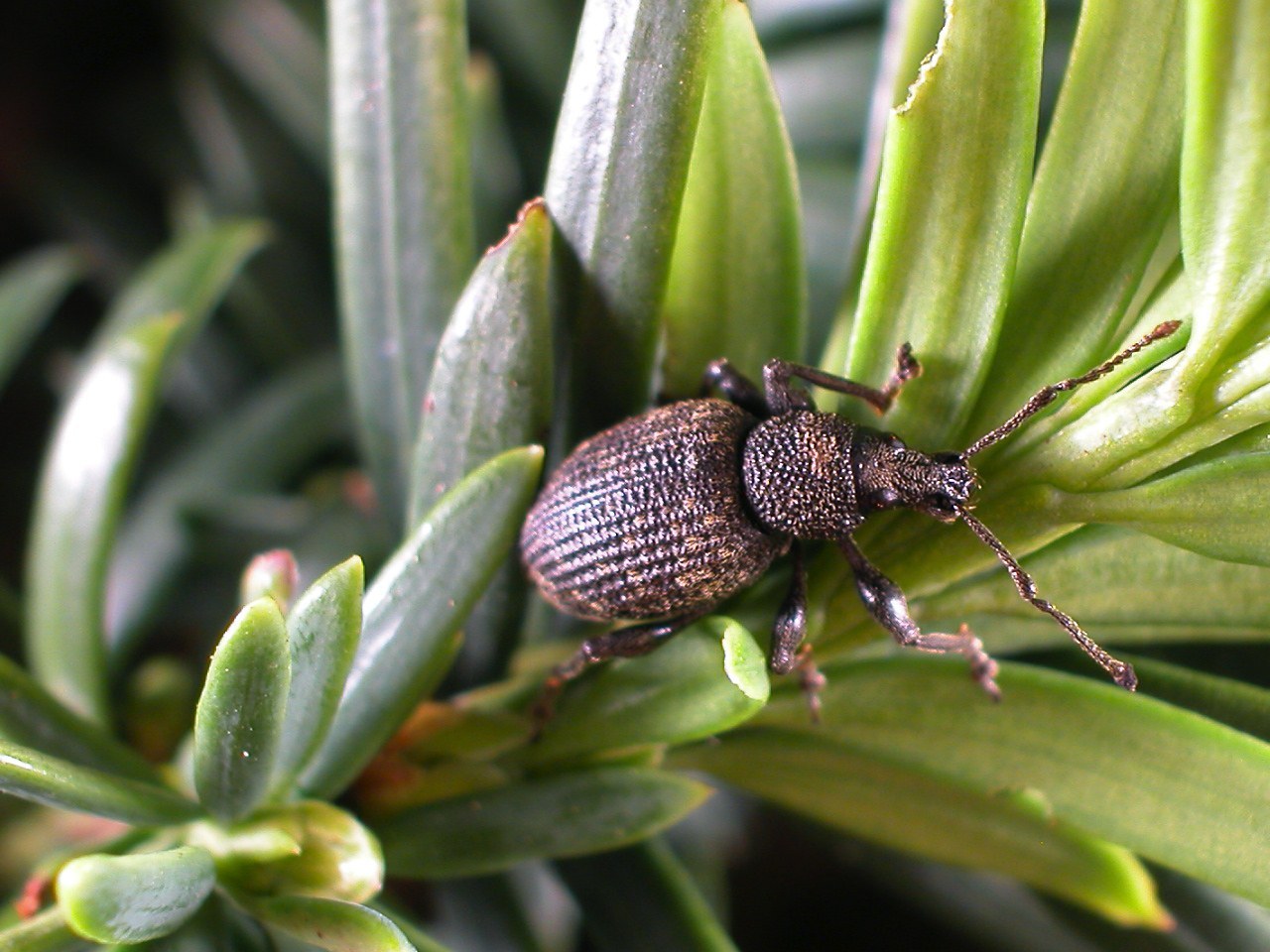
Vine Weevil
Gardens, nurseries, greenhouses, and container plantings
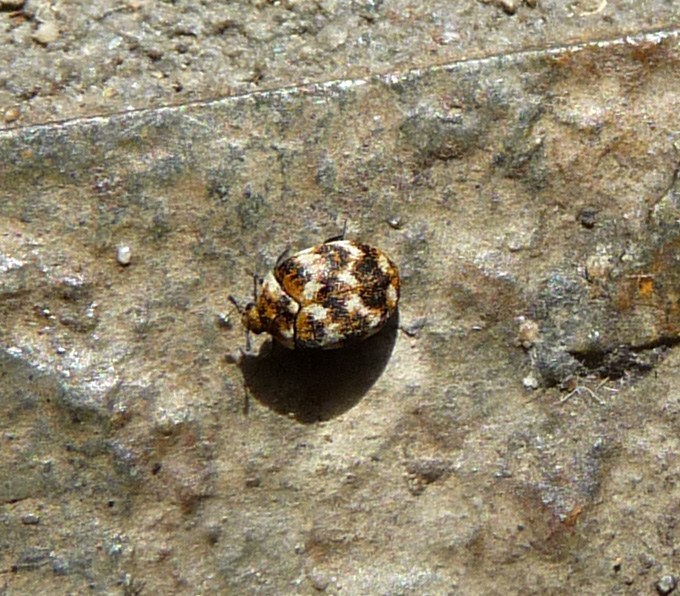
Varied Carpet Beetle
Homes, nests of birds and mammals, and flowers outdoors
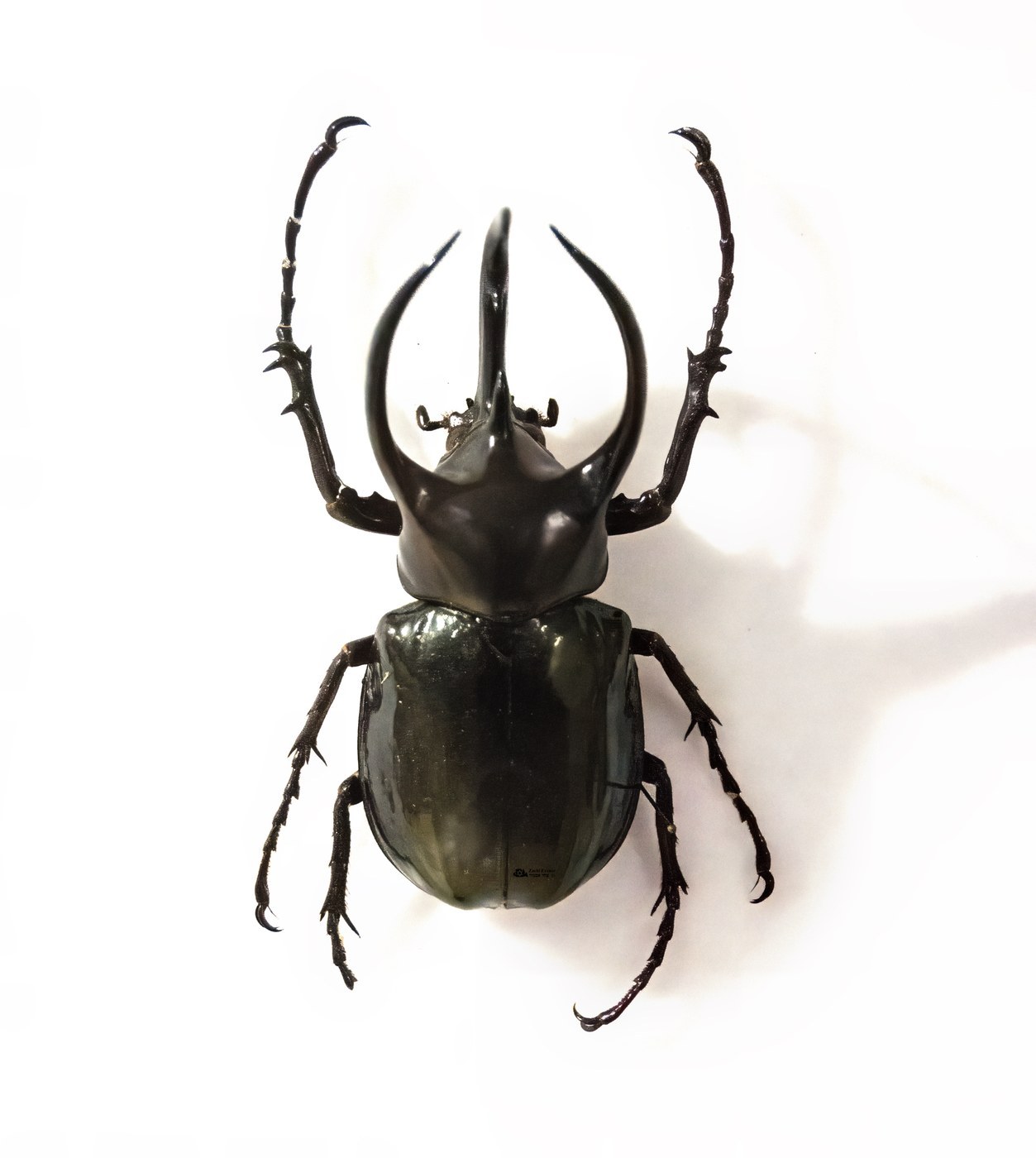
Atlas Beetle
Tropical forests of Southeast Asia
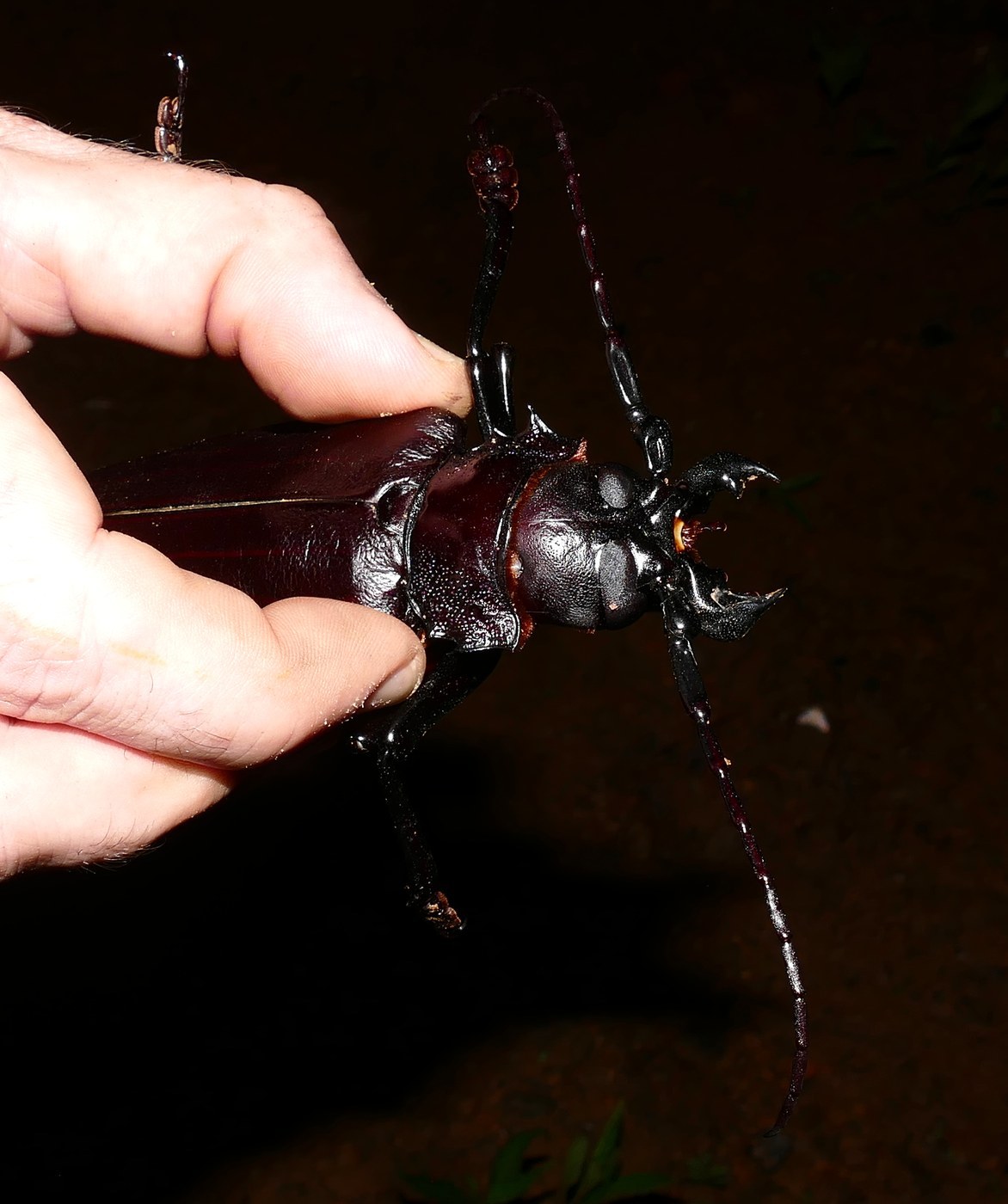
Titan Beetle
Amazon rainforest of South America
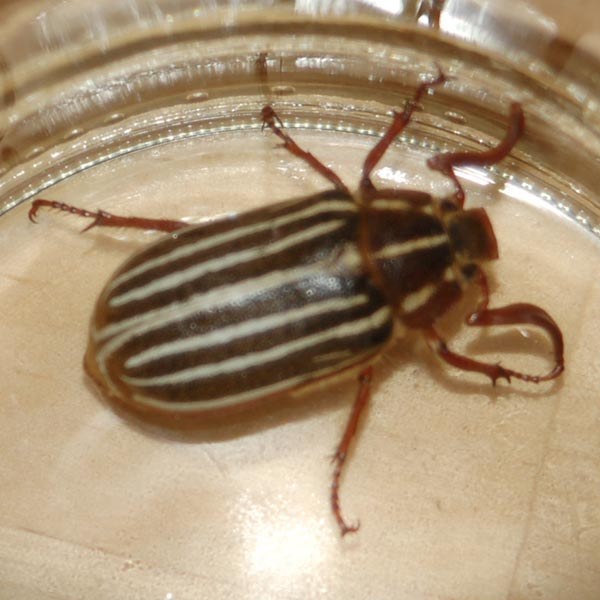
Ten-lined June Beetle
Sandy soils, pine forests, and orchards of western North America
Squash Beetle
Vegetable gardens and fields growing squash, pumpkin, and other cucurbits