Blacklegged Tick Identification Guide
Discover how to identify the blacklegged tick by its small size, dark legs, and teardrop-shaped body.
Read the full Blacklegged Tick encyclopedia entry →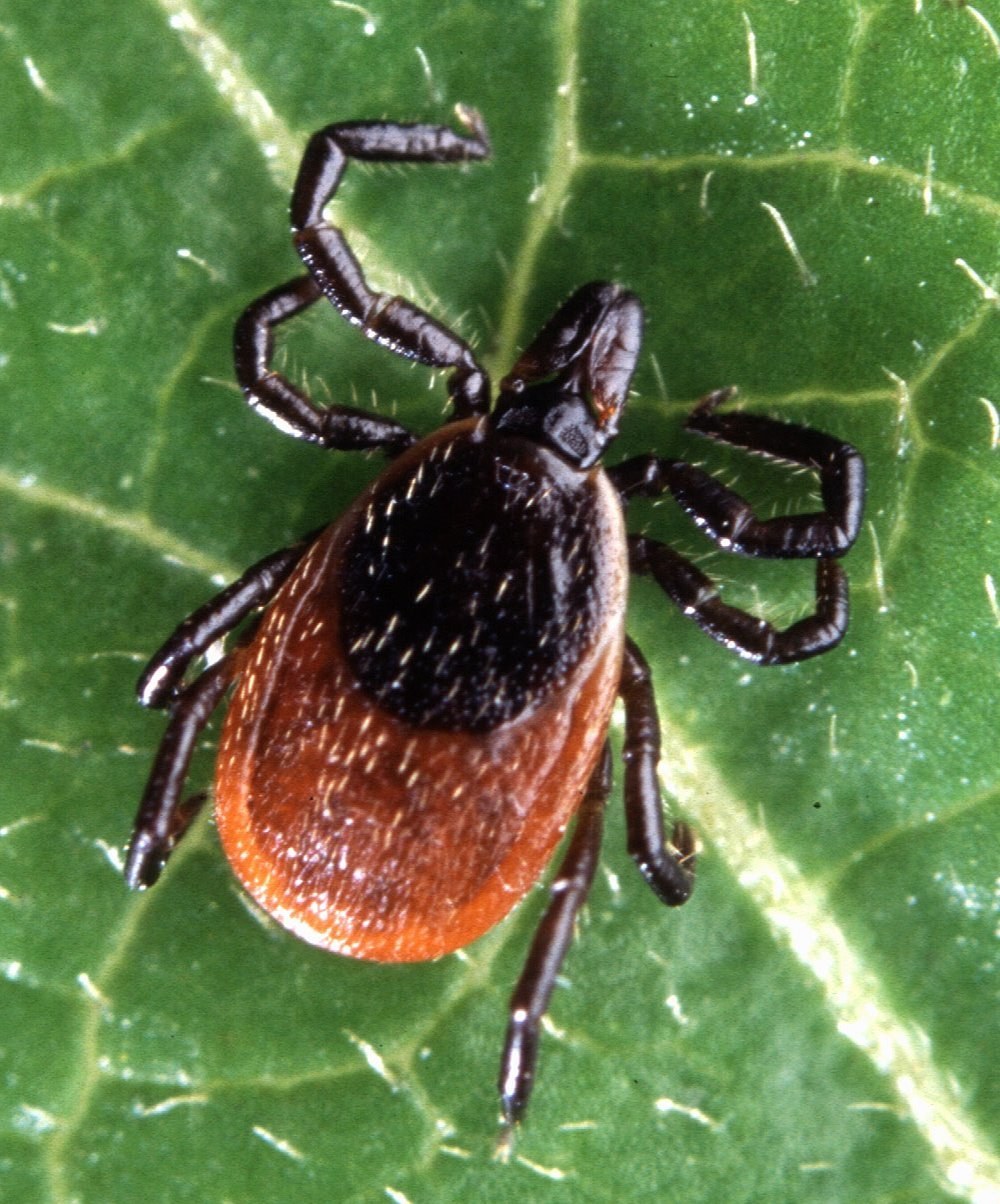
Key Visual Features
The blacklegged tick (Ixodes scapularis), sometimes called the deer tick, is notably smaller and plainer than many other hard ticks.
- Size: Adults are quite small, roughly 1/8 inch (3-5 mm) unfed; nymphs are even tinier, about the size of a poppy seed.
- Color: Reddish-brown to orange-brown abdomen with noticeably dark, almost black legs — hence the common name.
- Body shape: A smooth, teardrop-shaped or oval body that lacks the bold ornamentation seen in some other tick species.
- Legs: Eight legs in adults (six in larvae), all dark brown to black and thin relative to body size.
- Markings: Females have a small, unmarked dark shield near the head with the rest of the abdomen a plain reddish color; males are uniformly dark brown to blackish over the entire back.
- Mouthparts: A narrow, elongated capitulum at the front, longer in proportion than in some other tick species.
Where and When You'd See It
Blacklegged ticks favor wooded and brushy areas, especially leaf litter, low shrubs, and the transition zones between forest and open land. They quest on vegetation close to the ground, usually less than knee height. Activity patterns are seasonal: adults are commonly encountered in cooler months (fall through spring) while nymphs are more frequently seen in late spring and summer, giving this species a longer active season than many other ticks in the same range.
Similar-Looking Bugs
- American dog tick: Larger overall with bold silvery-white marbled markings; blacklegged ticks are smaller and lack this ornate pattern.
- Rocky Mountain wood tick: Also larger and patterned; found in different regional ranges and habitats than the blacklegged tick.
- Soft ticks: Have a rounded, leathery, unplated body without a hard shield, quite different from the smooth teardrop shape of the blacklegged tick.
Quick ID Checklist
- Small body size, especially in nymph stage (poppy-seed sized)
- Reddish-brown body with dark, almost black legs
- Smooth teardrop shape without ornate markings
- Found questing low in leaf litter and shrubs in wooded edges
- Most noticeable in cooler months as adults, warmer months as nymphs
Frequently asked questions
How small is a blacklegged tick compared to other ticks?
It is one of the smallest common hard ticks — adults are about the size of a sesame seed, and nymphs can be as small as a poppy seed, making them easy to overlook.
What color are the legs on a blacklegged tick?
The legs are distinctly dark brown to black, contrasting with the lighter reddish-brown abdomen, which is a key feature behind the common name.
Does the blacklegged tick have any ornate markings like the American dog tick?
No, its body is smooth and largely unmarked, lacking the bold silvery mottling found on species like the American dog tick or Rocky Mountain wood tick.
In what habitat would you most likely spot one?
Wooded areas with leaf litter and low shrubby vegetation, especially along the edges where forest meets open ground, are the typical habitat for questing blacklegged ticks.
Blacklegged Tick identified by the community
Recent Blacklegged Tick finds identified with Bug Identifier.