
Blue Dasher Dragonfly Identification Guide
A small, chunky pond dragonfly whose mature males turn a powdery sky-blue with a white-tipped tail and green eyes.
Read the full Blue Dasher Dragonfly encyclopedia entry →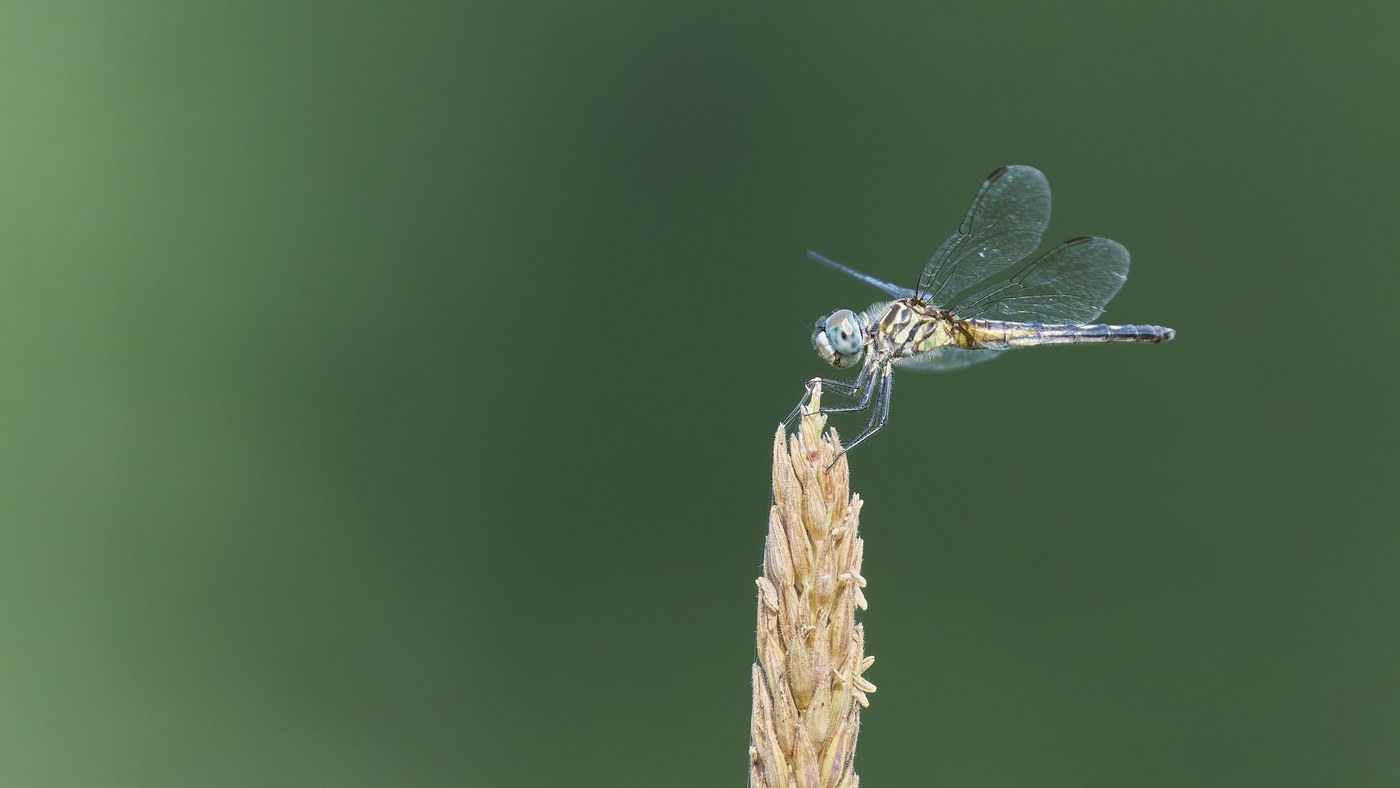
Key Visual Features
- Size: Small and stocky for a skimmer, with a body length of about 1 to 1.3 inches (25–32 mm).
- Color: Mature males develop a pale, powdery blue-gray abdomen (called pruinescence) that contrasts with a whitish tip at the very end of the tail. Females and young males are brown and yellow with pale side stripes on the thorax instead of blue.
- Eyes: Large eyes that meet at the top of the head, typically bright green in mature adults.
- Wings: Clear wings with a dark patch (stigma) near each wingtip; males often hold their wings forward and slightly down in a characteristic "obelisk" posture that helps them regulate body temperature.
- Body shape: Thick-bodied and short compared with darners, with a relatively short, blunt abdomen.
Where and When You'll See It
Look for this species around still or slow-moving fresh water — ponds, lakes, marshes, and slow ditches — almost anywhere in North America during the warm months, from late spring through early fall. Males frequently perch on twigs, reeds, or the tips of low vegetation right at the water's edge, darting out to chase intruders and returning to the same perch, which makes them one of the easier dragonflies to watch and photograph.
Similar-Looking Species
- Eastern Pondhawk: Also has a blue male form, but the Eastern Pondhawk is larger, more slender, and lacks the white tail tip; its face and legs also differ in color pattern.
- Slaty Skimmer: Larger and a darker, more uniform slate-blue with no white tail tip and no green eyes.
- Great Blue Skimmer: Bigger overall with a longer abdomen and lacks the short, stocky build of the Blue Dasher.
Quick ID Checklist
- Small, stocky dragonfly under 1.5 inches long
- Powdery blue body in mature males with a distinctive whitish tail tip
- Bright green eyes meeting at the top of the head
- Perches on low vegetation at pond and lake edges, often with wings angled downward
- Females/juveniles show brown-and-yellow striped patterning instead of blue
Frequently asked questions
How can I tell a male Blue Dasher from a female?
Mature males are powdery blue with a white-tipped tail, while females and immature males are brown and yellow with pale stripes along the sides of the thorax.
What habitat is most likely to have Blue Dashers?
Still or slow freshwater such as ponds, lakes, and marshes with plenty of emergent vegetation for perching.
Why does it hold its wings tilted downward?
This 'obelisk' posture helps the dragonfly manage its body temperature by adjusting how much sun hits its body.
What time of year are Blue Dashers active?
They are typically seen from late spring through early fall across much of their range, with peak activity in summer.