
Blue-eyed Darner Identification Guide
A fast-flying western darner named for its vivid blue eyes, with a mottled blue-and-black abdomen and brown-striped thorax.
Read the full Blue-eyed Darner encyclopedia entry →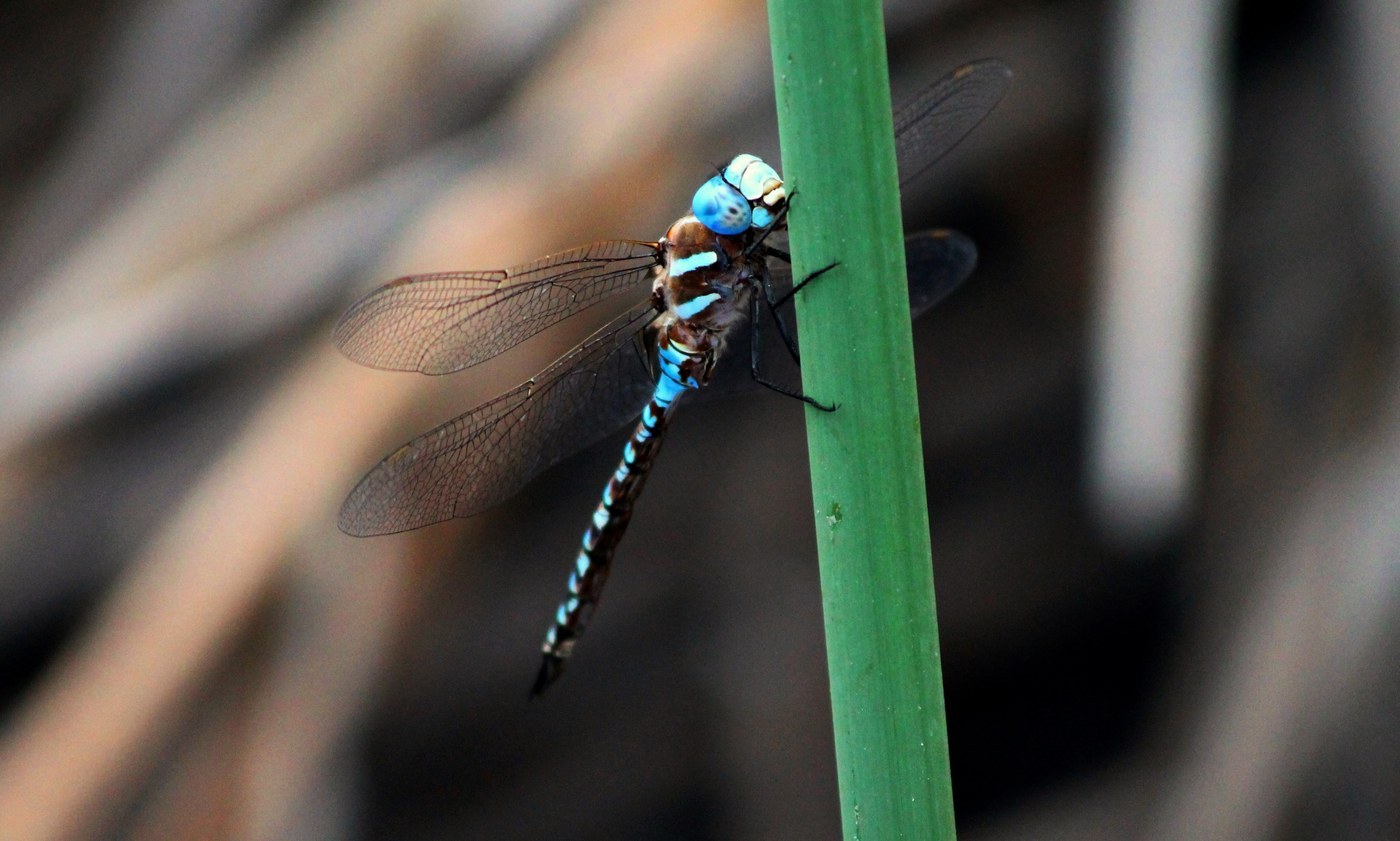
Key Visual Features
- Size: Large dragonfly, about 2.5 to 2.8 inches (64–71 mm) long.
- Eyes: Bright blue eyes that meet broadly on top of the head, giving the species its name; the eyes are especially vivid in mature individuals.
- Color: The thorax is brown with two pale blue or greenish stripes on each side, while the abdomen shows a mottled pattern of blue spots separated by black, rather than a solid color.
- Wings: Clear and long, held out flat to the sides when perched or, more often, seen in constant flight.
- Body shape: Classic darner build — long, narrow abdomen with a distinct waist behind the thorax, built for extended, fast flight.
Where and When You'll See It
Blue-eyed Darners are found across the western United States and into Canada and Mexico, patrolling ponds, lakes, slow streams, and even irrigation ditches. They are strong, fast fliers that often forage well away from water over fields and open areas, especially in the evening. Active from late spring through fall, they are among the darners most likely to be seen flying at dusk, when they hawk for small flying insects.
Similar-Looking Species
- Common Green Darner: Larger, with a solid green thorax rather than brown-and-blue striped, and a more uniformly colored abdomen.
- Paddle-tailed Darner: Similar mottled abdomen pattern, but differs in the shape of the male's terminal appendages and thoracic stripe details, best confirmed with a close look or photo.
- California Darner: Much smaller and typically seen earlier in the season, without the same bold blue eye color.
Quick ID Checklist
- Vivid blue eyes meeting on top of the head
- Brown thorax with pale blue/green side stripes
- Mottled blue-and-black abdomen pattern (not solid blue)
- Large size with a long, narrow abdomen
- Fast, sustained flight, often away from water and active near dusk
Frequently asked questions
What makes the eyes of this species stand out?
Mature Blue-eyed Darners have strikingly vivid blue eyes that meet broadly across the top of the head, which is the source of the common name.
How does its abdomen differ from a Common Green Darner's?
The Blue-eyed Darner shows a mottled pattern of blue spots broken up by black, while the Common Green Darner has a more solid, unbroken blue abdomen with a plain green thorax.
When is the best time to see this dragonfly hunting?
It is often most active foraging in the evening, sometimes well after other dragonflies have settled down for the day.
Does it stay close to water?
Not always — Blue-eyed Darners frequently range over open fields and dry areas away from water while hunting.