
Blue-fronted Dancer Identification Guide
A slender pond damselfly with a bright blue face and thorax and a mostly blue abdomen tipped in black.
Read the full Blue-fronted Dancer encyclopedia entry →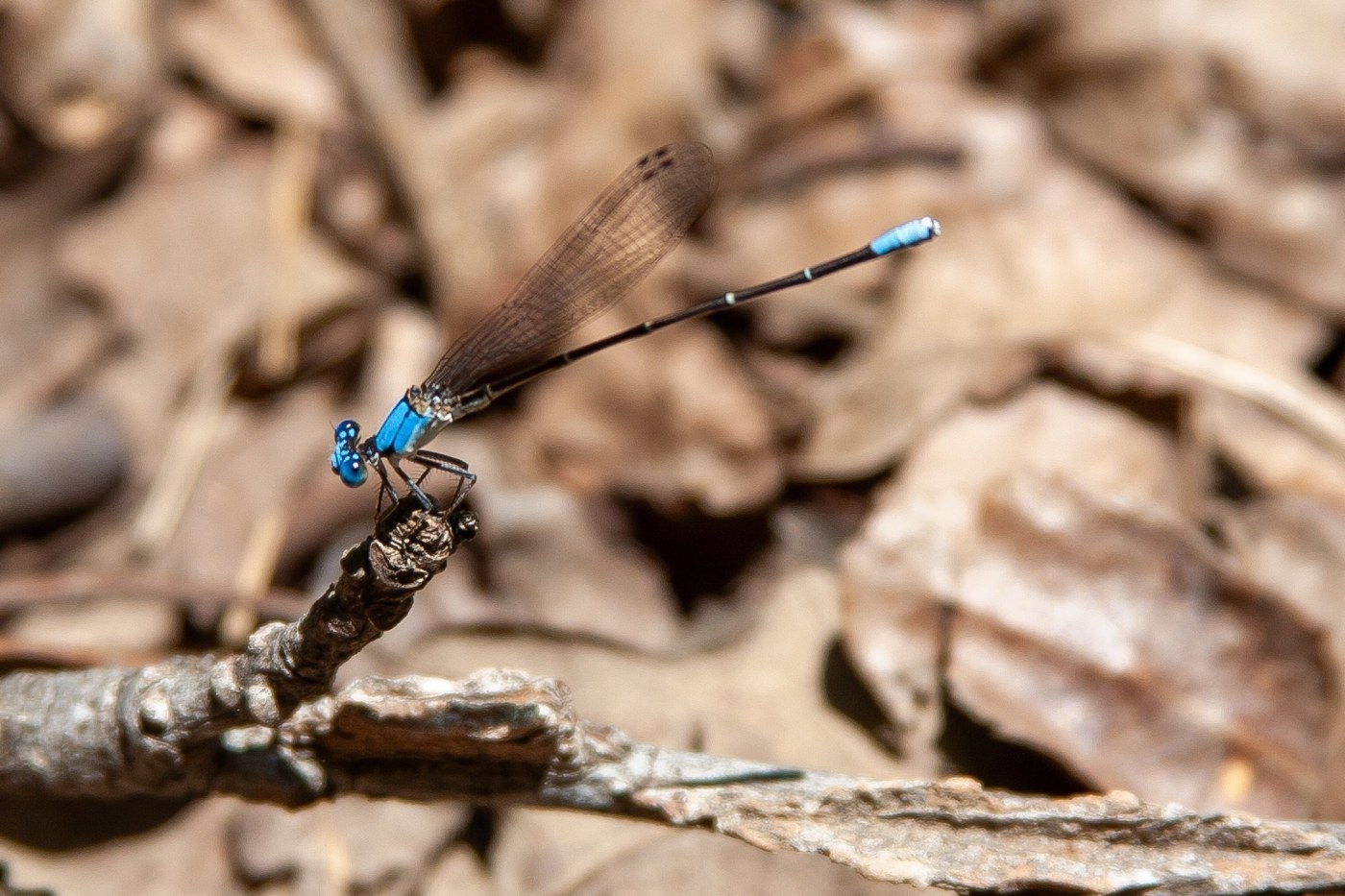
Key Visual Features
The Blue-fronted Dancer is a small pond damselfly, about 1.2 to 1.5 inches (30-38 mm) long, in the "dancer" group known for their bouncy, erratic flight.
- Body color: Mature males have a bright blue face (frons), blue thorax marked with black stripes, and a mostly blue abdomen with black rings at the joints and solid black coloring on the last two or three segments near the tip.
- Body shape: Slender, thin abdomen typical of pond damselflies, with wings held closed together over the back at rest.
- Eyes: Blue in mature males, often paler or brownish in females and immatures.
- Female coloring: Females and immature males are generally tan to light brown rather than blue, with a more subdued striped pattern on the thorax.
- Legs: Pale with fine dark stripes, thin and suited to perching on low vegetation.
Where and When You'll See It
This species favors ponds, lakes, and slow-moving streams with open, sandy or muddy banks and at least some emergent or shoreline vegetation. Adults are commonly seen from late spring through summer, perching low on rocks, bare ground, or short plants near the water, and exhibit the characteristic "dancing," erratic flight pattern typical of the genus when disturbed.
Similar-Looking Species
- Familiar Bluet: Also blue and black, but bluets have a more slender build overall and different terminal abdominal markings; close inspection of the abdomen tip pattern is often needed.
- Other dancer species: Very similar in general shape and color scheme; the specific extent of black on the last abdominal segments and thorax stripe pattern are the most reliable ways to separate dancers from one another.
- Azure Bluet: Smaller-bodied with a different, more isolated black spot pattern on the upper abdomen compared to the more continuous black tip of the Blue-fronted Dancer.
Quick ID Checklist
- Bright blue face and thorax in mature males
- Mostly blue abdomen with black rings and a black tip
- Bouncy, erratic "dancing" flight when disturbed
- Found at pond and stream edges with open, sandy or muddy banks
- Females and immatures are tan to light brown rather than blue
Frequently asked questions
What does the name 'Blue-fronted' refer to?
It refers to the bright blue face, or frons, seen in mature males, which is a key identifying feature at close range.
How can I tell a Blue-fronted Dancer from a bluet?
Both groups are blue and black damselflies, but dancers tend to have a slightly different body proportion and a more solidly black abdomen tip; confirming often requires a close look at the terminal segments.
What kind of flight behavior helps identify a dancer?
Dancers, including this species, have a characteristic bouncy, erratic flight pattern when flushed, which is where the group's common name comes from.
What habitat should I check for this species?
Open, sandy or muddy banks of ponds, lakes, and slow streams with some shoreline vegetation are the most reliable places to look.