Blue Morpho Butterfly Identification Guide
Learn to recognize the dazzling iridescent blue wings and quick, flashing flight of the blue morpho butterfly.
Read the full Blue Morpho Butterfly encyclopedia entry →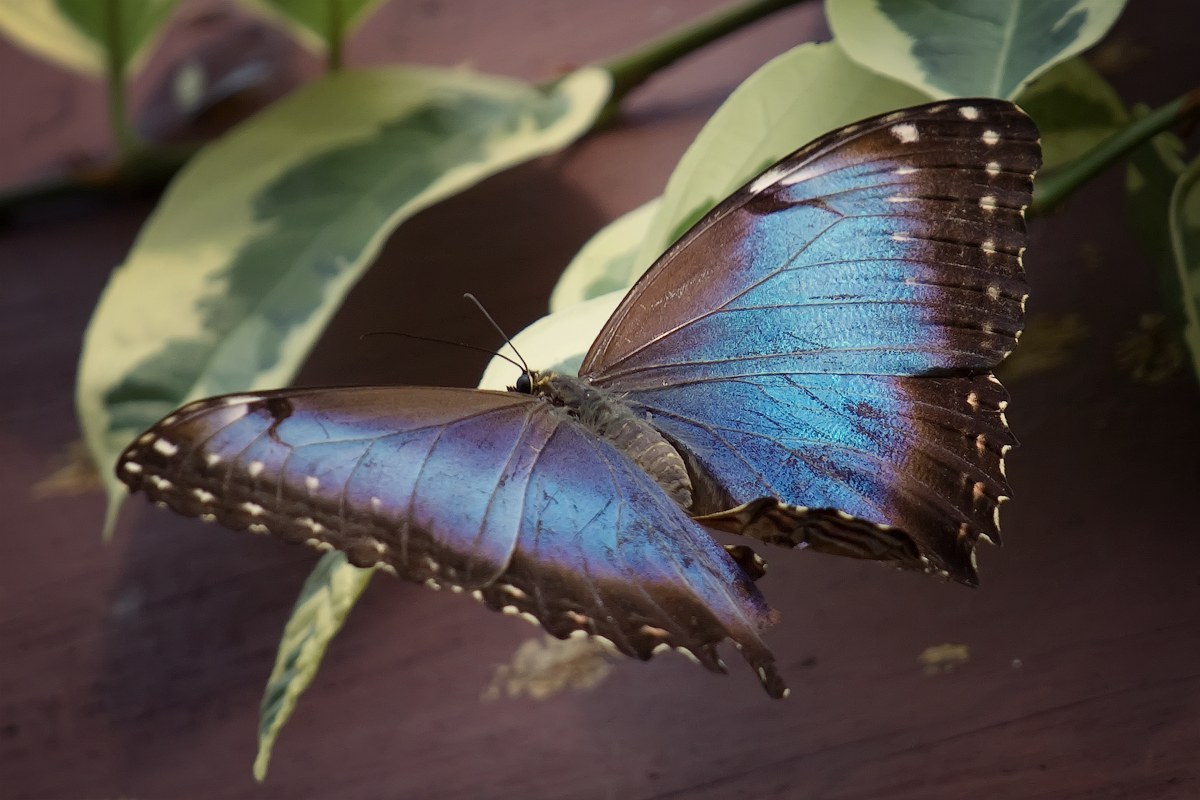
Key Visual Features
- Wingspan typically 5-8 inches (12.5-20 cm), among the largest butterflies in its range.
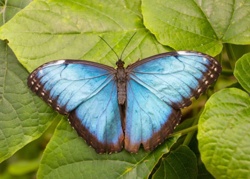
- Upper wing surfaces are brilliant, iridescent blue that shifts and flashes as light hits the scales at different angles.
- Wing undersides are a dull brown with prominent eyespots, providing camouflage when the wings are folded at rest.
- Body is relatively slender and dark brown to black, with the wings dominating the visual impression.
- Antennae are thin, club-tipped, and dark, typical of butterflies.
- Wing shape is broad and rounded, with a somewhat scalloped trailing edge.
Where and When You'd See It
- Found in tropical and subtropical forests of Central and South America, especially along forest edges, clearings, and near streams.
- Most active during the day, particularly in bright, sunny conditions when the iridescent blue is most visible in flight.
- Adults are often seen flying low and erratically along forest paths or riverbanks rather than high in the canopy.
- Peak sightings occur in warm, humid months, though timing varies by specific region and elevation.
Similar-Looking Species
- Other blue-toned butterflies exist, but true morphos are distinguished by their large size and the way the blue color flashes on and off in flight due to structural (not pigment-based) coloration.
- When perched with wings closed, morphos can be mistaken for dead-leaf-mimicking butterflies because of the brown, eyespot-covered underside — the hidden blue upperside is the giveaway when they open their wings or take flight.
- Smaller blue butterflies (such as certain hairstreaks) lack the large wingspan and the strong underside/upperside color contrast of a morpho.
Quick ID Checklist
- Large wingspan (5-8 inches) far exceeding most local butterflies.
- Brilliant, flashing iridescent blue visible only from the upper wing surface in flight.
- Brown underside with eyespots when wings are closed at rest.
- Slow, floating, erratic flight pattern low over forest trails or water.
- Found in Central/South American forest habitats, not open temperate meadows.
Behavior Notes
- Adults tend to fly a repeated route or "trapline" between patches of fallen fruit and other feeding spots, so a single individual is sometimes seen passing the same location several times.
- When landing, morphos typically fold their wings upright over the back, immediately hiding the blue and revealing only the camouflaged brown underside.
- The flash-and-disappear effect as the butterfly flies is a strong, distinctive behavioral cue on its own, even before other features can be examined closely.
Frequently asked questions
Why does the blue morpho's color seem to flash on and off?
The blue is produced by microscopic scale structures that reflect light at specific angles rather than pigment, so the color appears brilliant when wings catch the light and disappears when the brown underside shows or the angle changes.
How can I tell a blue morpho from other blue butterflies?
Size is the biggest clue: blue morphos have a wingspan of several inches, far larger than most other blue-colored butterflies, combined with the strong contrast between the iridescent blue upperside and dull brown, eyespotted underside.
What time of day is best for spotting one?
Daytime, especially sunny periods, since the iridescent blue is most visible in direct light and the butterflies are most active flying along forest edges and trails during these hours.
Do all blue morphos look identical?
There are multiple morpho species with varying shades of blue and wing patterns, but they share the large size, iridescent flash in flight, and brown eyespotted underside as common identification traits.
Blue Morpho Butterfly identified by the community
Recent Blue Morpho Butterfly finds identified with Bug Identifier.