
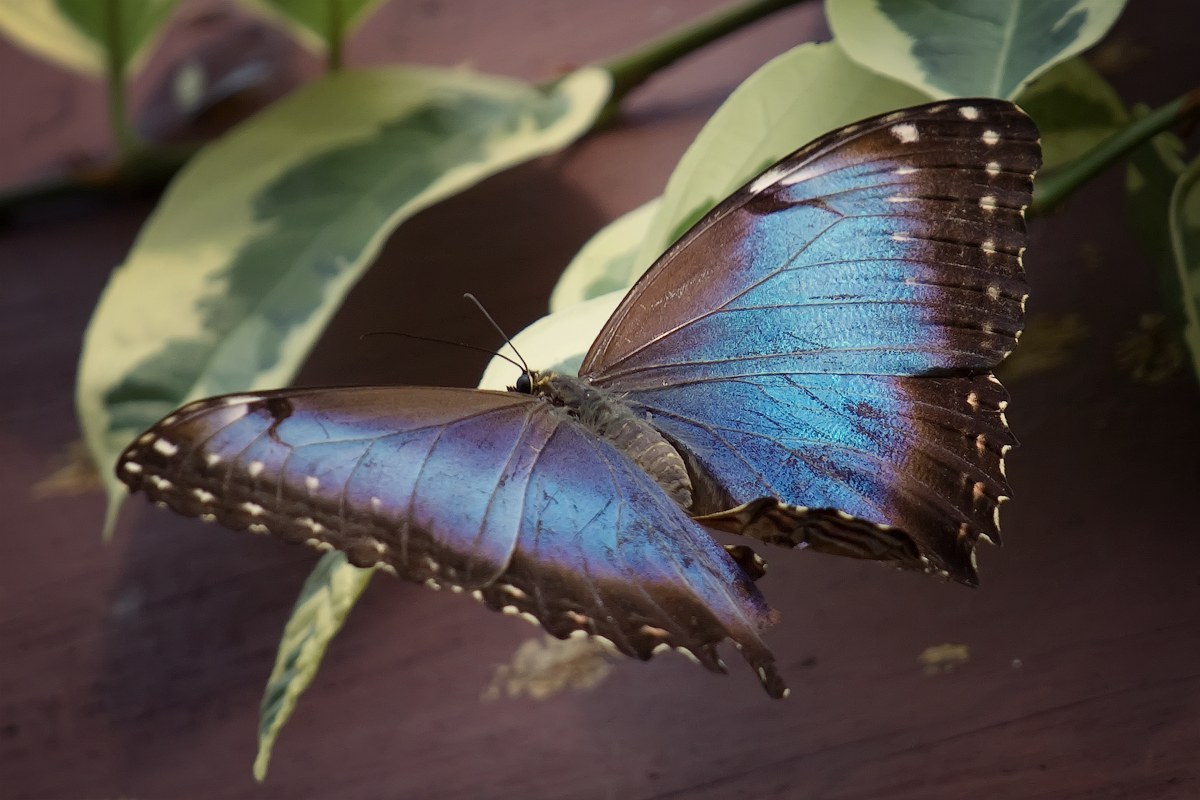
Blue Morpho Butterfly
Morpho peleides
A dazzling, hand-sized rainforest butterfly whose wings flash brilliant metallic blue in flight, an effect created not by pigment but by microscopic light-bending scales.
- Size
- Wingspan 9.5-12 cm (3.7-4.7 in)
- Habitat
- Tropical and subtropical rainforest understory and edges
- Danger
- Harmless
Spotted a bug like this?
Identify any bug or insect from a photo, free.
Overview
The blue morpho is one of the largest and most recognisable butterflies in the world, native to the humid lowland and montane forests of Central and South America. The genus Morpho contains dozens of species, several of which are commonly called blue morphos, with Morpho peleides being among the most widely encountered and frequently displayed in butterfly houses.
The butterfly's famous colour is a structural effect rather than true pigmentation: microscopic ridges on the wing scales scatter and reflect light in a way that produces an intense, shifting metallic blue that appears to flash on and off as the butterfly flies. This contrasts sharply with the underside of the wings, which is a muted brown patterned with large eyespots, giving the insect two very different appearances depending on whether its wings are open or closed.
As adults, blue morphos feed primarily on fermenting fruit and plant sap rather than flower nectar, and they play a role in nutrient cycling within the rainforest ecosystem. Their caterpillars, in turn, are herbivores of specific host plants and serve as prey for a range of forest predators.
How to Identify
- Very large butterfly with a wingspan of roughly 10-12 cm
- Upper wing surface iridescent metallic blue that appears to shimmer or flash in flight, edged with a narrow black-and-white border
- Underside of the wings dull brown with several large eyespots, providing camouflage when at rest with wings closed
- Slow, erratic, flapping flight low through forest understory and along trails
- Females often slightly duller or browner on the upperside than males, with more prominent eyespot markings
- Distinguished from other iridescent blue butterflies by its large size and the strong colour contrast between the upper and lower wing surfaces
Habitat & Range
Blue morphos inhabit the understory and edges of humid tropical and subtropical forests from Mexico through Central America and into northern South America, including countries such as Costa Rica, Panama, Colombia, and parts of the Amazon basin. They are typically found along forest trails, streambeds, and clearings where dappled sunlight reaches the forest floor, rather than high in the canopy. Adults are active by day and can be seen year-round in much of their tropical range, where seasonal changes are less pronounced than in temperate regions.
Behavior & Diet
Adult blue morphos fly with a distinctive slow, bounding pattern low over the forest floor, and their wings flash bright blue with each wingbeat before disappearing as the wings close, a pattern thought to help confuse predators such as birds. Rather than visiting flowers, adults feed on the juices of overripe and fermenting fruit, tree sap, and occasionally fungi or decomposing organic matter, using a coiled proboscis to draw up liquid. When at rest, they characteristically fold their wings upright, revealing the cryptic brown underside with large eyespots that can startle or misdirect potential predators. Caterpillars are herbivorous, feeding on the leaves of specific host plants in the legume family, and their bristly, reddish-brown bodies help deter predators as a defensive feature.
Life Cycle
Females lay individual pale eggs on the leaves of host plants, primarily in the pea and bean family (Fabaceae). Eggs hatch into caterpillars that are reddish-brown with tufts of bristly hairs and a mottled pattern, and they feed on host plant foliage through several instars over a few weeks. The mature caterpillar forms a jade-green chrysalis, often marked with metallic gold spots, suspended from a leaf or stem, undergoing complete metamorphosis. Adults emerge after roughly two to three weeks in the chrysalis, and in the tropical climates where the species lives, breeding continues year-round with overlapping generations rather than a single defined breeding season; the adult butterfly typically lives only a few weeks.
Frequently asked questions
Why is the blue morpho's blue so intense?
The colour comes from microscopic ridges on the wing scales that reflect and scatter light structurally, rather than from blue pigment, which is why the colour appears to shift and flash as the butterfly flies.
What do adult blue morphos eat?
They feed mainly on the juices of fermenting fruit and tree sap rather than flower nectar, using a long coiled proboscis.
Why does the underside of the wing look so different from the top?
The dull brown underside with large eyespots provides camouflage and predator deterrence when the butterfly is at rest with its wings closed, contrasting with the bright blue flash used in flight.
Where do blue morphos live?
They are found in the understory of tropical and subtropical rainforests from Mexico through Central America and into parts of northern South America.
Blue Morpho Butterfly guides
In-depth guides for identifying, understanding, and living alongside Blue Morpho Butterfly.
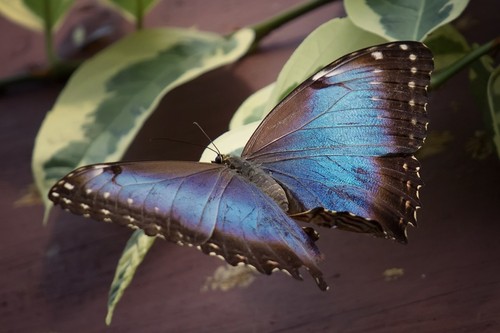
Blue Morpho Butterfly identified by the community
Real finds identified with Bug Identifier.
Other bugs you may enjoy
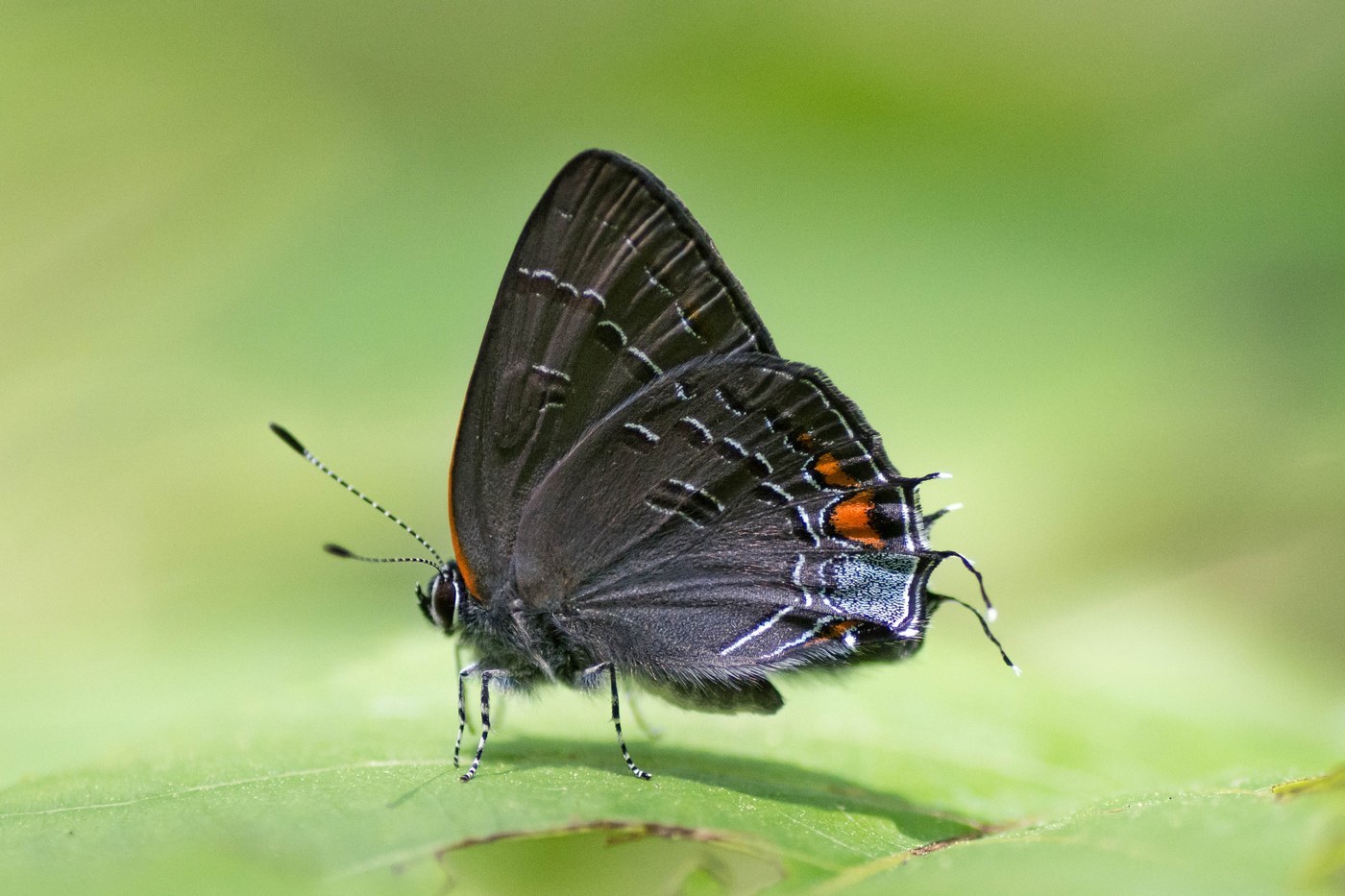
Banded Hairstreak
Deciduous woodlands and edges with oaks and hickories
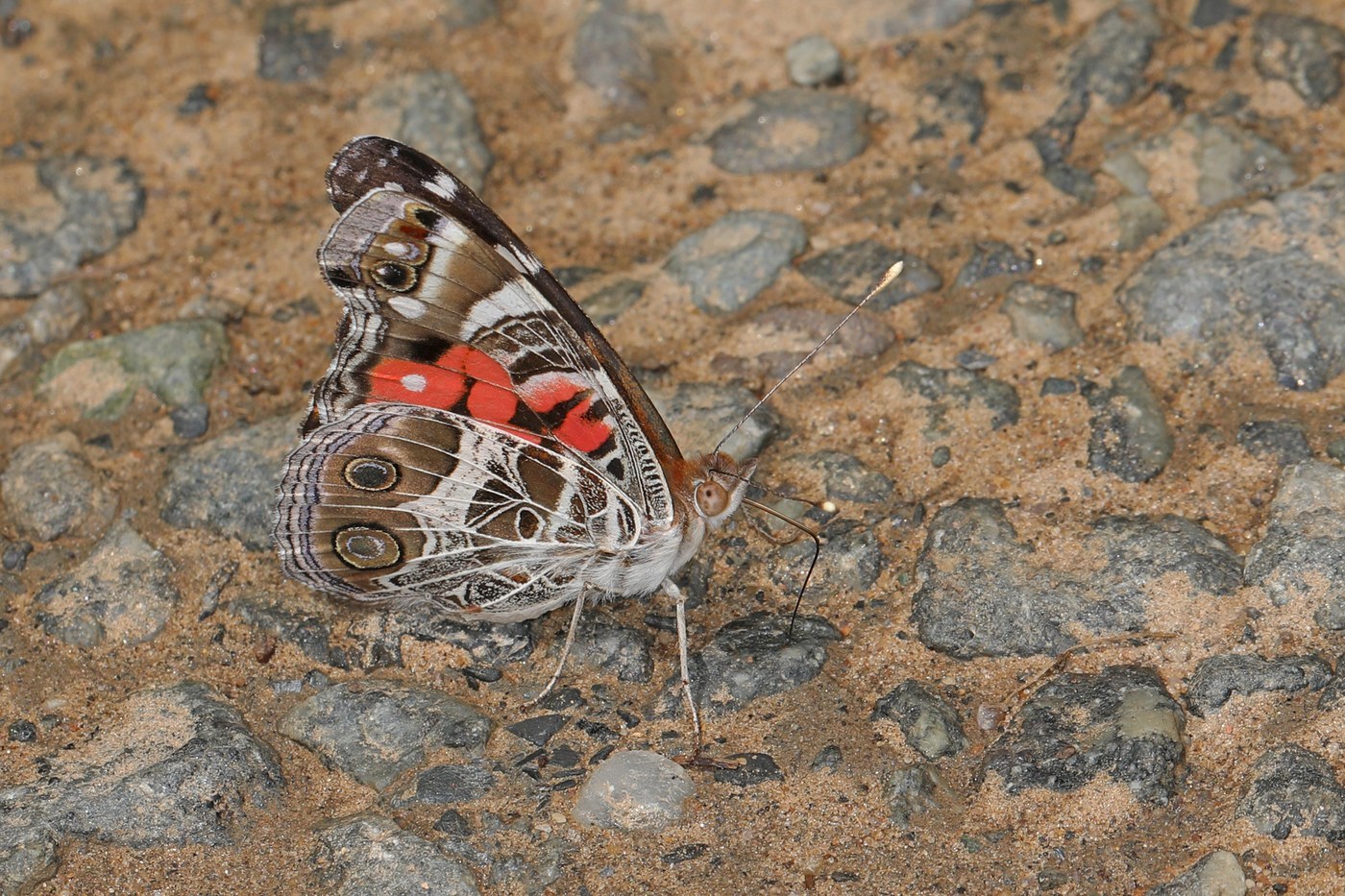
American Lady
Open fields, meadows, gardens, roadsides
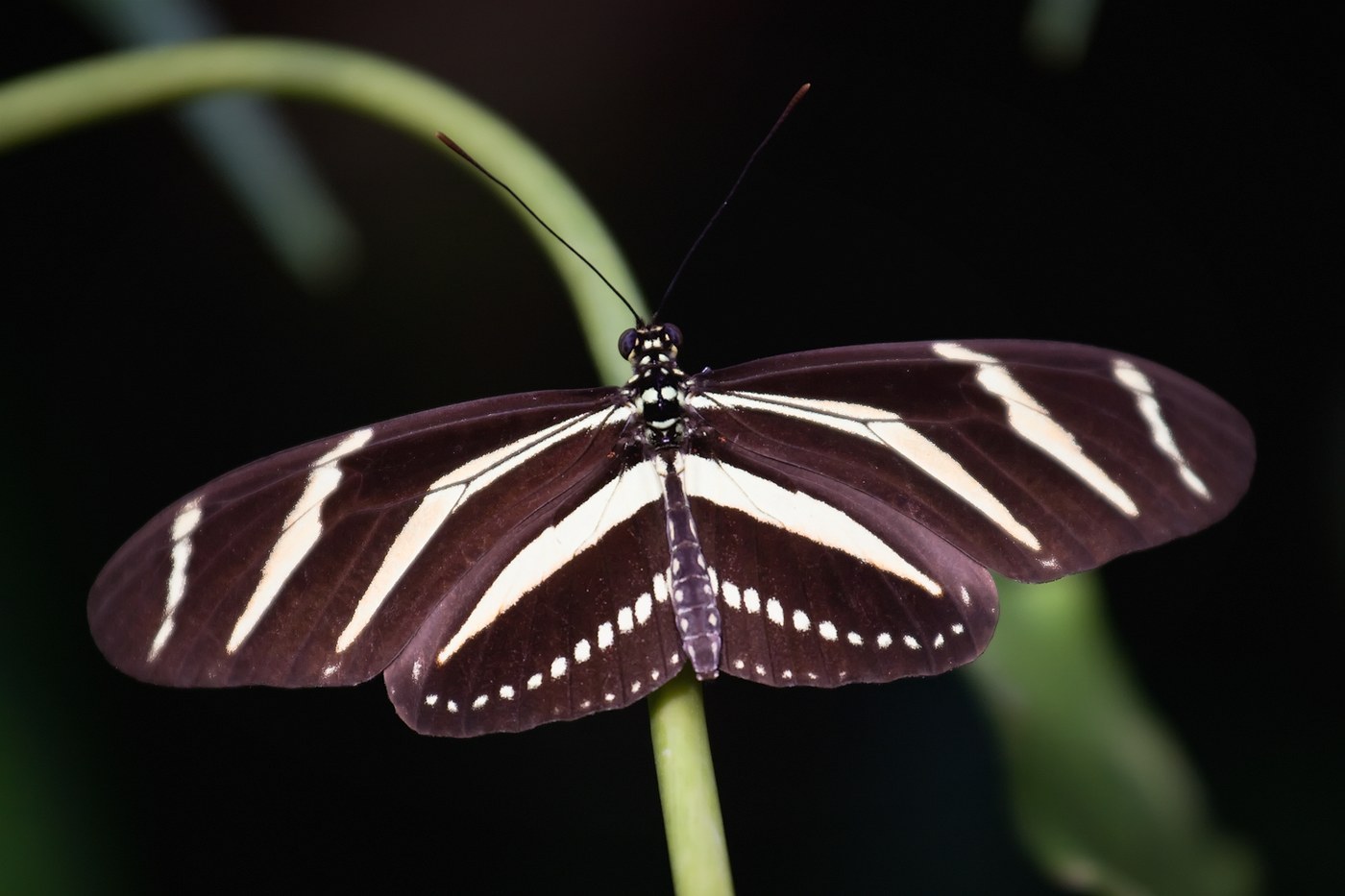
Zebra Longwing
Tropical hammocks, gardens, forest edges
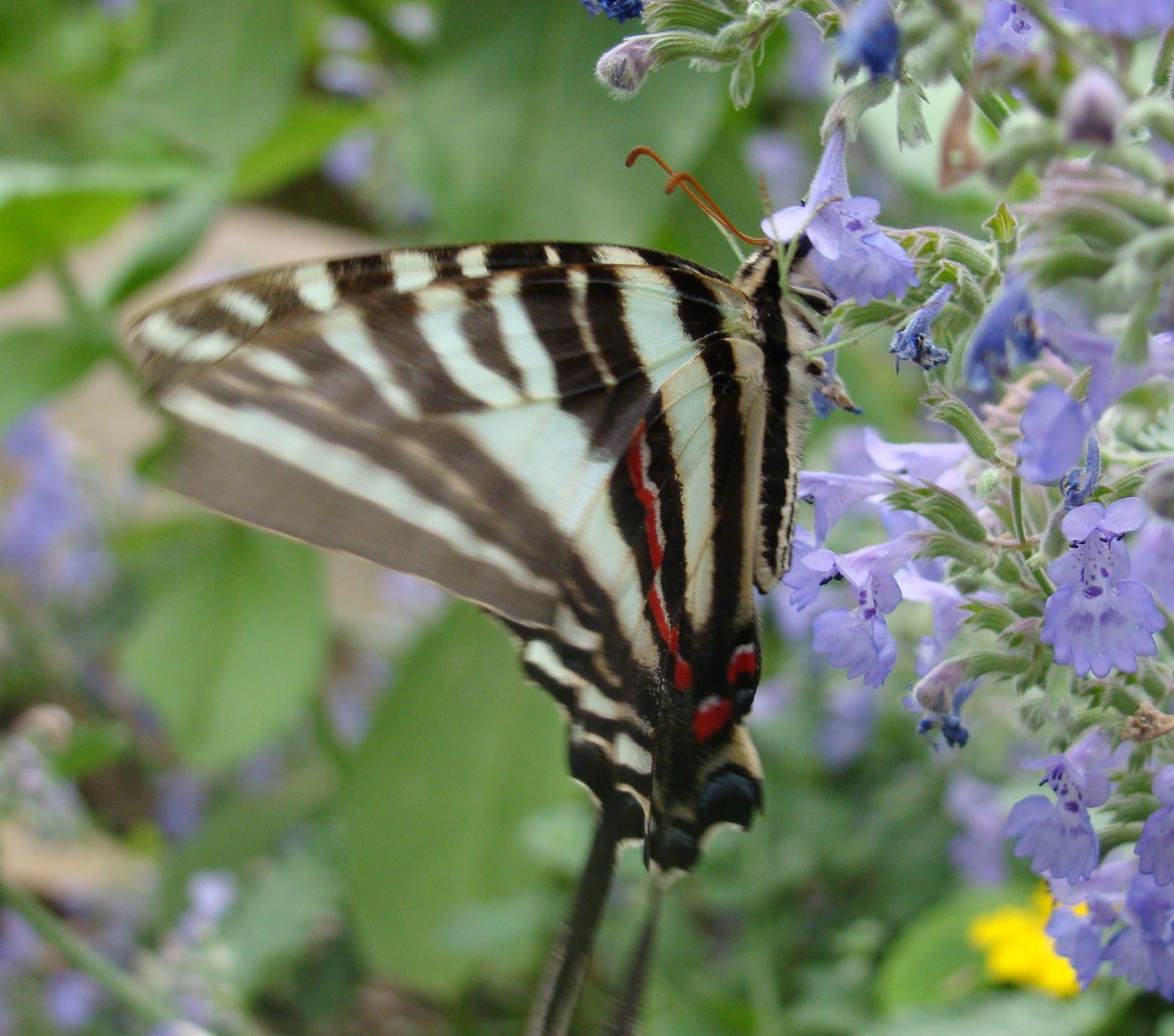
Zebra Swallowtail
Woodlands, floodplains, forest edges near pawpaw
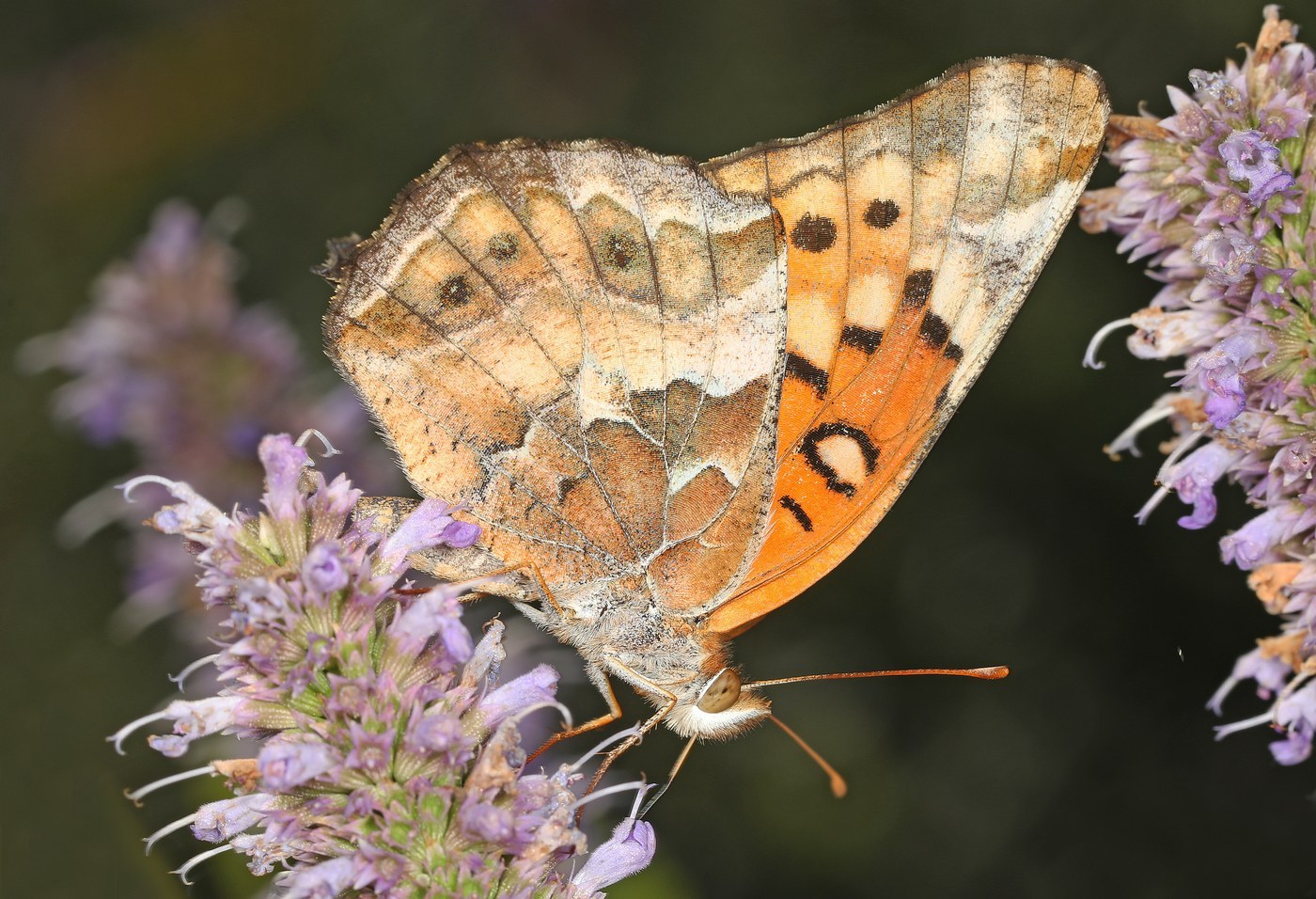
Variegated Fritillary
Open fields, prairies, roadsides, and disturbed ground across most of the United States
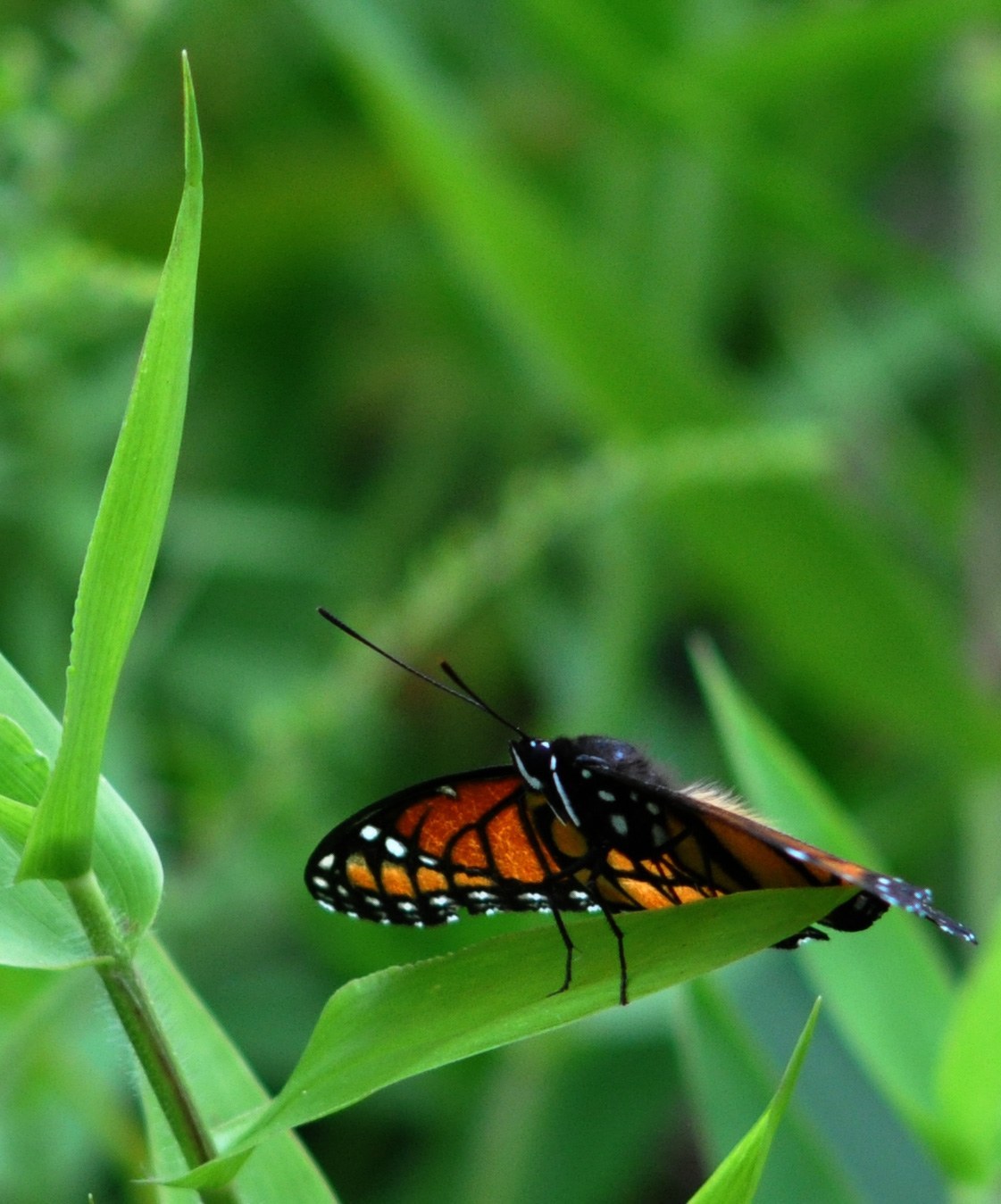
Viceroy Butterfly
Wetlands, meadows, riverbanks, willow thickets (North America)
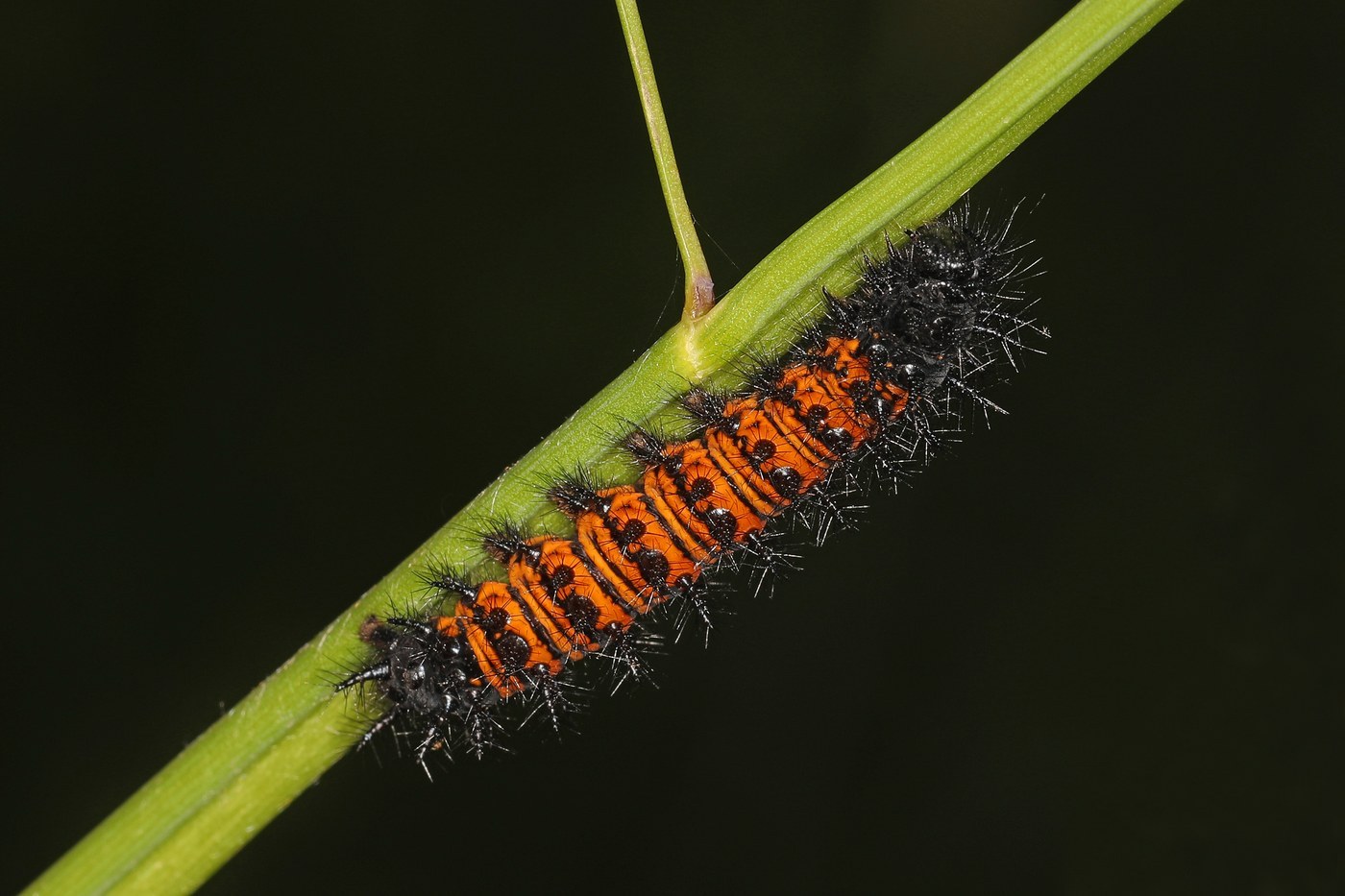
Baltimore Checkerspot
Wet meadows, bogs, and marshy fields in the northeastern and Appalachian US
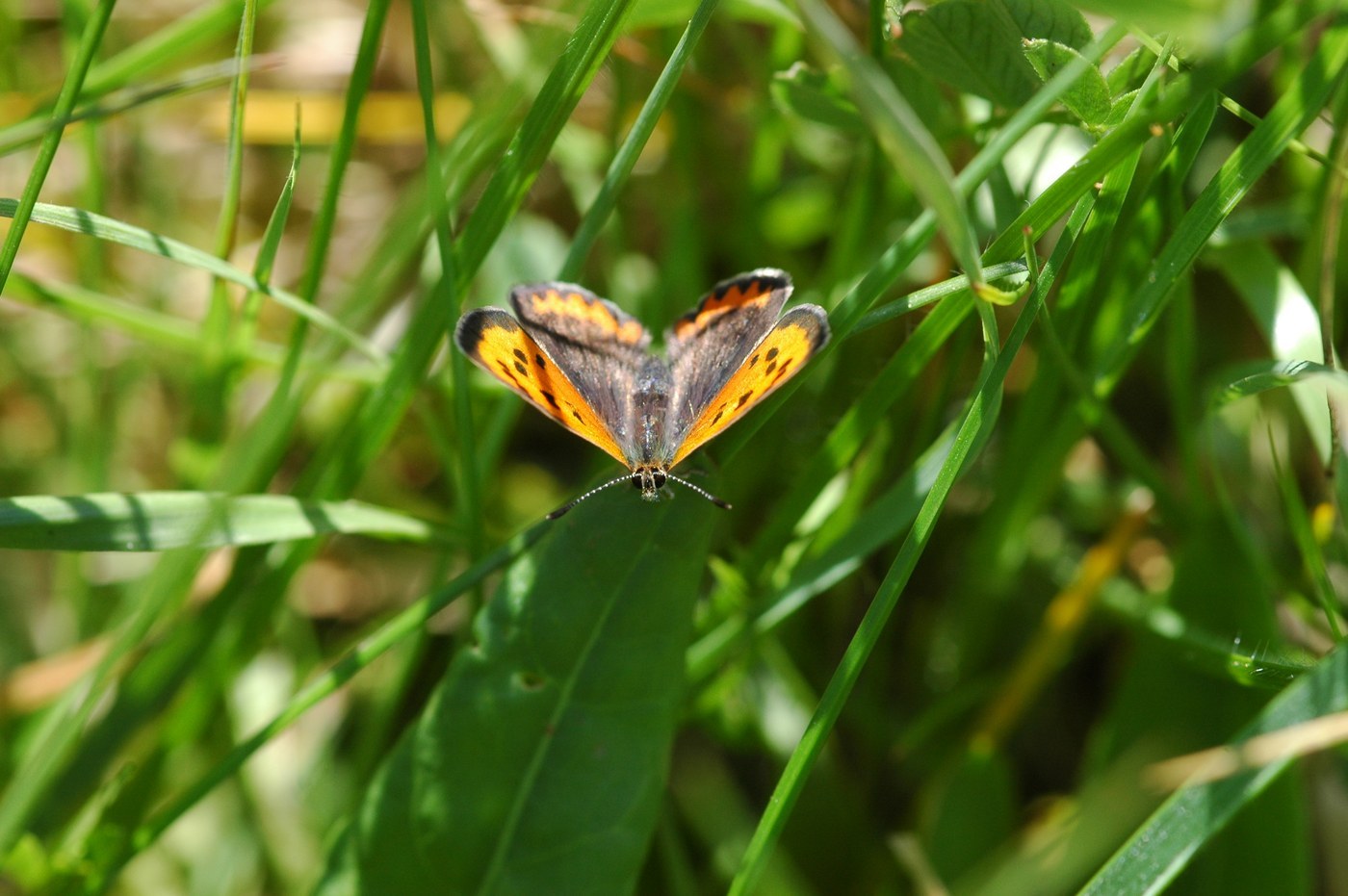
American Copper
Old fields, roadsides, and disturbed open ground with sorrel or dock
West Virginia White
Rich deciduous forest floors, especially near seeps and streams
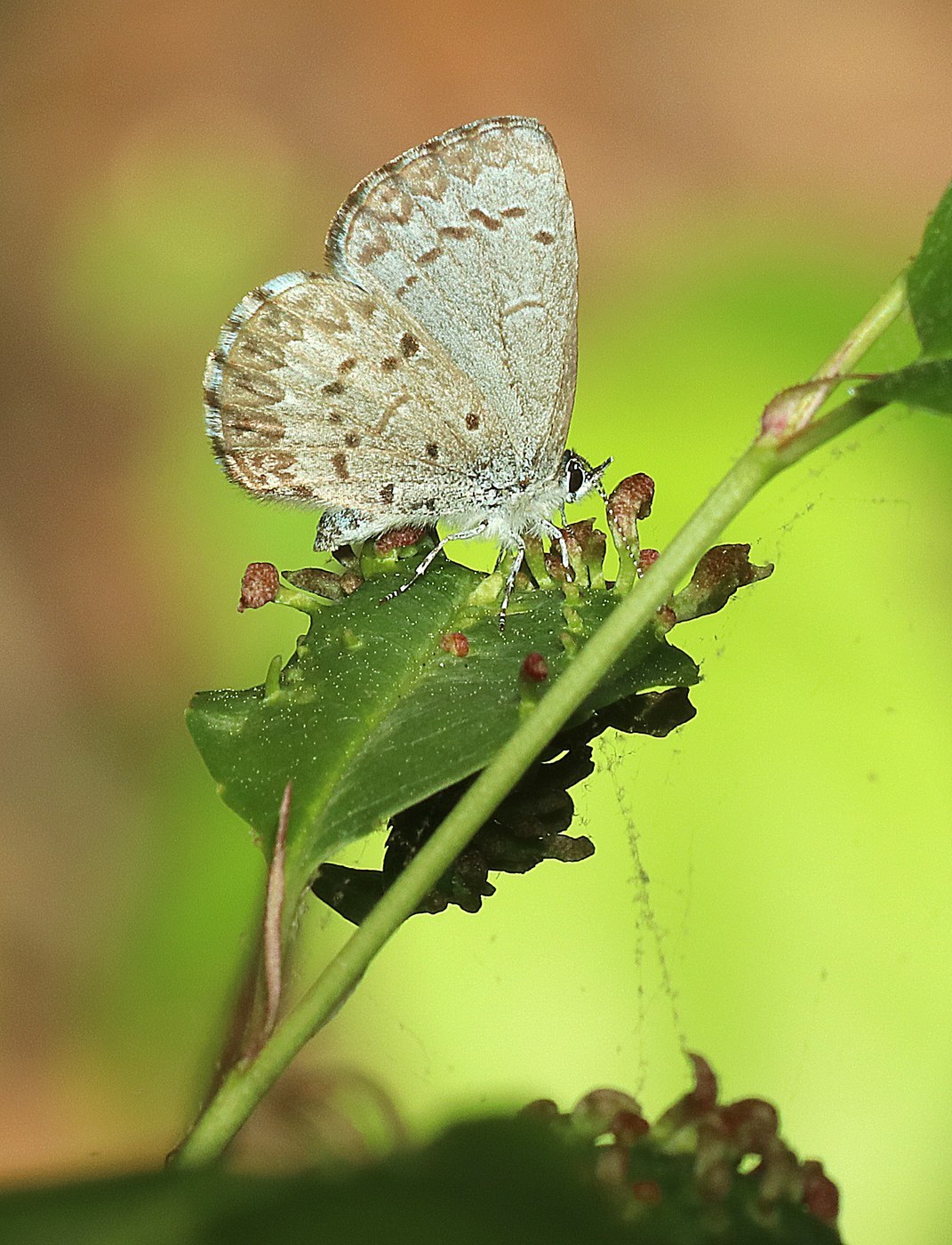
Spring Azure
Woodland edges, gardens, shrubby clearings
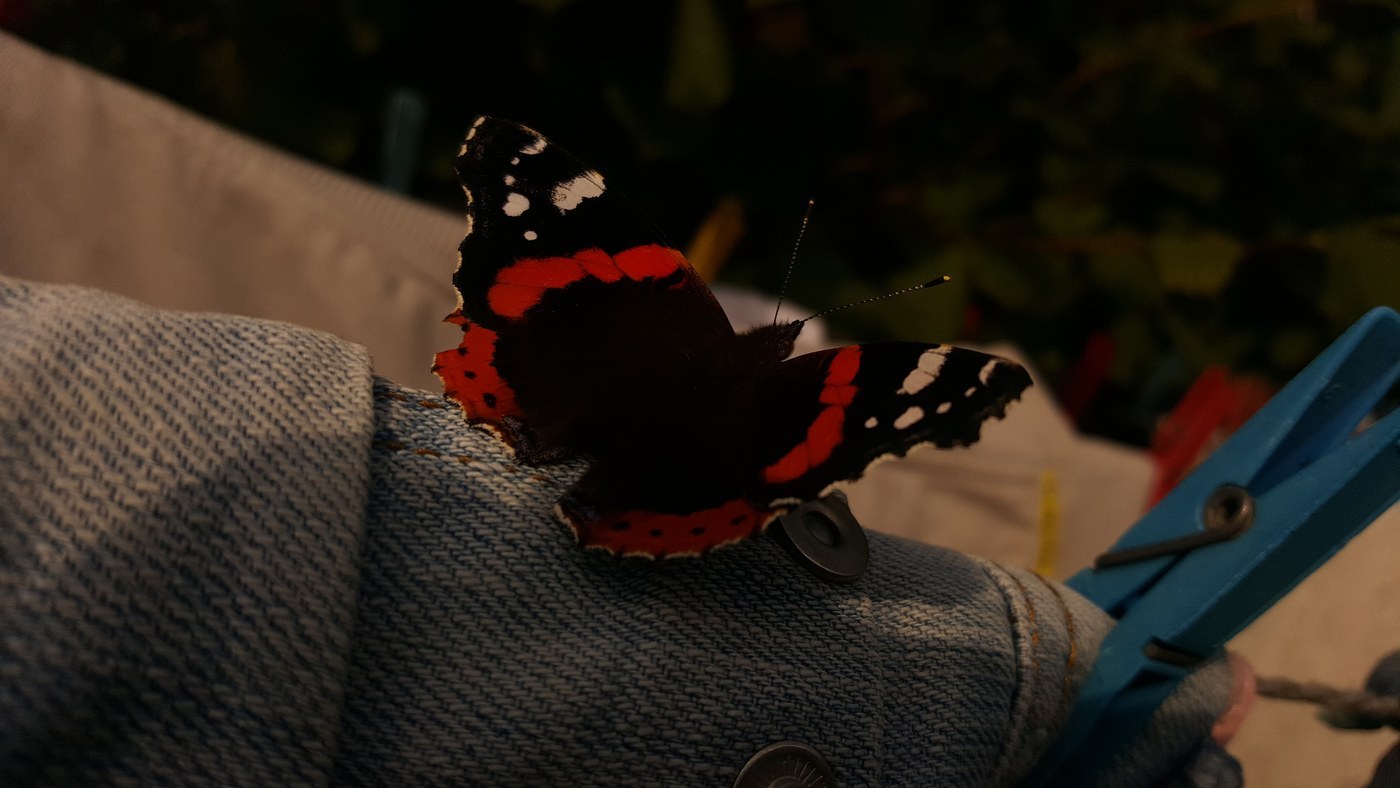
Red Admiral
Gardens, woodland edges, parks, meadows
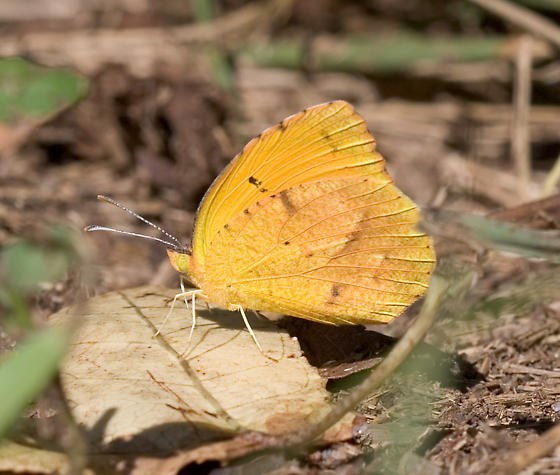
Sleepy Orange
Open woodland, fields, roadsides, and disturbed ground