
Blue Morpho Identification Guide
Spot the blue morpho by its dazzling iridescent blue wings that flash as it flies through the forest.
Read the full Blue Morpho encyclopedia entry →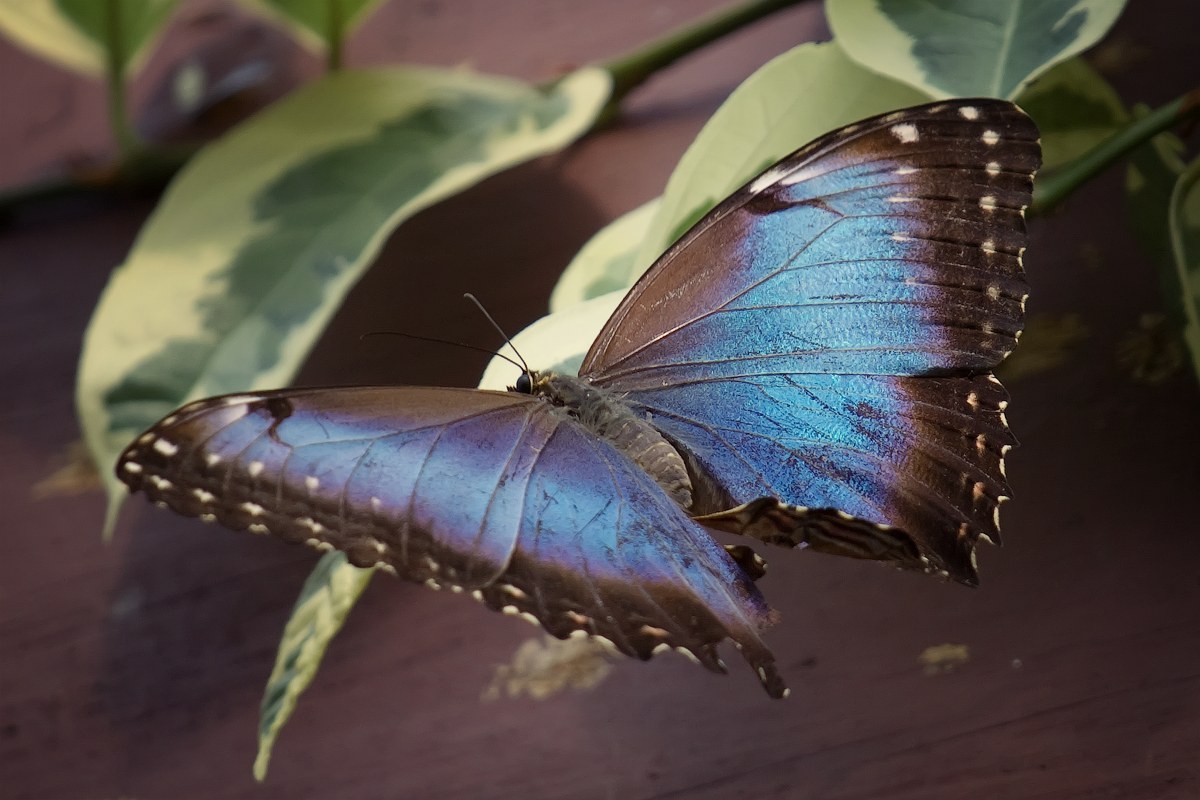
Key Visual Features
Blue morphos (genus Morpho, including Morpho peleides and related species) are among the most visually stunning butterflies in the world.
- Size: Large, with a wingspan typically ranging from 5 to 8 inches (12.5–20 cm) depending on species.
- Color: The upper wing surface is a brilliant, iridescent metallic blue that shifts and shimmers as light hits it at different angles, bordered by a narrow black-brown edge.
- Underside: In sharp contrast, the underside of the wings is dull brown and covered with large, dark eyespots — this cryptic pattern helps the butterfly blend into leaf litter when resting with wings closed.
- Body shape: Relatively stout body compared to the enormous wing surface area.
- Wings: Broad, rounded wings without tails; the iridescence comes from microscopic scale structures rather than pigment, which is why the blue appears to flash on and off in flight.
- Antennae: Slender, clubbed antennae typical of butterflies.
Where and When You'll See One
Blue morphos live in the tropical rainforests of Central and South America, from Mexico down through the Amazon basin. They are most often seen flying low and erratically along forest edges, sunny clearings, and paths through the understory, where flashes of blue appear and disappear as the butterfly alternates between showing its bright upperside and camouflaged underside. Activity peaks during the warm, humid daylight hours, and they are often spotted near fermenting fruit on the forest floor.
Similar-Looking Bugs
- Other Morpho species: Some morphos have white, purple, or more restricted blue patterns; overall shape and habitat are similar, but the intensity and border pattern of the blue can differ between species.
- Blue-and-black swallowtails: Tailed swallowtails such as certain Papilio species can show blue iridescence but have a very different wing outline (tailed hindwings) and much smaller size compared to a blue morpho.
- Owl butterflies: Related tropical butterflies with large eyespots on brown wings, but they lack the brilliant blue upperside entirely.
Quick ID Checklist
- Large wings (5–8 inches) with brilliant iridescent blue on top
- Dull brown underside with large dark eyespots
- No tails on the hindwings, rounded wing outline
- Erratic, flashing flight pattern low along forest paths
- Found in Central and South American rainforests
Frequently asked questions
Why does the blue morpho's color seem to disappear and reappear in flight?
The blue is created by microscopic scale structures that reflect light rather than pigment, so the wings flash bright blue when the upper surface catches the light and appear to vanish when the dull brown underside is shown, especially during rapid wingbeats.
Where in the world can you see blue morphos?
They are native to tropical rainforests of Central and South America, from Mexico through the Amazon basin, typically found along forest edges and sunlit paths rather than deep, shaded canopy.
How can I tell a blue morpho from other blue butterflies?
Size and wing shape are the biggest clues — blue morphos are unusually large with broad, tailless, rounded wings, while most other blue butterflies (like small blues or hairstreaks) are far smaller with different wing outlines.
What does a resting blue morpho look like?
With wings folded upright at rest, a blue morpho shows only its brown, eyespot-covered underside, making it look completely different from its flashy blue appearance in flight and helping it blend into leaf litter.