
Blue Orchard Bee Identification Guide
Identify the blue orchard bee by its metallic blue-black body and pollen-dusted belly, most visible during spring fruit-tree bloom.
Read the full Blue Orchard Bee encyclopedia entry →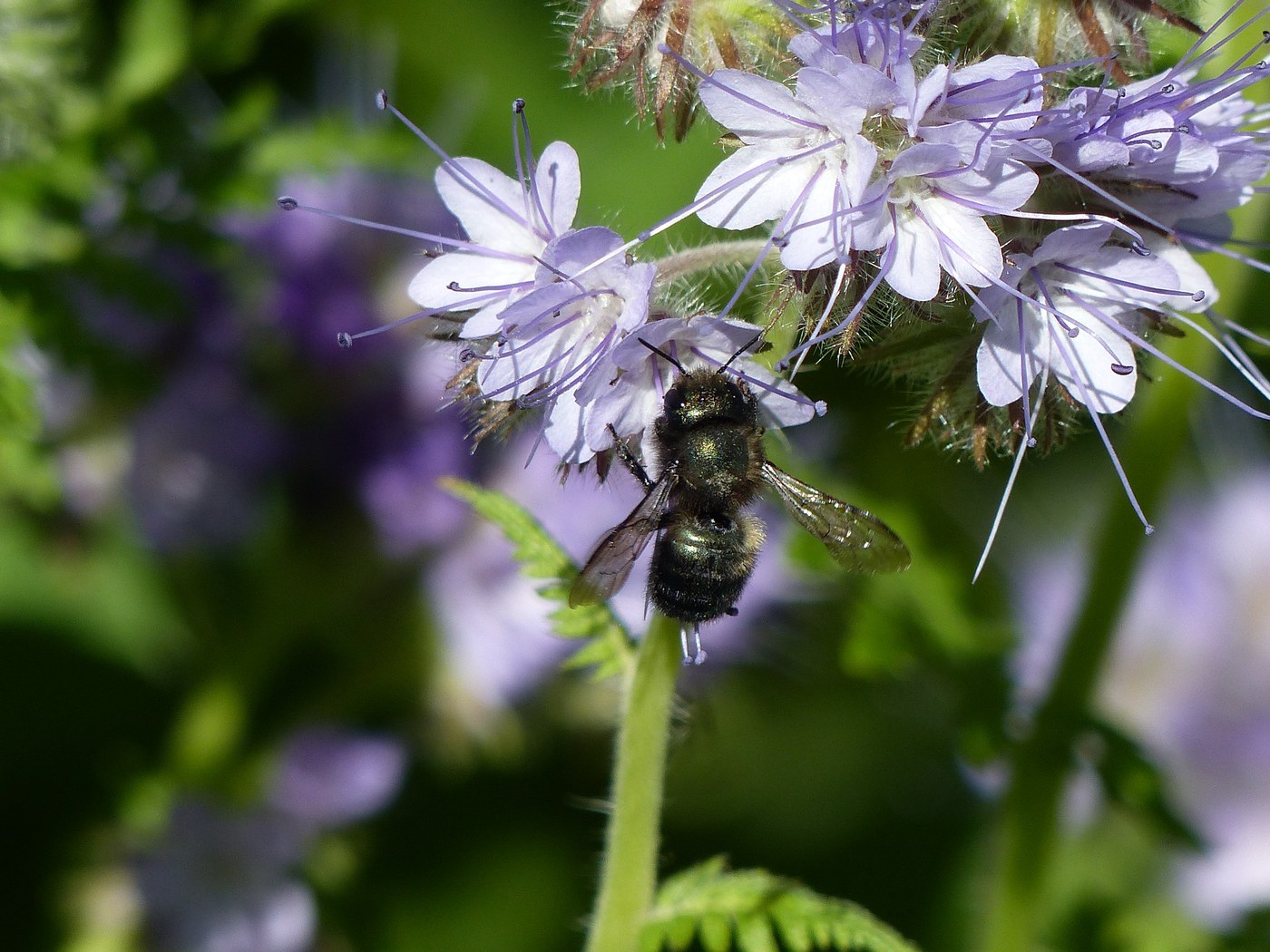
Key Visual Features
The blue orchard bee (Osmia lignaria) is a small mason bee with a distinctive metallic sheen:
- Compact body, roughly 8-13mm long
- Metallic blue-black coloring across the body, often shimmering green or blue in direct sunlight
- Dense, non-metallic dark hair covering the thorax
- Females carry pollen on a dense patch of hair on the underside of the abdomen (scopa), rather than on the legs, giving the belly a dusty, pollen-coated look
- A relatively large head with strong mandibles, used for working mud into nest partitions
Where and When You'll See Them
This species nests in narrow, pre-existing cavities — hollow plant stems, old wood-boring beetle holes, or purpose-built bee hotels — rather than digging burrows itself. It's strongly associated with orchards and gardens, and its flight season is short and tightly timed with early spring bloom of fruit trees like apple, cherry, and almond. Look for females entering and exiting nest holes with mud in their mandibles, sealing off completed cells.
Similar-Looking Bugs
- Metallic sweat bees can share a blue-green sheen but are typically smaller and more slender, without the dense fuzzy thorax of the blue orchard bee.
- Carpenter bees are much larger with a bare, shiny black abdomen, unlike the fuzzy, metallic-blue body of the blue orchard bee.
- Other mason bees (Osmia species) can look quite similar and are often best distinguished by region, season, and close examination rather than casual observation.
Quick ID Checklist
- Small, metallic blue-black body, 8-13mm
- Dense dark hair on thorax, pollen carried on belly hairs
- Nests in narrow cavities, not dug burrows
- Active for a short window in early spring during fruit tree bloom
- Seen carrying mud to seal nest cells
Frequently asked questions
Why does the blue orchard bee look shiny blue?
Its exoskeleton has a metallic blue-black sheen that can appear green or blue depending on the angle of light.
How does it carry pollen?
Unlike many bees that carry pollen on their hind legs, females carry it on a dense patch of hair on the underside of the abdomen.
Where does the blue orchard bee nest?
It uses narrow, pre-existing cavities such as hollow stems, old beetle borer holes, or bee hotels, sealing completed cells with mud rather than digging its own burrow.
When is the best time to see blue orchard bees?
Their flight season is short and centers on early spring, timed closely with the bloom of fruit trees like apple, cherry, and almond.