
Bluet Damselfly Identification Guide
Learn to identify these slender blue-and-black pond damselflies by their banded abdomen pattern and delicate clear wings.
Read the full Bluet Damselfly encyclopedia entry →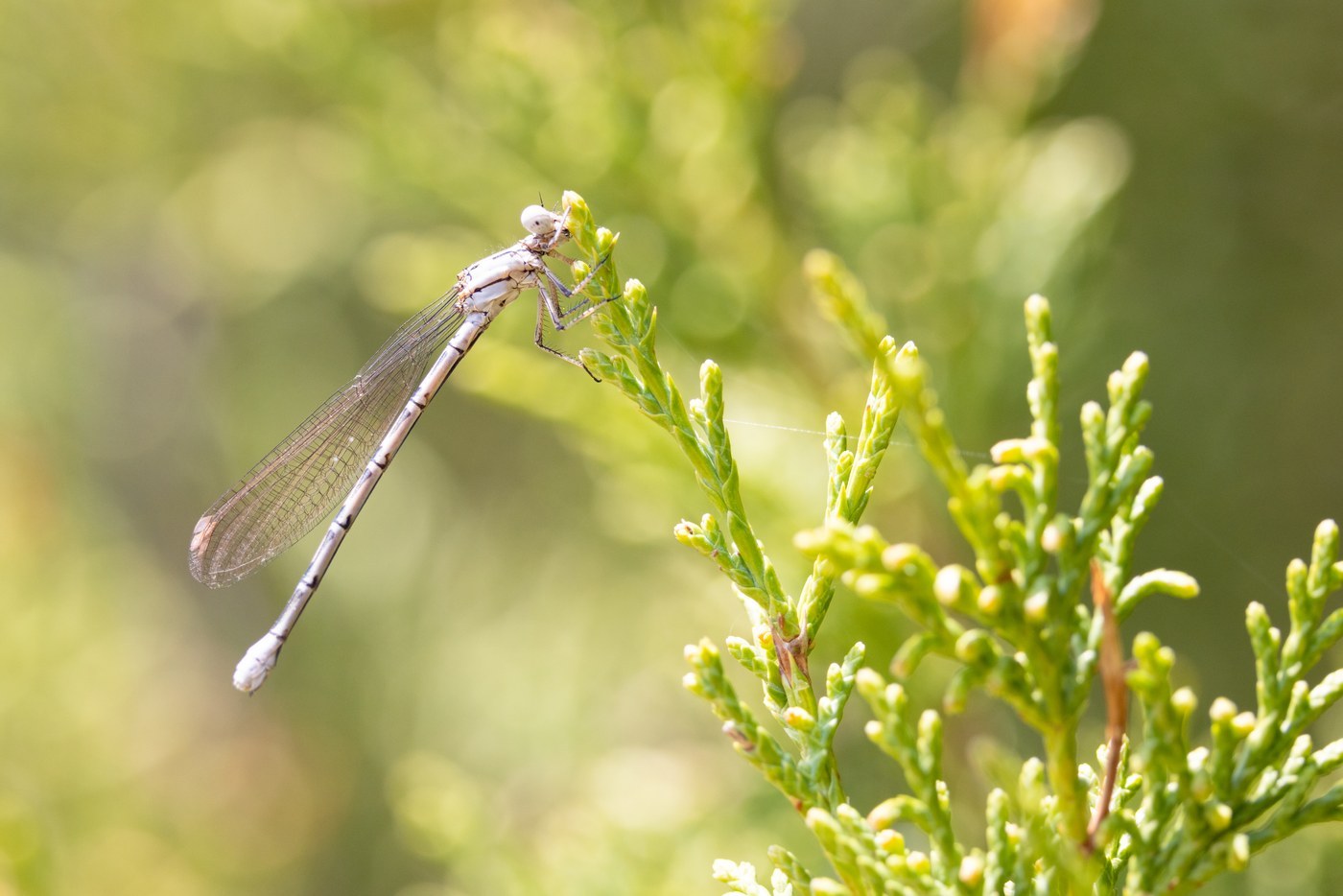
Key Visual Features
Bluets are a group of small, slender damselflies common around ponds and lakes, named for their predominantly blue coloration.
- Size: Small and delicate, typically 25-35 mm in body length, with a thin thread-like abdomen.
- Color: Males are usually pale to bright blue with black markings segmented along the abdomen, giving a banded or ringed appearance; females tend to be duller, showing blue, green, brown, or tan tones with more extensive black patterning.
- Body shape: Very slender and thread-like, with the abdomen much longer and thinner than the thorax, typical of damselflies.
- Wings: Clear and transparent, held folded together above and along the body when perched, unlike the spread-wing posture of dragonflies.
- Thorax pattern: The thorax typically shows blue or pale stripes separated by black stripes, visible from the side.
- Eyes: Large but well-separated on either side of the head, not touching, unlike many dragonflies.
Where and When You'd See It
Bluets are common around the edges of ponds, lakes, and slow streams with plenty of emergent or floating vegetation, where they perch on reeds, grasses, or float low over the water. They are active from late spring through late summer, often seen in mating pairs flying in tandem, with the male grasping the female behind the head while she dips her abdomen to lay eggs in plant stems just below the surface.
Similar-Looking Bugs
- Forktail damselflies: Smaller and often show more green or pale coloration with less extensive blue, plus distinctive pale markings on the top of the thorax.
- Sprites and dancers: Closely related and similarly patterned; precise identification between species often requires close examination of the abdomen tip markings, but general shape and size are very similar.
- Ebony jewelwing: Much larger, with solid dark wings rather than the clear wings of bluets, making the two easy to distinguish.
Quick ID Checklist
- Small, thread-thin damselfly, roughly 25-35 mm
- Males mostly blue with black abdominal banding; females duller
- Clear, transparent wings held folded above the body at rest
- Blue-and-black striped thorax visible from the side
- Found perched on vegetation at pond and lake edges
Frequently asked questions
How can you tell a bluet damselfly is male or female at a glance?
Males are typically bright blue with crisp black banding along the abdomen, while females are usually duller, showing more brown, tan, or green tones with heavier black markings.
What distinguishes a bluet from a dragonfly seen at the same pond?
Bluets are much thinner and hold their clear wings folded together above the body at rest, while dragonflies have thicker bodies and rest with wings spread flat to the sides.
Where on a pond are bluets most likely to be seen?
They are usually found perched on emergent vegetation, reeds, or grasses right at the water's edge, or flying low over the surface near plant growth.
What behavior helps confirm a bluet sighting during summer?
Seeing a mating pair flying in tandem, with the male gripping the female behind the head while she dips her abdomen into the water among plant stems, is a common and confirming bluet behavior.