
Bogong Moth Identification Guide
Recognize this migratory Australian moth by its mottled brown wings and famous mass gatherings in alpine caves.
Read the full Bogong Moth encyclopedia entry →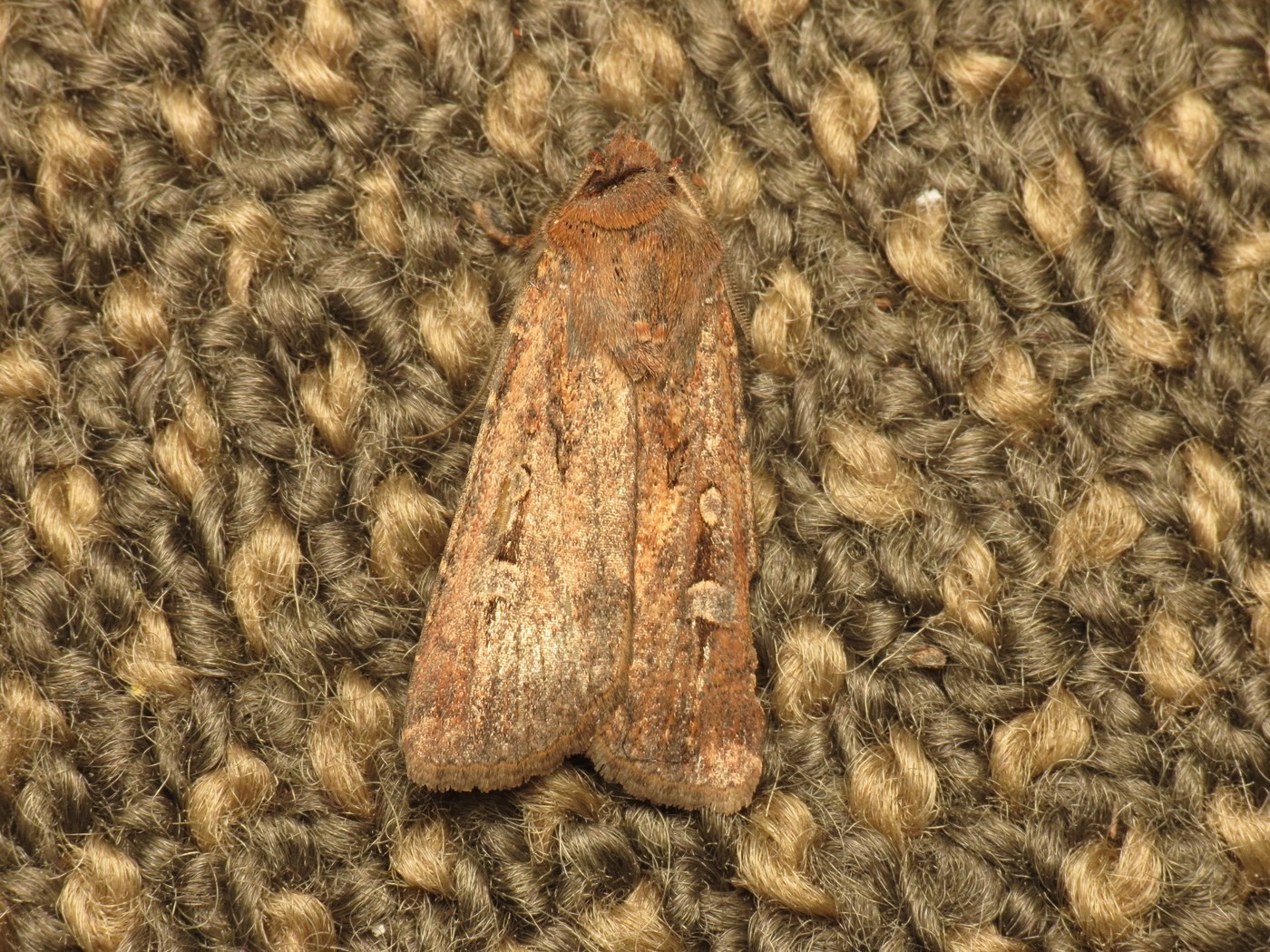
Key Visual Features
The bogong moth is a medium-sized noctuid moth best known for its long-distance migrations and enormous cave-dwelling aggregations.
- Size: Wingspan of about 30-45mm (roughly 1.2-1.8 inches), a medium size typical of many noctuid moths.
- Color and pattern: Forewings are dark brown to blackish-brown with a variable mottled pattern, often showing a faint pale kidney-shaped (reniform) marking and a rounder (orbicular) marking typical of many cutworm moths. The overall tone can range from grayish-brown to a much darker chocolate brown depending on the individual.
- Body shape: Stout body with a hairy, brown thorax and a tapering abdomen typical of dart and cutworm moths.
- Wings: Hindwings are paler brownish-gray and largely unmarked, contrasting with the darker, patterned forewings.
- Legs and antennae: Antennae are thread-like; legs are covered in fine hairs and are proportionate to the stout, compact body.
Where and When You'll See It
Bogong moths are native to Australia. Their caterpillars (a type of cutworm) are found in grassland and farmland habitats across southeastern Australia, feeding low among grasses and crops. Adults undertake a remarkable seasonal migration of hundreds of miles to cool mountain caves and rock crevices in the Australian Alps, where they cluster in dense, overlapping masses on cave walls and ceilings to pass the summer in a dormant state before migrating back to lowland breeding grounds in autumn. Adults are most visible during their spring migration, while resting at lowland sites along the way, and while aggregating in caves over the summer months.
Similar-Looking Moths
Many other cutworm or dart moths in the genus Agrotis share a similar mottled brown forewing pattern, making individual moths tricky to separate on markings alone, especially worn or faded specimens. The faint kidney-shaped mark combined with plain grayish-brown hindwings helps narrow it down, but the most distinctive clue is behavioral: the bogong moth's habit of forming massive, dense aggregations in alpine caves during summer is unique among Australian moths and is the most reliable way to confirm identification in the field.
Quick ID Checklist
- Mottled dark-brown noctuid moth, 3-4cm wingspan
- Faint kidney-shaped marking on the forewing
- Plain grayish-brown, mostly unmarked hindwings
- Found across Australia, especially grassland and alpine regions
- Known for dense summer aggregations inside mountain caves
Frequently asked questions
What is the easiest way to identify a bogong moth?
Its mottled dark-brown forewings with a faint kidney-shaped mark, combined with its known habit of forming dense clusters in alpine caves during summer.
How can I tell it apart from other cutworm moths?
Individual markings can be similar to other Agrotis species, so location and the moth's mass cave-gathering behavior are the most reliable clues.
Where are bogong moths typically seen?
In grassland and farmland areas as caterpillars, and in mountain caves of the Australian Alps as adults during summer.
When is migration season for the bogong moth?
Adults migrate in spring toward the mountains, remaining clustered in caves through the summer months.