
Boll Weevil Identification Guide
Learn to spot the boll weevil by its long curved snout and small grayish-brown body.
Read the full Boll Weevil encyclopedia entry →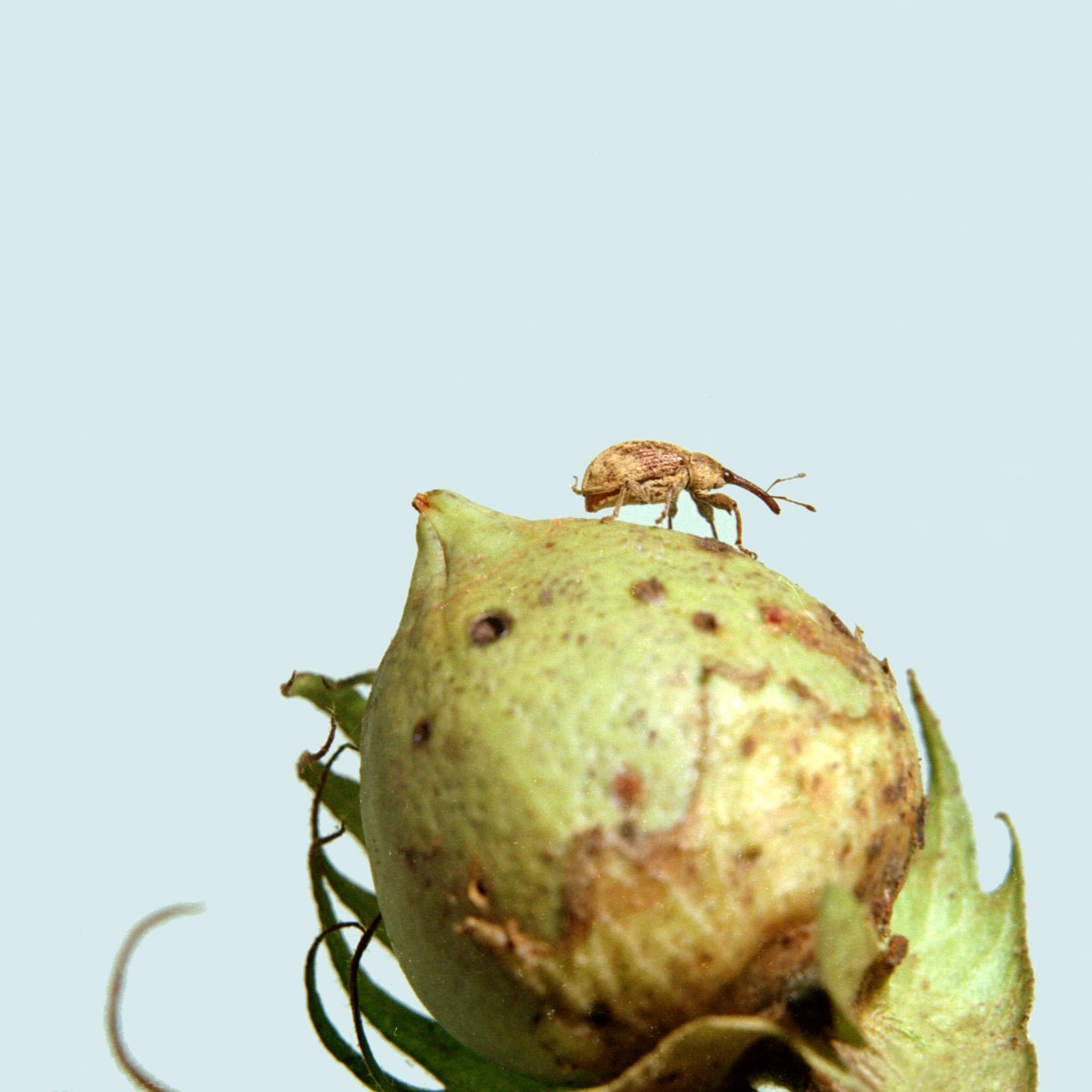
Key Visual Features
- Snout: The most distinctive feature is a long, curved, downward-pointing snout (rostrum) about half the length of its body, tipped with small chewing mouthparts.
- Body shape: Small, oval, and somewhat humpbacked, typically 1/4 to 1/3 inch long, not counting the snout.
- Color: Grayish-brown to reddish-brown, often appearing mottled or dusty in texture; older individuals may look darker or grayer as fine hairs wear off.
- Legs: Six reddish-brown legs, with the front pair often held forward near the snout.
- Antennae: Elbowed (geniculate) antennae that attach partway along the snout, a hallmark of weevils in general.
- Wings: Hardened forewings (elytra) cover the abdomen and may show faint ridges or a slightly rough texture.
- Texture: Fine hairs or scales can give the body a slightly fuzzy or dusty look when freshly emerged, wearing smoother with age.
Where and When You'd See One
Boll weevils are associated with cotton plants and cotton-growing regions, where adults feed on and lay eggs in flower buds and developing bolls. They are most active during the warm growing season from spring through fall, and adults may overwinter in leaf litter, plant debris, or sheltered ground cover near old cotton fields, emerging again as temperatures warm.
Similar-Looking Creatures
- Other weevil species (e.g., rice weevil, plum curculio): Share the elongated snout and elbowed antennae but differ in size, host plant association, and body markings.
- Bark beetles: Lack the long snout entirely, having a more compact, cylindrical body with a visibly rounded or blunt head.
- Small click beetles: Elongated but without a snout, and capable of flipping themselves upright with a clicking motion.
- Seed beetles: Rounder body shape, shorter or absent snout compared to the pronounced weevil snout.
- Leaf-footed bugs (nymphs): Occasionally mistaken at a glance due to similar coloring, but they are true bugs with piercing mouthparts rather than a chewing snout.
Quick ID Checklist
- Long, curved snout nearly half the body's length.
- Small, oval, grayish-brown to reddish-brown body around 1/4 inch long.
- Elbowed antennae attached along the snout.
- Found on or near cotton plants, especially flower buds and bolls.
- Most active in warm months during the cotton growing season.
Frequently asked questions
What is the single best feature for identifying a boll weevil?
The long, curved snout is the clearest identifying feature. It is nearly as long as the rest of the body and ends in small mouthparts used for feeding on plant tissue.
How can I tell a boll weevil from other types of weevils?
Boll weevils are specifically associated with cotton plants and their buds and bolls, are grayish-brown to reddish-brown in color, and are relatively small at about 1/4 to 1/3 inch in body length, which along with the host plant helps narrow down identification.
Where on a cotton plant would I typically spot a boll weevil?
Adults are usually found on flower buds (squares) and developing bolls, where they feed and lay eggs, making these plant parts a good place to look during the growing season.
Why do the antennae look 'elbowed'?
Like other weevils, boll weevils have antennae that bend sharply partway along their length, giving them an elbow-like appearance that is a useful family-level identification clue.