
Book Scorpion Identification Guide
Discover how to identify the tiny, tailless pseudoscorpion often found hiding among old books and papers.
Read the full Book Scorpion encyclopedia entry →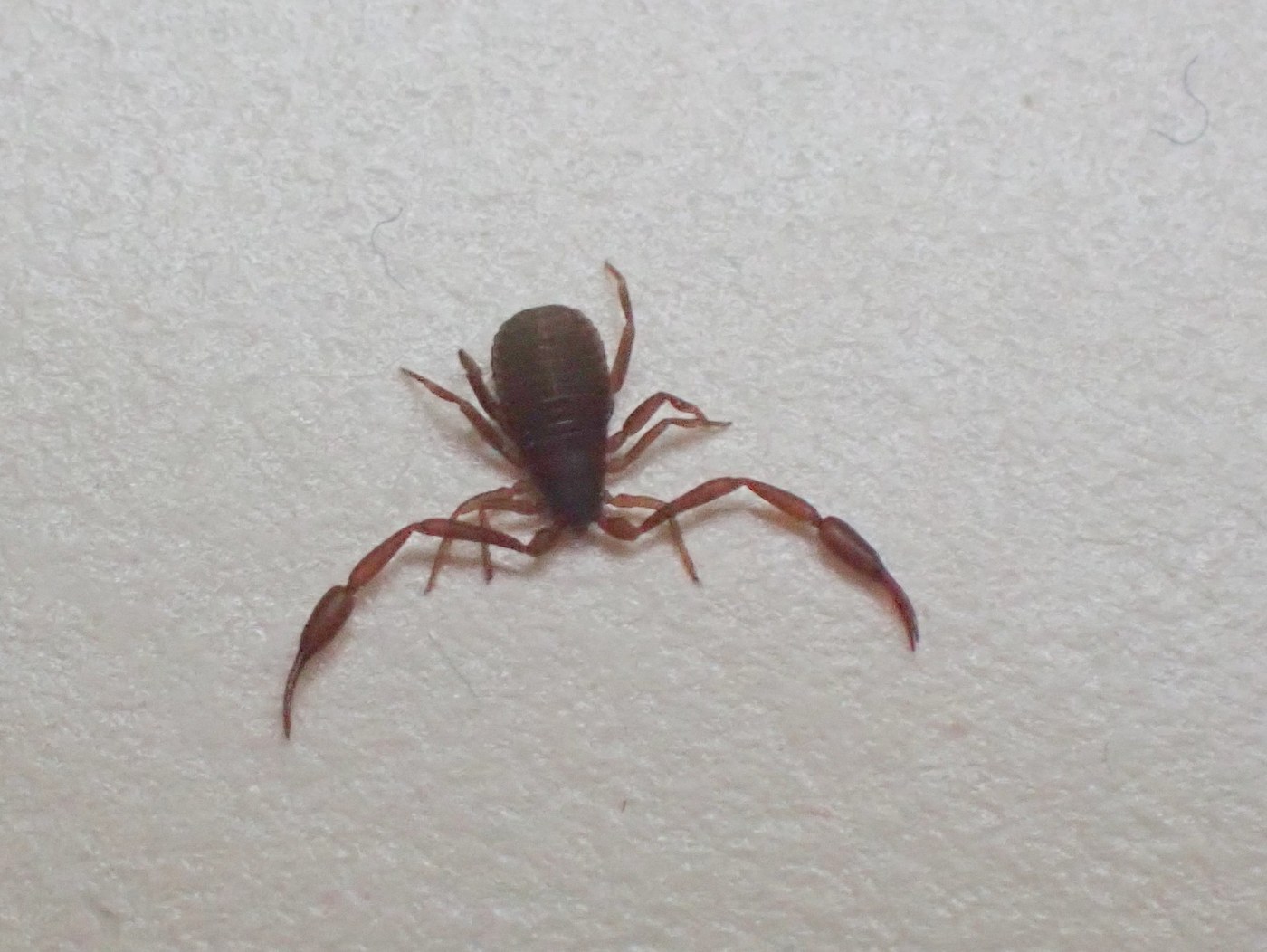
Key Visual Features
- Tiny arachnid, usually only 2 to 4.5 mm long — about the size of a small ant or apple seed
- Flattened, pear-shaped body divided into a small head-thorax region and a segmented abdomen
- Large, prominent pincers (pedipalps) that look like a miniature scorpion's claws, often reddish-brown or dark brown
- No tail or stinger — this is the key feature separating it from true scorpions
- Eight legs, pale to brownish in color, and short antenna-like sensory hairs on the pincers
- Body color ranges from tan to dark brown, sometimes appearing almost black
Where and When You'd See Them
- Found indoors in old books, stacks of paper, cluttered closets, and cupboards, as well as outdoors under bark, leaf litter, and stones
- Prefers dim, undisturbed, slightly humid spaces where it can move among small crevices unnoticed
- Can be seen year-round indoors since it isn't strongly tied to outdoor seasons, though outdoor sightings under bark or stones may be more common in warmer months
- Often noticed when old books or boxes are opened after sitting undisturbed for a long time, or when sorting through stacks of stored papers
- Tends to freeze or scuttle sideways and backward in short bursts when its hiding spot is disturbed, rather than fleeing in a straight line
Similar-Looking Bugs
- True scorpions are much larger and have a long, segmented tail ending in a stinger, which book scorpions completely lack.
- Ticks have a rounder, unsegmented body without large pincers and move much more slowly, without any claw-like front appendages.
- Small spiders lack the oversized front pincers and instead have simple, thin front legs and no divided pincer-claws, plus a distinctly rounder, unsegmented abdomen.
- Mites are far smaller, rounder, and lack visible pincers or clear leg segmentation, often appearing as little more than a moving speck.
- Baby true scorpions might seem similarly sized at first glance, but even the youngest true scorpions still show a segmented tail bud, which book scorpions never develop.
Quick ID Checklist
- Very small size (a few millimeters), often mistaken for a speck of debris
- Prominent scorpion-like pincers but absolutely no tail or stinger
- Flattened, pear-shaped body with eight legs
- Found in old books, paper stacks, or under bark and leaf litter
- Slow, deliberate crab-like walk
Frequently asked questions
How is a book scorpion different from a true scorpion?
The biggest giveaway is the tail — true scorpions have a long, curved, segmented tail tipped with a stinger, while book scorpions have no tail at all, just a rounded rear end to the abdomen.
Why is it called a book scorpion?
It gets its common name from its habit of turning up in old books, papers, and cluttered storage areas where it hunts tiny insects and mites.
How small is a book scorpion really?
Most adults measure only a few millimeters long, making them easy to overlook or mistake for a bit of lint or debris until you see the pincers move.
Do book scorpions have wings?
No, they are wingless arachnids and get around entirely by walking with their eight legs.