
Bordered Plant Bug Identification Guide
Identify the bordered plant bug by its dark body outlined with a bright orange or red border along the abdomen edge.
Read the full Bordered Plant Bug encyclopedia entry →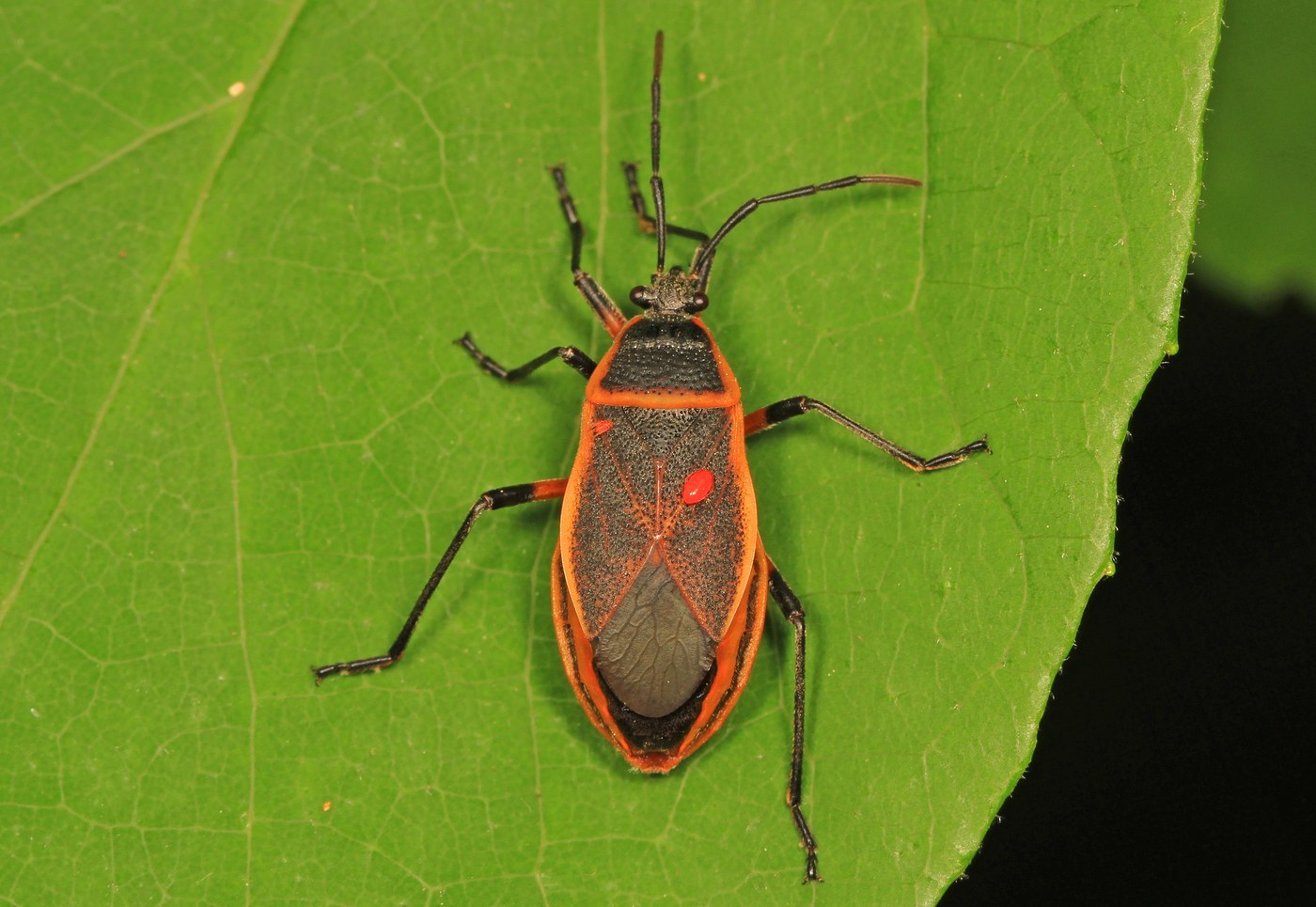
Key Visual Features
The bordered plant bug (genus Largus) is a medium-sized true bug named for the bright, contrasting border that outlines the sides of its abdomen.
- Size: About 10-14 mm (roughly 3/8 to 5/8 inch) long
- Color: Adults are typically dark gray, blue-black, or bluish with a metallic sheen, bordered along the abdomen's edge by a bright orange, red, or yellow line
- Body shape: Elongated oval, somewhat flattened, broader in the middle
- Wings: Leathery forewing bases with membranous tips, folded flat; the colorful border remains visible along the exposed abdominal edge beyond the folded wings
- Legs: Long and dark, proportionate to the body
- Antennae: Four-segmented, dark, often as long as or longer than the head and thorax combined
- Markings: Nymphs are strikingly different from adults, often bright red or orange with black markings, gradually darkening and developing the bordered pattern as they mature
Where and When You'd See It
Bordered plant bugs are found on a variety of low-growing plants, shrubs, and weedy vegetation in warm and temperate regions. They are active during the day in spring through fall, often seen walking on foliage, stems, and ground-level plants in gardens, fields, and open scrubland. Nymphs and adults may be seen together, with the color contrast between life stages sometimes causing confusion about whether they belong to the same species.
Similar-Looking Bugs
- Boxelder bugs: Similar dark body with red-orange markings, but boxelder bugs show red lines mainly on the thorax and wing edges rather than a continuous border along the abdomen, and they favor boxelder and maple trees.
- Milkweed bugs: Bright orange-and-black patterning, but arranged in bold geometric shapes across the back rather than a border restricted to the abdomen's edge.
- Assassin bugs: Narrower head and more elongated body, often with a curved beak held under the head, distinct from the broader oval shape of bordered plant bugs.
- Stink bug nymphs: Rounder and more shield-shaped rather than the elongated oval form of bordered plant bugs.
Quick ID Checklist
- Dark gray, blue-black, or metallic body with a bright orange or red border along the abdomen
- Elongated oval shape, about 10-14 mm long
- Long, dark antennae and legs
- Nymphs are bright red or orange, contrasting sharply with darker adults
- Found on low vegetation, shrubs, and weeds in warm months
Frequently asked questions
What is the key feature that gives the bordered plant bug its name?
A bright orange, red, or yellow border runs along the edge of the abdomen, contrasting with the darker, often bluish-black body color.
Do bordered plant bug nymphs look like the adults?
No, nymphs are often bright red or orange with black markings, looking quite different until they mature and darken into the bordered adult form.
How large is a bordered plant bug?
Adults typically measure 10-14 mm, roughly 3/8 to 5/8 inch, with an elongated oval body.
How is a bordered plant bug different from a boxelder bug?
Boxelder bugs show red-orange lines mainly on the thorax and wing edges, while bordered plant bugs have a distinct continuous colored border running along the edge of the abdomen.