Bottle Fly Identification Guide
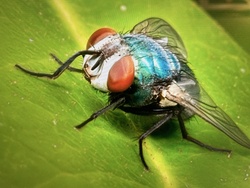
Spot a bottle fly by its shiny, metallic blue or green body and compact, buzzing flight.
Read the full Bottle Fly encyclopedia entry →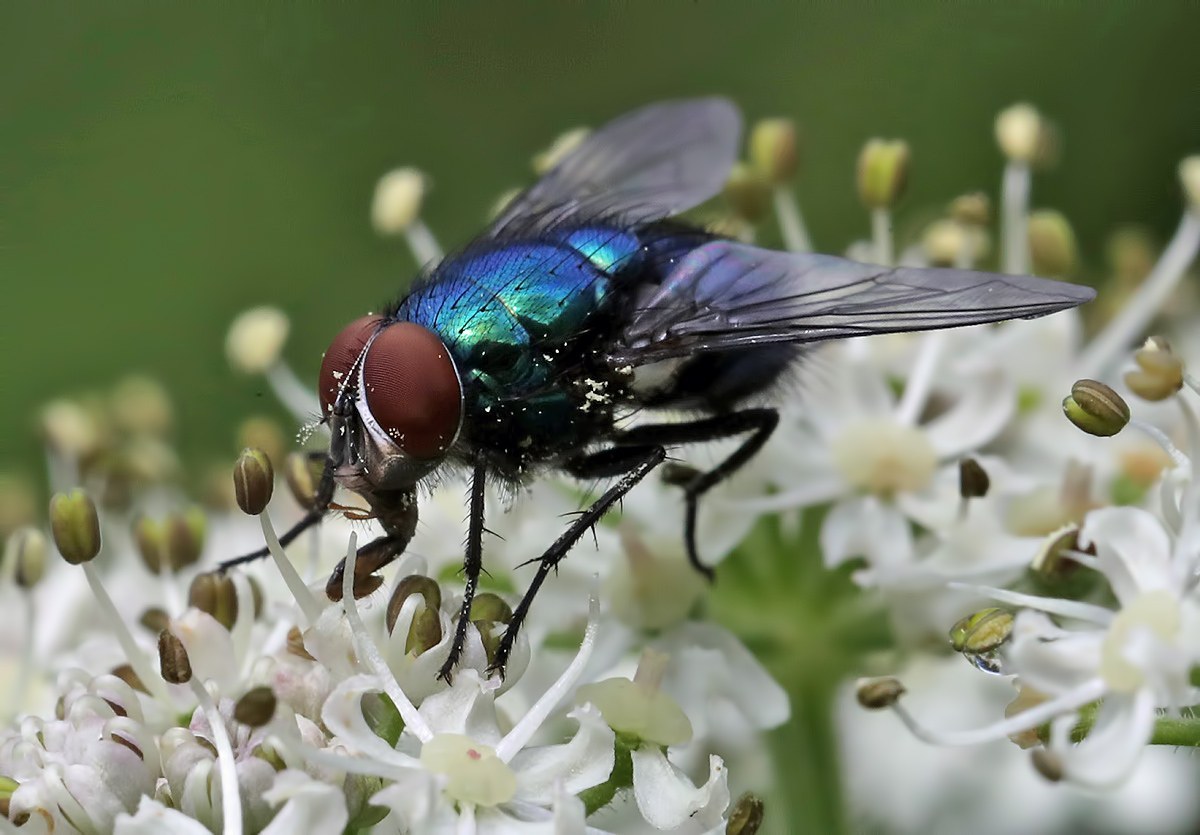
Key Visual Features
Bottle flies (also called blow flies in some regions) are best known for their striking metallic sheen.
- Size: Roughly 6 to 12 mm in body length, similar in size to a house fly but slightly stockier.
- Body shape: Compact, rounded body with a thick thorax and abdomen.
- Color: Bright, glossy metallic blue, green, or coppery sheen that reflects light distinctly — the single most recognizable feature.
- Wings: One pair of clear, veined wings held slightly apart from the body at rest.
- Legs: Six legs covered in short bristles, typical of true flies.
- Eyes: Large reddish or brownish compound eyes taking up much of the head.
Where and When You'd See One
Bottle flies are common in both outdoor and indoor settings, especially where organic material is present.
- Near garbage areas, compost, and outdoor spaces with decaying organic matter
- Frequently enter homes and buildings, often seen buzzing at windows trying to get outside
- Active during the day, especially in warm weather from spring through fall
- Attracted to sunlit surfaces and windows when indoors
Similar-Looking Bugs
- House flies are gray to black with dull, non-metallic coloring and four dark stripes on the thorax, unlike the shiny sheen of a bottle fly.
- Blow flies are extremely similar and closely related, often distinguished mainly by subtle differences in color tone (green versus blue) and precise body proportions rather than obvious visual cues.
- Flesh flies are gray with three dark stripes on the thorax and a checkered abdomen pattern, lacking the glossy metallic shine.
- June beetles, while unrelated, can appear similarly shiny at a glance, but have hardened wing covers and a beetle body shape rather than the single pair of fly wings.
Quick ID Checklist
- Bright, glossy metallic blue or green body
- Compact, rounded shape similar in size to a house fly
- Single pair of clear, veined wings
- Large reddish compound eyes
- Found near organic debris or buzzing at windows indoors
Frequently asked questions
What makes a bottle fly easy to identify?
Its glossy, metallic blue or green body color is the most distinctive and easily spotted feature.
How is a bottle fly different from a house fly?
House flies are dull gray with four dark thorax stripes, while bottle flies have a shiny metallic sheen and lack that striped pattern.
Where are bottle flies commonly seen?
They are often found near outdoor organic debris such as compost or garbage areas, and frequently enter buildings, buzzing near windows.
Are bottle flies and blow flies the same?
They are closely related and very similar in appearance, generally distinguished by subtle color tone and body proportion differences rather than any single obvious trait.
Bottle Fly identified by the community
Recent Bottle Fly finds identified with Bug Identifier.