Boxelder Bug (Eastern) Identification Guide
Recognize the eastern boxelder bug by its bold black body with three red-orange stripes and its habit of clustering in large sunny groups.
Read the full Boxelder Bug (Eastern) encyclopedia entry →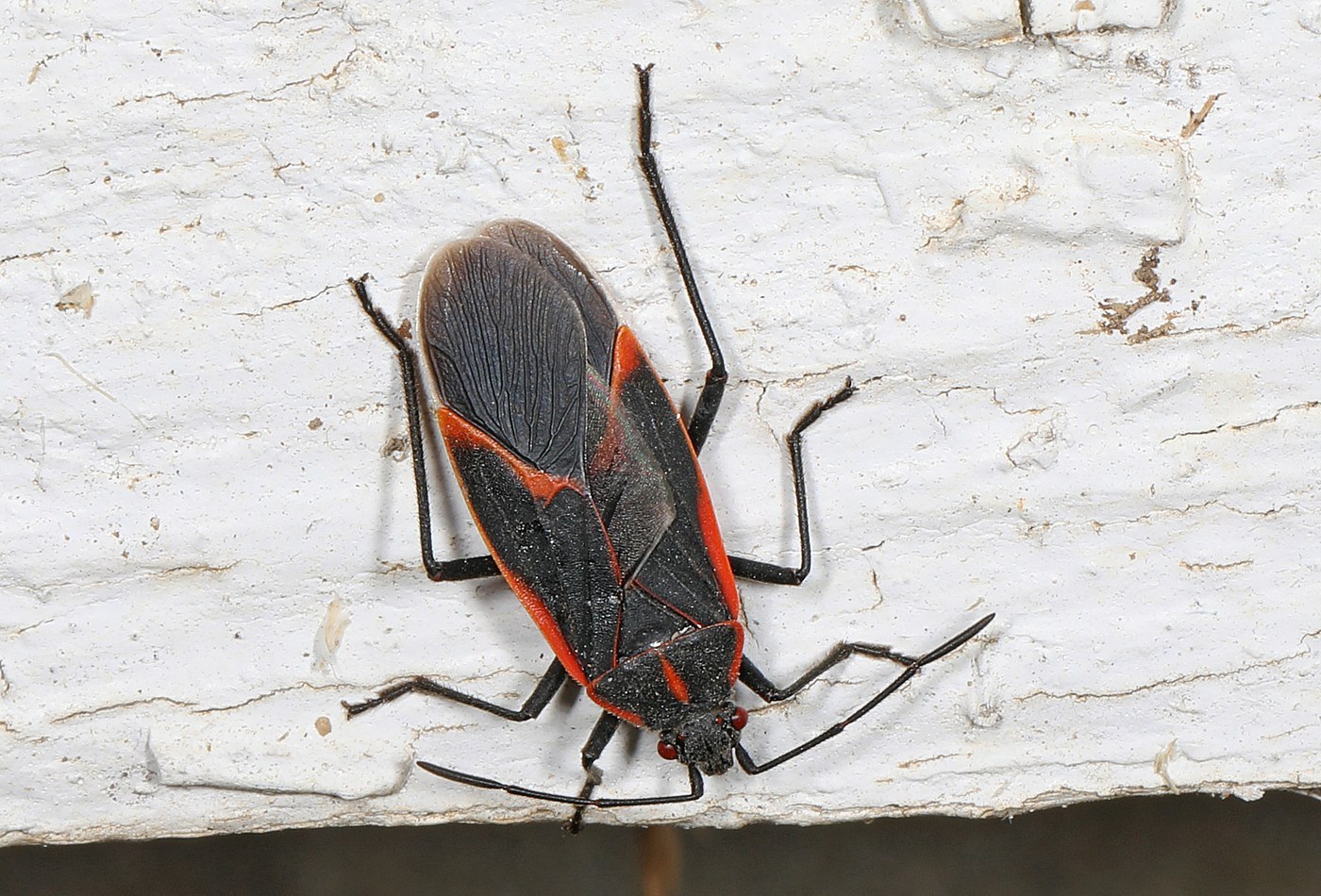
Key Features
- Elongated-oval, flattened body about 12-14mm long
- Black background color with three distinctive red-orange stripes - one down the center of the pronotum and one along each wing margin
- Wings fold flat over the back, creating a bold black-and-red pattern visible from above
- Six long, slender black legs
- Small black head with short, thread-like antennae
- Nymphs are wingless and bright red, gradually developing the black-and-red adult pattern with each molt
Where and When to Look
- Closely tied to boxelder trees, as well as maple and ash, where adults and nymphs feed on seeds, leaves, and twigs
- Adults are most visible in spring when they emerge from overwintering sites, and again in late summer through fall when they cluster in large numbers
- Common in yards, parks, and wooded areas with boxelder or maple trees nearby
- Frequently seen basking in large groups on sun-warmed tree trunks, rocks, and the south- or west-facing sides of buildings in autumn
Similar-Looking Bugs
- Red-shouldered (soapberry) bugs look similar but have red-orange coloring concentrated on the pronotum "shoulders" rather than full-length wing stripes, and favor soapberry-family trees instead of boxelder
- Elm seed bugs are smaller overall with thinner, less bold red-orange edging and are associated with elm trees
- Milkweed bugs share the black-and-orange theme but have a more rounded body with a bold geometric pattern on the wings rather than straight stripes
Life Cycle and Behavior
Boxelder bugs typically produce one to two generations per year depending on climate. Eggs are laid in bark crevices or on host tree foliage, and nymphs pass through several molts over the growing season before reaching the winged adult stage. Overwintering adults shelter in leaf litter, under bark, or inside structures, emerging again the following spring to resume feeding.
Quick ID Checklist
- Black body with three bold red-orange stripes (one central, two along the wing edges)
- Flattened, elongated-oval shape around 1/2 inch long
- Found on or near boxelder, maple, or ash trees
- Large sunny-day aggregations in spring and fall
- Bright red, wingless nymphs alongside black-and-red adults
Frequently asked questions
What's the easiest way to identify a boxelder bug?
Look for the black body with three red-orange stripes along the back, especially when seen clustering in groups on a sunny wall or tree trunk.
Why do boxelder bugs gather in such large groups?
They aggregate on warm, sunlit surfaces, especially in fall, as they search for sheltered spots to spend the winter.
How do young boxelder bugs (nymphs) look different from adults?
Nymphs are wingless and mostly bright red, gradually gaining the black coloring and wing pattern as they mature.
Are boxelder bugs only found near boxelder trees?
They favor boxelder trees but are also commonly found on maple and ash trees, especially seed-bearing female trees.
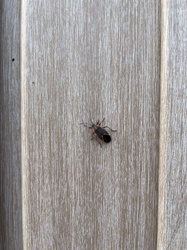
Boxelder Bug (Eastern) identified by the community
Recent Boxelder Bug (Eastern) finds identified with Bug Identifier.