
Brazilian Wandering Spider Identification Guide
Identify the Brazilian wandering spider by its large, robust build, hairy legs, and alert, ground-hunting posture.
Read the full Brazilian Wandering Spider encyclopedia entry →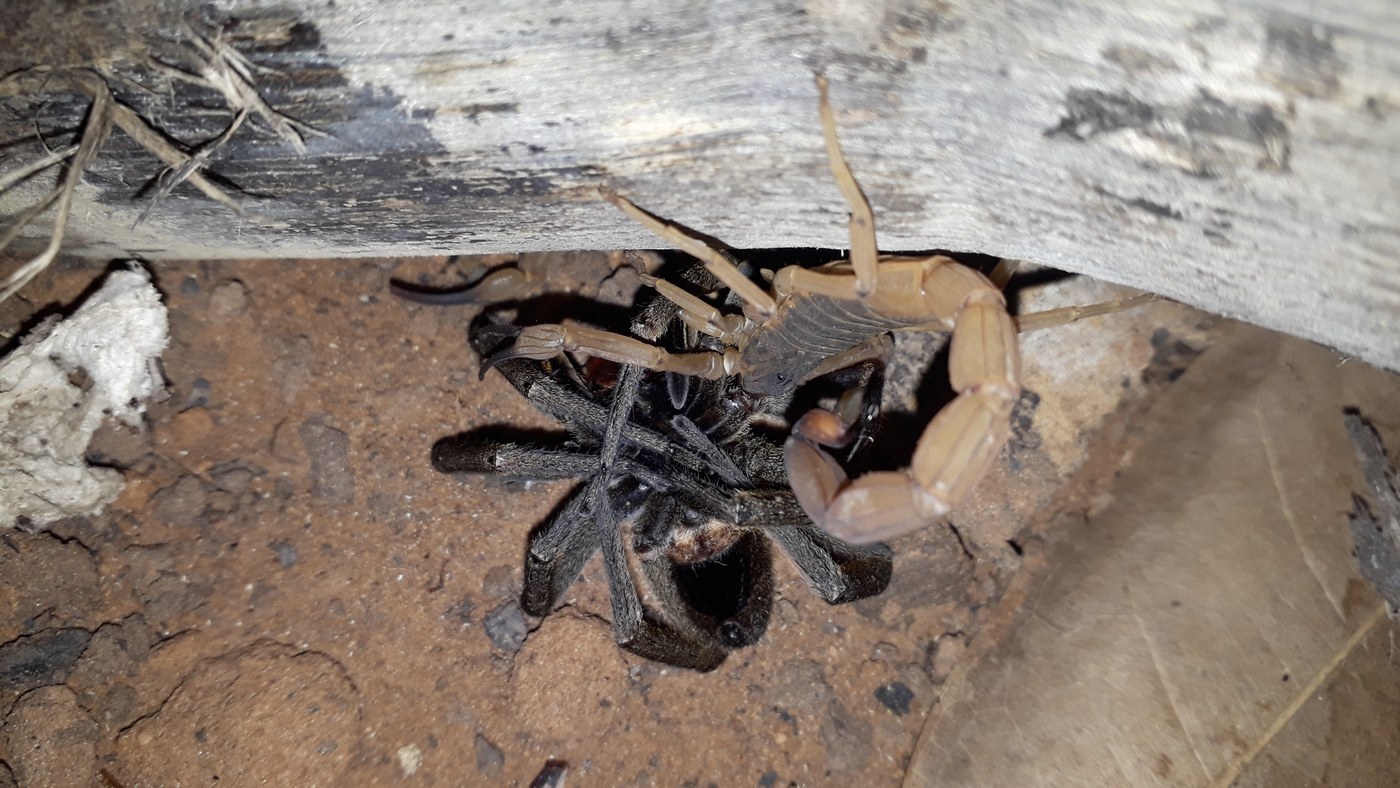
Key Visual Features
The Brazilian wandering spider is a large, muscular ground hunter rather than a web builder. Recognizable traits include:
- Size: Leg span often reaches 4-5 inches, with a stout, hairy body about 1.5-2 inches long.
- Color: Generally brown or grayish-brown overall, with legs that may show faint banding.
- Underside markings: When threatened, it lifts its front legs to reveal patches of black and white or reddish coloring on the underside of the legs and body, part of a warning display.
- Body shape: A robust, slightly flattened body with long, thick legs covered in fine hairs, built for speed on the ground rather than climbing thin threads.
- Eyes: Eight eyes arranged in three rows, giving it excellent night vision typical of active hunting spiders.
Where and When You'll See One
This spider is native to tropical South America, especially Brazil, and is a nocturnal, ground-dwelling hunter. During the day it hides in leaf litter, under logs, in banana plants, or in dark, sheltered spots; at night it actively wanders the forest floor searching for prey rather than sitting in a web. It does not spin a capture web at all, which is a key identification clue.
Similar-Looking Spiders
- Huntsman spiders: Also large and fast-moving but have a flatter, crab-like stance and lack the dramatic leg-raising warning display.
- Wolf spiders: Similar hairy brown bodies and ground-hunting habits, but wolf spiders are generally smaller and carry egg sacs attached to their spinnerets, then carry spiderlings on their backs.
- Tarantulas: Bulkier and slower-moving with a rounder abdomen, whereas wandering spiders are leaner and quicker.
Quick ID Checklist
- Large, hairy, brown to grayish body with no web nearby
- Long, thick legs suited for fast ground movement
- Raised front-leg warning posture revealing underside markings when disturbed
- Found hiding in leaf litter, logs, or dense vegetation by day
- Active hunter roaming the forest floor at night rather than sitting in a web
Frequently asked questions
How can I tell a wandering spider isn't a tarantula?
Wandering spiders have a leaner, more streamlined body and longer legs built for speed, while tarantulas are bulkier, slower, and covered in denser hair.
Why doesn't the Brazilian wandering spider build a web?
It's an active ground hunter that chases down prey at night rather than trapping it, so it relies on speed and stealth instead of silk snares.
What does the leg-raising posture mean?
It's a defensive display used to look larger and reveal bright underside markings, warning whatever is nearby to back off.
Where in its habitat is this spider most often found during the day?
It typically hides in dark, sheltered spots like leaf litter, fallen logs, or dense low vegetation, emerging to hunt after dark.