
Broad-Bodied Chaser Identification Guide
Recognize this stocky dragonfly by its wide, flattened abdomen, powder-blue or yellow-brown coloring, and short darting flights.
Read the full Broad-Bodied Chaser encyclopedia entry →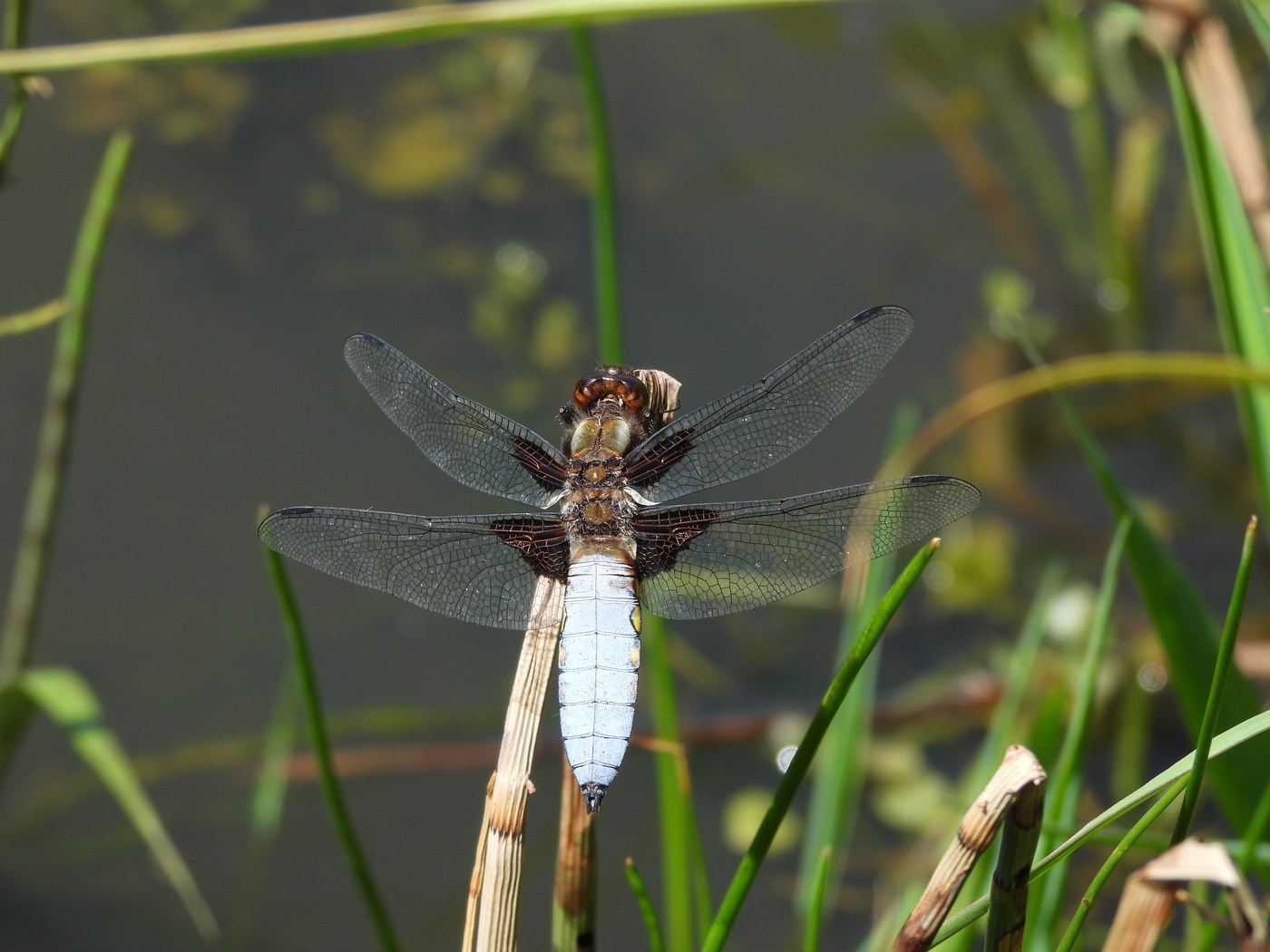
Key Visual Features
The broad-bodied chaser is a distinctive, stocky dragonfly named for its unusually wide, flattened abdomen.
- Size: Medium-sized dragonfly, body length around 40-48 mm, appearing shorter and stockier than many other dragonfly species due to its broad shape.
- Color: Mature males develop a powdery, pale blue abdomen (from a waxy bloom called pruinescence) with small yellow patches along the sides; females and immature males are golden-brown to yellowish-brown with similar yellow side spots, lacking the blue bloom.
- Body shape: The abdomen is notably broad and flattened, almost oval when viewed from above, giving the whole body a compact, paddle-like silhouette very different from the long, slender abdomens of hawker or emperor dragonflies.
- Wings: Clear wings with a distinctive dark brown-black patch at the base of each wing, held open flat at rest as in all dragonflies.
- Eyes: Large compound eyes meeting broadly at the top of the head.
- Flight behavior: Tends to make short, fast darting flights from a favorite perch, returning to the same spot repeatedly, rather than continuously patrolling long stretches of water like the emperor dragonfly.
Where and When You'd See It
Broad-bodied chasers favor small, sunny, often newly created ponds, garden ponds, and shallow pools with some open water and sparse vegetation, making them one of the first dragonflies to colonize new water bodies. They are active from late spring through mid-summer, frequently seen perched on a prominent twig or reed stem at the water's edge, darting out briefly to chase prey or intruders before returning to the same perch.
Similar-Looking Bugs
- Four-spotted chaser: Similar stocky body shape but shows extra dark wing spots along the leading edge of each wing in addition to the base patches, and lacks the powdery blue bloom of the male broad-bodied chaser.
- Black-tailed skimmer: Has a more slender, less flattened abdomen and a dark tip to the abdomen, without the broad oval shape of the chaser.
- Emperor dragonfly: Much larger with a long, slender, straight abdomen rather than the short, wide, flattened shape of the broad-bodied chaser.
Quick ID Checklist
- Short, stocky dragonfly with a broad, flattened, oval abdomen
- Males: powdery pale blue abdomen with yellow side patches
- Females/immatures: golden-brown abdomen with yellow side patches
- Dark patch at the base of each clear wing
- Short darting flights returning repeatedly to the same perch
Frequently asked questions
What body feature gives the broad-bodied chaser its name?
Its abdomen is unusually wide and flattened, almost oval when viewed from above, giving it a stockier, paddle-like silhouette compared to most other dragonflies.
How can you tell a male from a female broad-bodied chaser?
Mature males develop a powdery pale blue abdomen with small yellow side patches, while females and immature males remain golden-brown to yellowish with the same yellow side markings but no blue bloom.
What wing feature helps confirm this species?
Each wing shows a distinctive dark brown-black patch at its base, a helpful field mark when combined with the broad, flattened abdomen shape.
What kind of pond is most likely to attract a broad-bodied chaser?
Small, sunny, often newly established ponds with open water and sparse vegetation are favored, and this species is frequently among the first dragonflies to colonize new water bodies.