
Bullet Ant Identification Guide
Identify the Bullet Ant by its large size, uniform black color, and shiny, robust build.
Read the full Bullet Ant encyclopedia entry →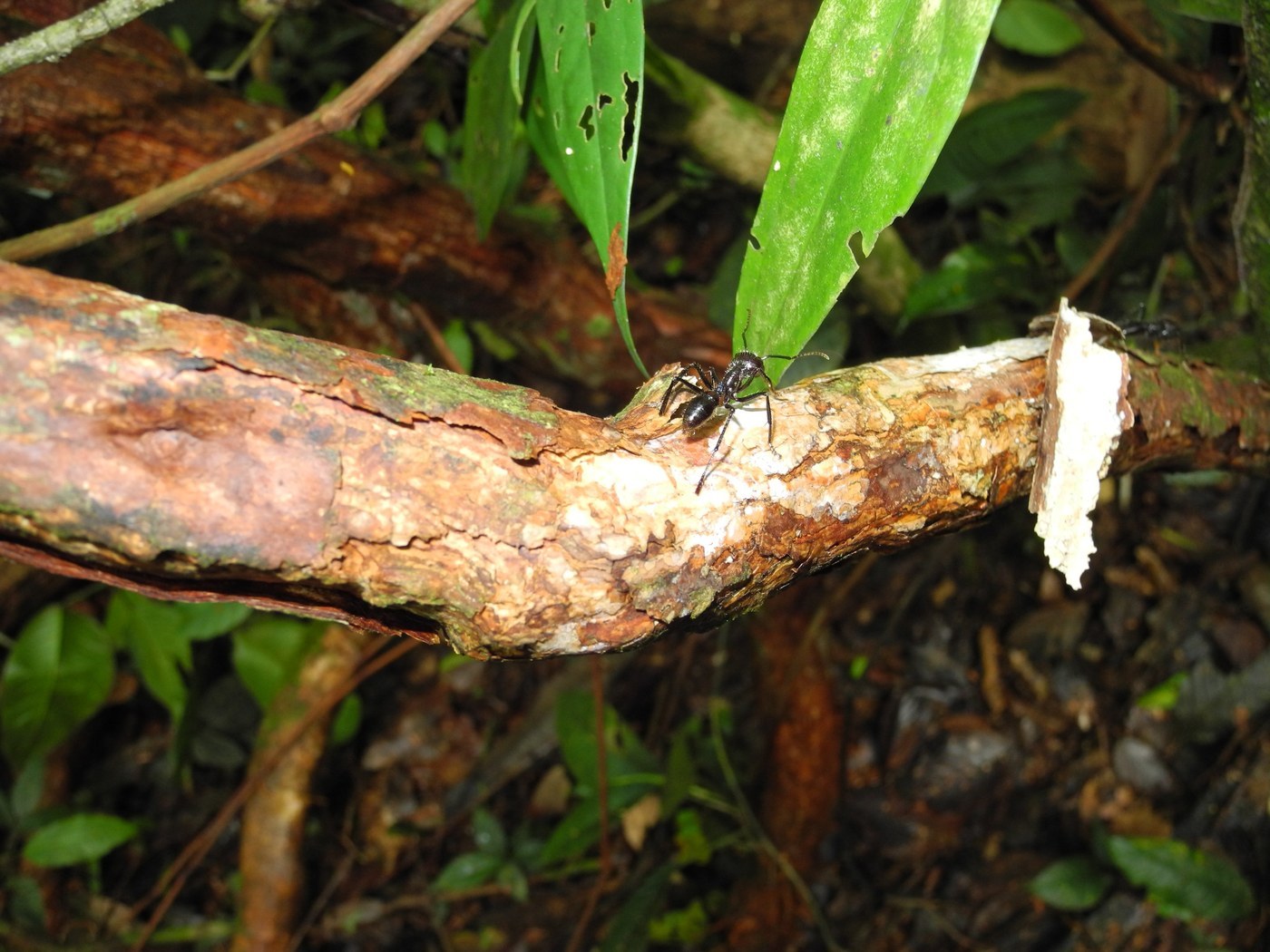
Key Visual Features
- One of the largest ant species in the world, with workers measuring roughly 18-30 mm (up to about 1.2 inches) long.
- Uniformly dark reddish-black to black in color, with a smooth, glossy exoskeleton.
- Robust, heavily built body with a large head, strong mandibles, and a noticeably narrow, waist-like connection (petiole) between the thorax and abdomen.
- Long legs relative to body size, giving it an agile, fast-moving gait compared to bulkier ants.
- Antennae are long, thin, and elbowed, constantly probing as the ant moves.
- Lacks wings in the worker caste; only reproductive males and queens develop wings during their brief mating flights.
Where and When You're Likely to See It
- Native to lowland rainforests of Central and South America, found from Nicaragua through the Amazon Basin.
- Typically nests at the base of large trees, in leaf litter, or in decaying logs on the forest floor.
- Workers are solitary foragers rather than forming the dense mass columns seen in some other ant species, often seen singly climbing tree trunks or moving through leaf litter and low vegetation.
- Active both day and night, though foraging activity often increases after dusk in humid, warm conditions typical of tropical rainforest.
- Found at all levels of the forest, from the ground up into the lower and mid canopy while foraging on vegetation.
Similar-Looking Species
- Carpenter ants can reach a large size but rarely match the bullet ant's bulk and lack its glossy, uniformly black finish.
- Army ants travel in large visible columns and swarms, unlike the bullet ant's more solitary foraging pattern.
- Giant tropical bull ants are similarly large in some regions but often show reddish or bicolored patterning rather than the bullet ant's solid black coloring.
- Trap-jaw ants have distinctive straight, trap-like mandibles held open at a wide angle, differing from the bullet ant's more standard curved mandibles.
Quick ID Checklist
- Very large (18-30 mm), solid black to reddish-black ant.
- Smooth, glossy exoskeleton and robust build.
- Long legs and long, elbowed antennae.
- Found singly on tree trunks or leaf litter in tropical rainforest.
- Nests at the base of large trees or in decaying logs.
Frequently asked questions
How big does a Bullet Ant get compared to other ants?
Workers typically reach 18-30 mm, making it one of the largest ant species in the world, dwarfing most common household or garden ants.
Where in the world would I encounter a Bullet Ant?
It is native to lowland tropical rainforests from Nicaragua south through the Amazon Basin in Central and South America.
Does the Bullet Ant travel in large groups like army ants?
No, bullet ants typically forage alone, climbing tree trunks or moving through leaf litter individually rather than in visible mass columns.
What does a Bullet Ant nest look like?
Nests are usually found at the base of large trees, hidden within leaf litter or decaying logs on the rainforest floor.