
Cabbage White Identification Guide
Recognize the cabbage white by its plain white wings and simple black wingtip markings.
Read the full Cabbage White encyclopedia entry →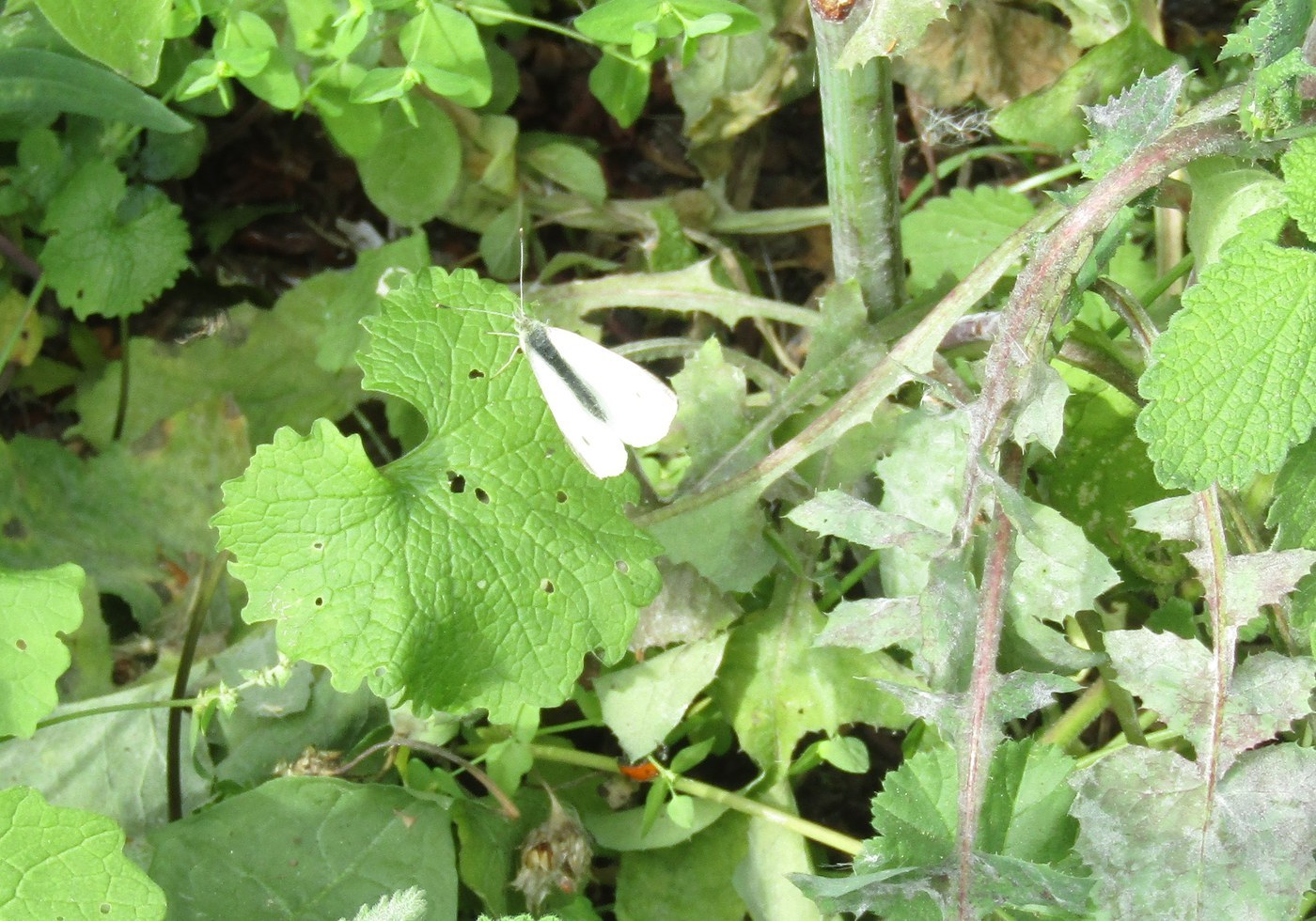
Key Visual Features
The cabbage white (Pieris rapae) is one of the most familiar and widespread butterflies, known for its clean, simple look.
- Size: Wingspan of about 1 3/4 to 2 1/4 inches (4.5–6 cm), making it a small to medium butterfly.
- Color: Predominantly white to pale cream on both wing surfaces.
- Body shape: Slender body with a light gray-white dusting, typical of white and sulphur butterflies.
- Wings: Forewing tips are shaded gray to black. Males typically show one black spot on each forewing, while females show two. The underside of the hindwing is pale yellow-green, offering subtle camouflage when the butterfly rests with wings closed.
- Antennae: Black and white banded, clubbed at the tip.
Where and When You'll See One
Cabbage whites are extremely common in open, sunny habitats: gardens, agricultural fields, meadows, roadsides, and vacant lots almost anywhere in the world outside the tropics and polar regions. They are especially drawn to areas with plants in the mustard/cabbage family, which serve as host plants for their caterpillars. Adults fly in a fluttery, somewhat erratic pattern low over vegetation and can be seen from early spring through late fall, often producing multiple generations in a single season.
Similar-Looking Bugs
- Other white butterflies (e.g., checkered white, western white): May share the plain white base color but often show more extensive black checkering or veining across the wings rather than a simple gray-black tip.
- Sulphur butterflies: Typically pale yellow rather than white, with different spot patterns and often a small central spot on the forewing.
- Cabbage moths (day-flying moths): Moths tend to have feathery or thread-like antennae rather than the clubbed antennae of the cabbage white, and a stockier, fuzzier body.
Quick ID Checklist
- Small, plain white wings with gray-black tips
- One black forewing spot on males, two on females
- Pale yellow-green underside on the hindwing
- Fluttery, low flight over open vegetation
- Common in gardens and fields nearly everywhere
Frequently asked questions
How can I tell a male cabbage white from a female?
Count the black spots on the forewing: males typically have just one spot, while females usually have two. Females can also appear slightly more heavily marked overall.
How do I tell a cabbage white from other small white butterflies?
Cabbage whites have a simple pattern — plain white wings with gray-black tips and one or two small spots — while many other white species show more extensive black veining or checkered patterns across the wing surface.
When is the best time to see cabbage whites?
They are active from early spring through late fall in most temperate regions, with several generations appearing throughout the warm months, making them one of the most consistently visible butterflies of the season.
Is the cabbage white found worldwide?
It is native to Europe, Asia, and North Africa but has become established across North America and other regions, making it one of the most widely distributed white butterflies today.