
Carolina Mantis Identification Guide
Learn to recognize North America's native mottled-gray mantis by its camouflage pattern and wing length differences between males and females.
Read the full Carolina Mantis encyclopedia entry →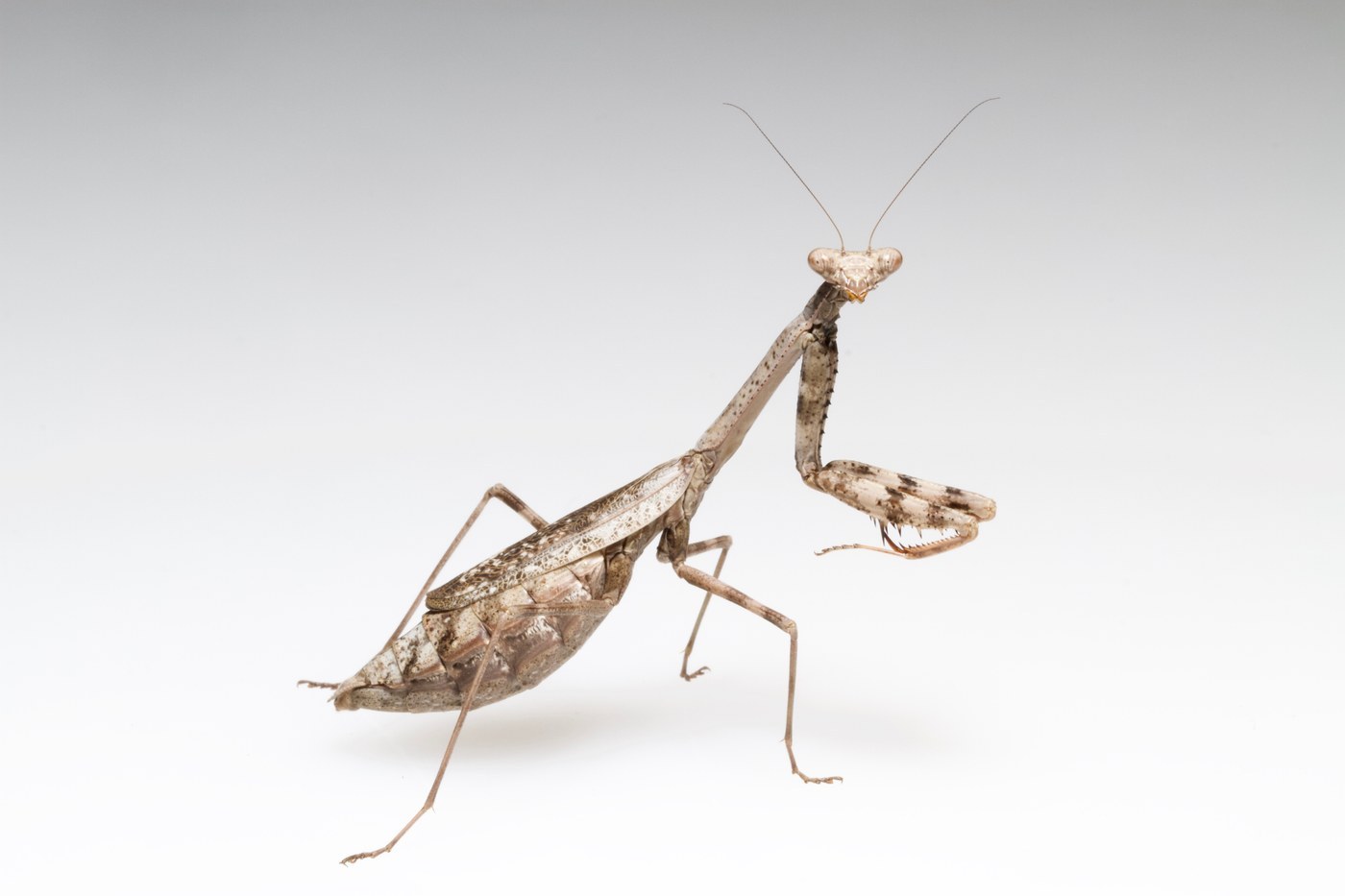
Key Visual Features
The Carolina mantis (Stagmomantis carolina) is a medium-sized mantis, with females reaching about 2 to 2.4 inches and males slightly smaller and slimmer.
- Color: Mottled gray, brown, or greenish-gray, often blending closely with tree bark, dry grass, or weathered wood.
- Body shape: Elongated and slender, with a triangular head that can swivel to track movement.
- Forelegs: Large, spined, raptorial front legs held folded in front of the body in a "praying" posture.
- Wings: Males have long wings that extend past the tip of the abdomen, allowing weak flight. Females have shorter wings that do not fully cover the abdomen, making them flightless or nearly so.
- Eyes and antennae: Large compound eyes on either side of the triangular head, with slender thread-like antennae.
Where and When You'll See It
Carolina mantises are native to the southern and eastern United States, favoring gardens, shrubs, tall grass, and open fields with plenty of perching surfaces. They are most visible from mid-summer through fall, when nymphs mature into adults. Look for them perched motionless on plant stems, fence posts, or garden walls, often waiting in ambush for passing insects during daylight hours.
Similar-Looking Species
- Chinese mantis: Noticeably larger (up to 4+ inches), bright green or tan, with a distinct green stripe bordering the wing margins. The Carolina mantis is smaller and lacks the strong bright-green wing edge.
- European mantis: Usually bright green or tan with a diagnostic bullseye-shaped mark ringed in white on the inside of the front legs near the "elbow." The Carolina mantis does not have this bullseye spot and instead shows an overall mottled, bark-like coloring.
- Nymphs of any mantis species: Young mantises of different species can look similar; wing development and coloring become more diagnostic as they mature into adults.
Quick ID Checklist
- Mottled gray-brown-green coloring that resembles bark or dry vegetation
- Female wings shorter than the abdomen; male wings extend past it
- No bullseye marking on the inner foreleg
- Triangular, mobile head with large eyes
- Found perched on plants or structures in gardens and fields, southern/eastern US
Frequently asked questions
How can I tell a male from a female Carolina mantis?
Females have a thicker abdomen and shorter wings that don't fully cover it, while males are slimmer with longer wings that extend past the abdomen tip.
What color is a Carolina mantis?
It's typically mottled gray, brown, or grayish-green, which helps it blend in with bark, dry stems, and weathered surfaces rather than bright foliage.
How is the Carolina mantis different from the European mantis?
The European mantis has a distinctive white-ringed bullseye spot on the inside of its front legs, which the Carolina mantis lacks; the Carolina mantis also has a duller, more camouflaged pattern overall.
When is the best time to spot a Carolina mantis?
Adults are most commonly seen from late summer into fall, perched on stems or structures in gardens and open fields during the day.