Carrot Rust Fly Identification Guide
Spot this slender, shiny black fly by its yellow head and legs and its rust-colored root tunnels.
Read the full Carrot Rust Fly encyclopedia entry →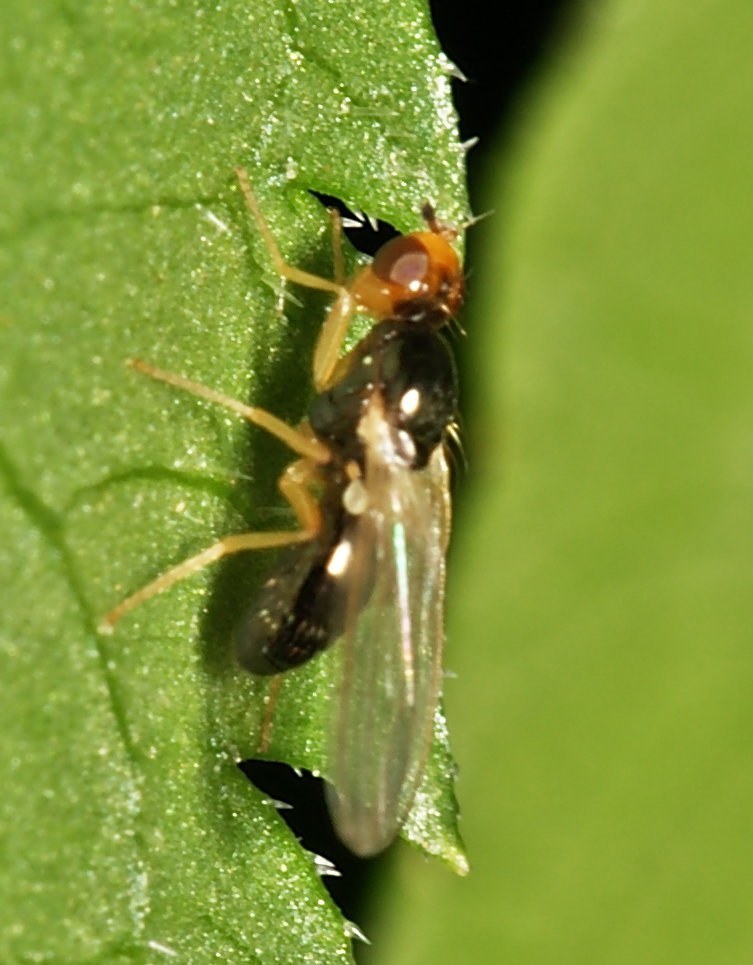
Key Visual Features
The carrot rust fly is a small, slender fly with a distinctive color contrast that helps set it apart from other garden flies.
- Adults measure about 1/5 to 1/4 inch (4-6 mm) long with a shiny, metallic greenish-black body.
- The head is yellow to orange, and the legs are also yellow, creating a clear contrast against the dark body and wings.
- Wings are clear and held flat over the body at rest, and the overall body shape is narrow and elongated compared to a house fly.
- The larvae are small, yellowish-white, legless maggots with a tapered front end, similar in general form to other root maggots, found tunneling within carrot and related roots.
- Larval tunnels leave a rust-colored, scarred trail on the root surface, which is where the common name comes from.
Where and When You'd See It
Carrot rust flies are associated with carrots and other umbellifer crops such as parsley, celery, and parsnip. Adults are weak fliers and tend to stay low, resting on foliage near the soil in shaded, cool, and humid conditions rather than flying in open sun. They are most active in spring and again in late summer to fall, with two generations common in many regions. Larvae live in the soil and inside roots, so their rust-colored tunneling damage is usually discovered when roots are harvested or pulled.
Similar-Looking Bugs
- House flies are larger, bristly, and gray-striped rather than shiny black with a yellow head, making them easy to distinguish at a glance.
- Onion flies are a similar size and general fly shape but lack the yellow head and legs, tending toward a duller gray-brown coloring.
- Fruit flies are smaller, often with red eyes and a more rounded body, and are not associated with root tunneling.
- Other small root maggot flies can look similar in silhouette, but the sharp yellow-and-black contrast plus the association with carrot-family plants is a strong clue for carrot rust fly specifically.
Quick ID Checklist
- Shiny greenish-black body with a yellow head and yellow legs
- Small, narrow-bodied fly about 4-6 mm long
- Found resting low on foliage near carrot-family plants
- Larvae are pale, legless maggots inside roots
- Rust-colored tunneling scars on carrot or parsnip roots are a telltale sign
Frequently asked questions
What makes the carrot rust fly's head color distinctive?
Its head and legs are bright yellow to orange, standing out sharply against the shiny black-green body, which is a key feature separating it from similar flies.
Why is it called a 'rust' fly?
The larvae tunnel through carrot and related roots, leaving rusty, reddish-brown scarring on the root surface.
When are adult carrot rust flies most active?
They tend to be active in cooler, shaded conditions during spring and late summer to fall, and are generally weak, low-flying insects.
How can I confirm root damage is from carrot rust fly larvae?
Look for slender rust-colored tunnels just under the root surface along with small, pale, legless maggots inside the affected root.
Carrot Rust Fly identified by the community
Recent Carrot Rust Fly finds identified with Bug Identifier.