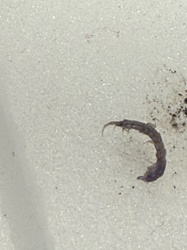
Centipede Identification Guide
Spot a centipede by its flattened body, one pair of long legs per segment, and fast, darting movement.
Read the full Centipede encyclopedia entry →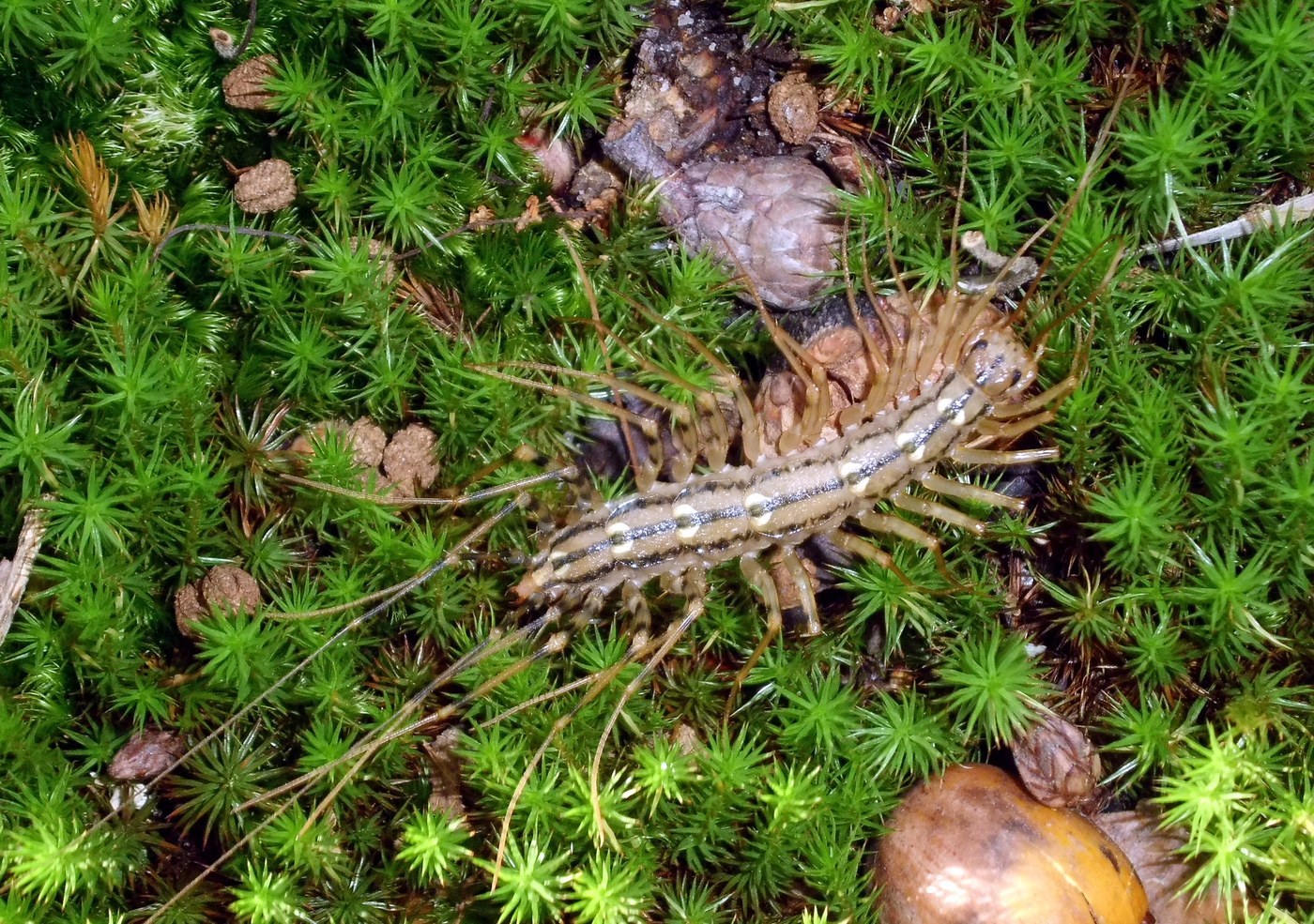
Key Visual Features
Centipedes are fast-moving, elongated arthropods with a body plan that sets them apart from their millipede relatives.
- Body shape: Flattened top-to-bottom, elongated, and made up of a series of segments, giving a more streamlined profile than a millipede.
- Legs: One pair of legs per body segment, with the legs often long and trailing visibly out to the sides as the animal moves.
- Size: Varies by species, from under an inch to several inches long, with the last pair of legs sometimes noticeably elongated and trailing behind like extra antennae.
- Color: Often yellowish-brown, reddish-brown, or tan, sometimes with darker banding along the body.
- Head features: Long, thin antennae at the front, and a pair of modified front legs (forcipules) near the head used to grasp prey.
- Leg count: The number of leg pairs varies by species, generally an odd number ranging from 15 up to over 100, always fewer and longer than the legs on a similarly sized millipede.
Where and When You'll See Them
Centipedes seek out damp, dark hiding spots such as under rocks, logs, mulch, leaf litter, and in basements or crawl spaces. They are largely nocturnal, emerging at night to hunt, and are more often glimpsed darting quickly across a surface than seen at rest. They're most commonly encountered in warm, humid weather.
Similar-Looking Bugs
- Millipede: The closest look-alike, but millipedes have two pairs of legs per segment, a rounder cross-section, and move slowly, curling up rather than fleeing.
- Silverfish: Similarly quick-moving but much smaller, with a tapered teardrop body and no long trailing legs along the sides.
- Earwigs: Have pincers at the rear and only six legs, unlike a centipede's many leg pairs.
Quick ID Checklist
- Flattened, elongated body with visible segments
- One pair of long legs per segment, trailing to the sides
- Fast, darting movement rather than slow crawling
- Long antennae at the front of the head
- Found in damp, dark spots like under logs, rocks, or in basements
Frequently asked questions
How do I quickly tell a centipede from a millipede?
Centipedes are flatter, move fast, and have one pair of long legs per segment, while millipedes are rounder, move slowly, and have two pairs of shorter legs per segment.
Why do centipedes have such long back legs?
In many species the last pair of legs is elongated and can resemble a second set of antennae, which may help the animal sense its surroundings while moving backward.
Are centipedes usually seen during the day?
Not often—they are mostly nocturnal and prefer to stay hidden in damp, dark spots during the day, becoming active at night.
What kind of places do centipedes prefer?
Humid, dark environments such as under rocks, logs, leaf litter, mulch beds, and damp areas of basements or crawl spaces.
Centipede identified by the community
Recent Centipede finds identified with Bug Identifier.