Checkered White Identification Guide
A white butterfly with a scattered, checkered brown-black pattern that is bolder in females than males.
Read the full Checkered White encyclopedia entry →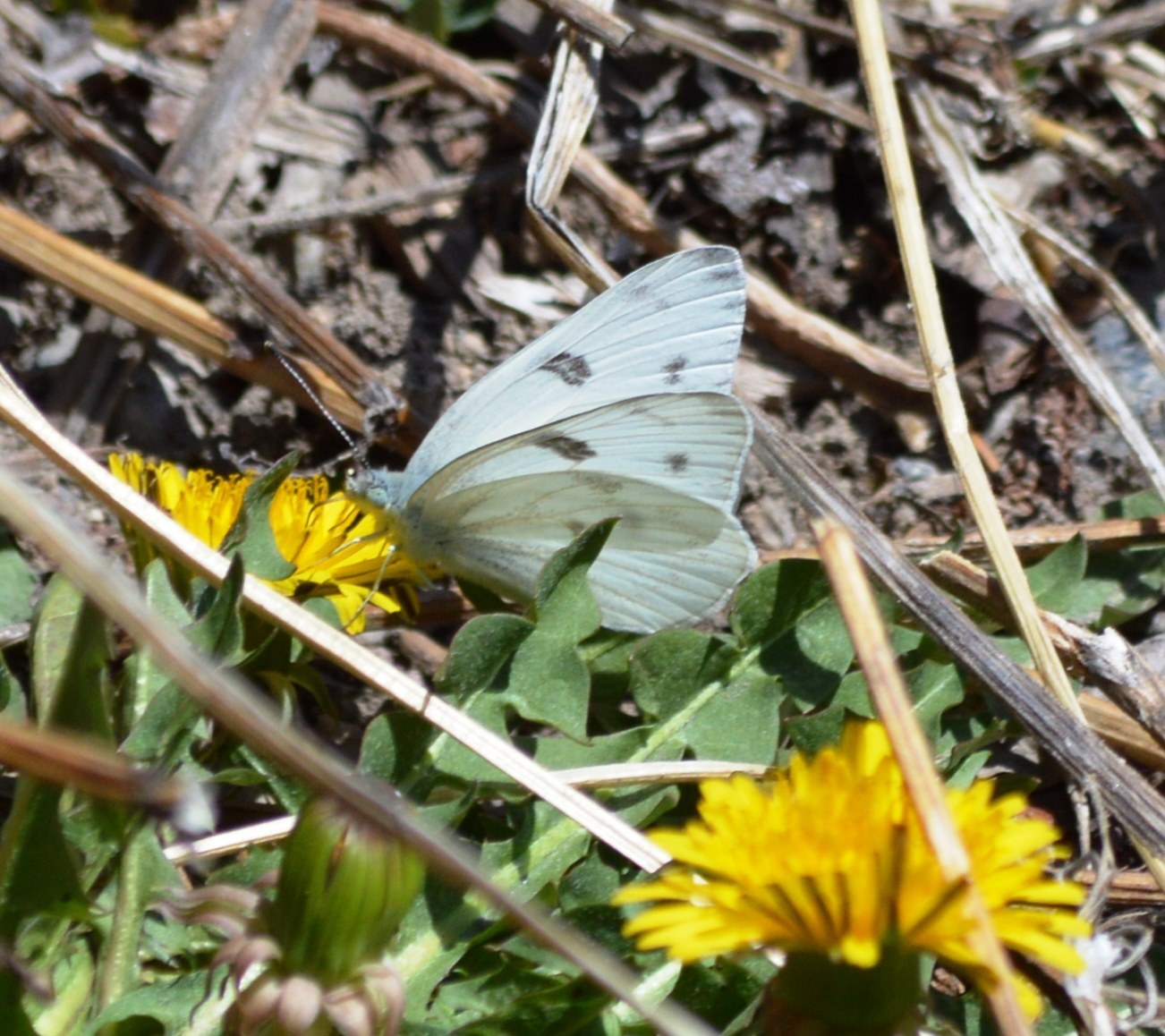
Key Features
The checkered white (Pontia protodice) is a small-to-medium white butterfly, with a wingspan of about 1.5 to 2 inches. Distinguishing traits include:
- White wings marked with an irregular, checkered pattern of gray-brown to black blotches, most concentrated near the wingtips and along the veins.
- Females show a noticeably heavier, more extensive checkered pattern across both wings, giving them a marbled look, while males appear cleaner and whiter with lighter markings.
- Underside of the hindwing is pale with faint yellow-green to olive veining and mottling that provides subtle camouflage at rest.
- Wings are moderately rounded with a fairly direct, low-to-medium flight.
Where and When to Spot It
Checkered whites favor open, dry habitats: fields, roadsides, vacant lots, agricultural edges, and prairies, and they are especially common across the central and western United States, with more localized populations in the east. They are active from spring through fall across most of their range, with multiple generations possible in warmer areas. Look for them low over open, sun-baked ground and around mustard-family plants, their caterpillar hosts.
Similar Species
- Cabbage white: Has one or two bold, solid round black spots rather than a scattered checkered pattern, and a plain pale yellow-green hindwing underside.
- Great southern white: Larger, found mainly along the coast, with black marks concentrated at the wingtip rather than scattered checkering across the wing.
- Western white: Very similar and best separated by range and subtle underside vein shading; often requires close comparison. Comparing the degree and location of checkering, along with wing shape and habitat, will usually narrow down which of these related white butterflies you are observing.
Quick ID Checklist
- Small-to-medium white butterfly with scattered checkered markings
- Females more heavily marked/marbled than males
- Underside hindwing shows faint olive-yellow veining
- Found in open, dry fields and roadsides
- Active spring through fall, multiple generations
FAQs
Frequently asked questions
How do male and female checkered whites differ?
Males look cleaner and whiter with lighter markings, while females carry a heavier, more extensive checkered pattern that gives them a marbled appearance.
How is the checkered white different from the common cabbage white?
The cabbage white has one or two bold solid black spots, while the checkered white has a scattered, irregular checkered pattern across the wings.
What habitat should I search to find checkered whites?
Open, dry areas such as fields, roadsides, and agricultural edges, particularly in the central and western United States, are the most reliable habitats.
Does the checkered white have more than one generation per year?
Yes, in warmer parts of its range it can produce multiple generations from spring through fall.
Checkered White identified by the community
Recent Checkered White finds identified with Bug Identifier.