Chinese Mantis Identification Guide
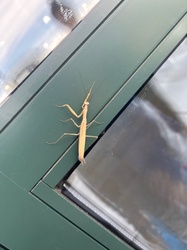
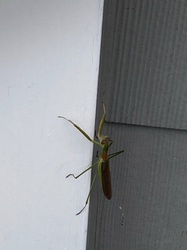
Identify the Chinese mantis by its large size, green-edged wings, and characteristic upright, raptorial front legs.
Read the full Chinese Mantis encyclopedia entry →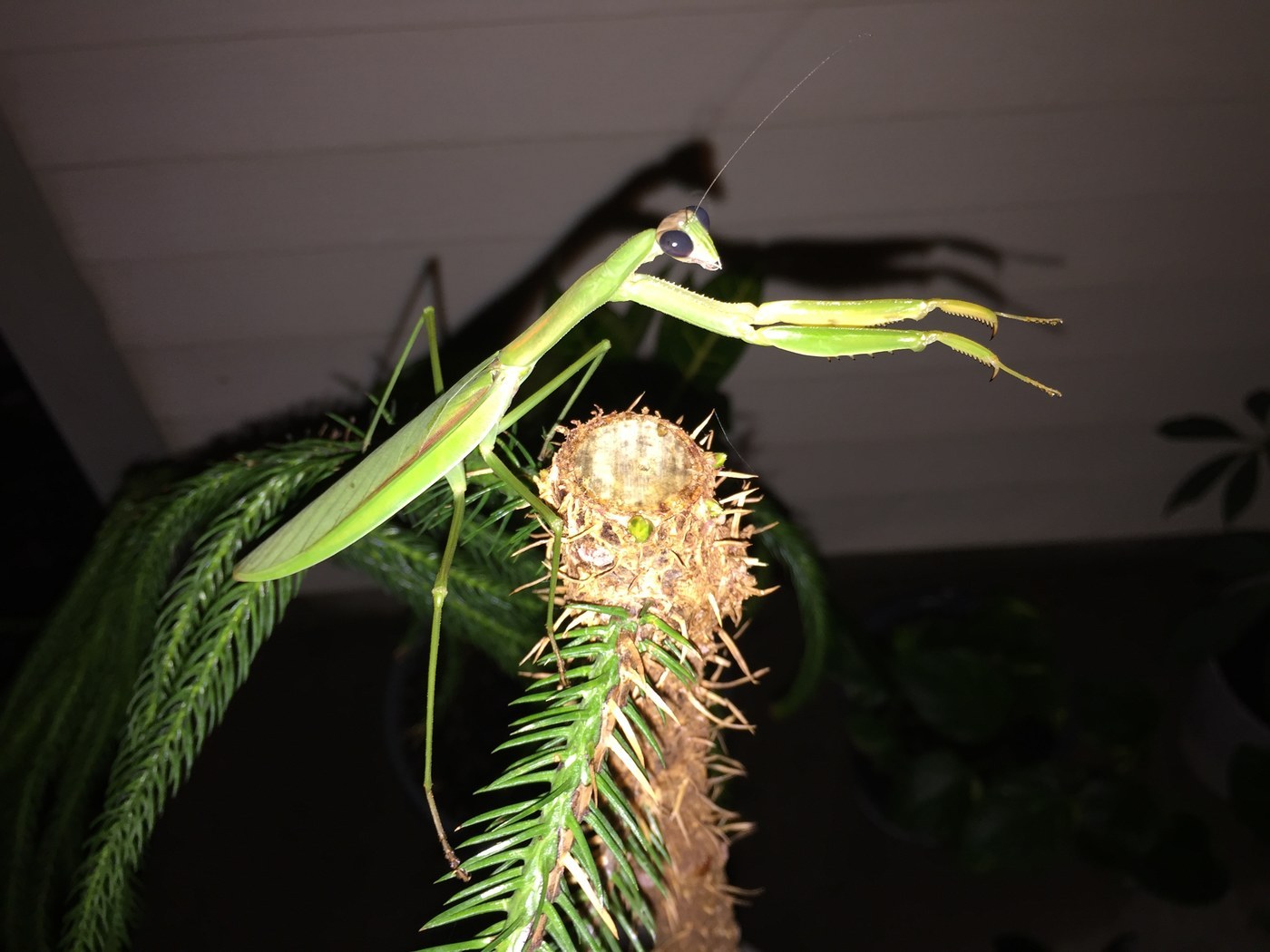
Key Visual Features
The Chinese mantis is one of the largest mantis species commonly encountered, easily recognized by its size and coloring.
- Body: Long and slender, typically 3 to 5 inches long, making it noticeably larger than most native mantis species.
- Color: Generally light brown or tan overall, with a distinctive green stripe running along the outer edge of the folded forewings.
- Head: Triangular with large compound eyes positioned for excellent binocular vision, and the ability to rotate nearly 180 degrees.
- Front legs: Enlarged, spined, raptorial forelegs held folded upward in a "praying" posture, used to grasp prey.
- Wings: Long, extending past the tip of the abdomen; males have narrower bodies and are more inclined to fly, while females are bulkier with a wider abdomen.
Where and When You'd See Them
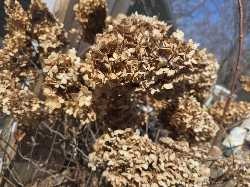
Chinese mantises are found in gardens, meadows, tall grasses, and shrubby edges, typically from mid-summer through fall as nymphs mature into full-sized adults. They are most active during the day, perching motionless on plants while waiting to ambush passing prey, and their coloring blends well with dried grasses and stems. In fall, females can be seen depositing distinctive frothy egg cases, called oothecae, on twigs and stems; these tan, papery-looking masses persist through winter and are often the easiest way to spot mantis activity in an area even after the adults are gone.
Similar-Looking Bugs
- Carolina mantis: Smaller, generally under 2.5 inches, with mottled gray or brown coloring rather than the tan-and-green pattern of the Chinese mantis, and shorter wings that don't fully cover the abdomen in females.
- European mantis: Typically bright green or tan with a distinctive dark "bullseye" spot on the inside of each front leg, which the Chinese mantis lacks.
- Walking sticks: Lack the enlarged raptorial front legs and triangular head of a mantis, with a uniformly stick-like body instead.
- Katydids: Leaf-shaped wings and long antennae, but without the mantis's characteristic folded, spiked front legs.
Quick ID Checklist
- Large size, typically 3 to 5 inches long, among the biggest mantises seen in gardens
- Tan to light brown body with a green stripe along the wing edges
- Enlarged, spined front legs held folded upward
- Triangular head with large, mobile eyes
- Frothy, tan, papery egg cases (oothecae) attached to twigs in fall and winter
Frequently asked questions
How can I tell a Chinese mantis from a Carolina mantis?
The Chinese mantis is noticeably larger, generally 3 to 5 inches long, with a tan body and a green stripe along the wing edges, while the Carolina mantis is smaller and more mottled gray-brown.
What does a Chinese mantis egg case look like?
The ootheca is a frothy, papery-looking tan mass attached to a twig or stem, typically laid in fall and persisting through winter, making it a useful sign of mantis presence even in colder months.
What is the easiest feature to spot a Chinese mantis by?
Its large overall size combined with the green stripe running along the edge of the folded wings is one of the most distinctive combinations for identification.
When are Chinese mantises most commonly seen as adults?
Adults are most visible from mid-summer through fall, after nymphs have matured, often perched motionless on garden plants or tall grasses.
Chinese Mantis identified by the community
Recent Chinese Mantis finds identified with Bug Identifier.