Cicada Killer Wasp Identification Guide
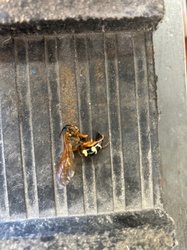
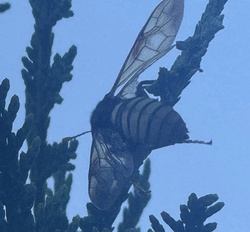
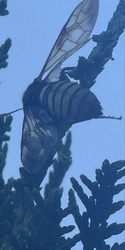
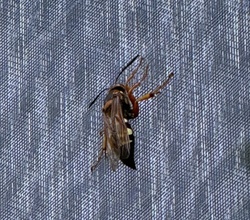
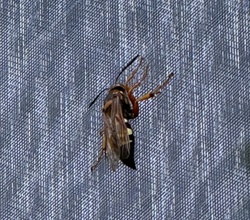
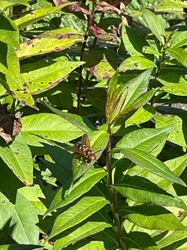
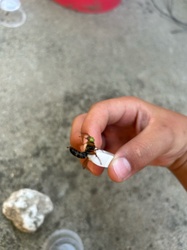
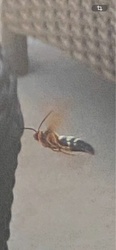
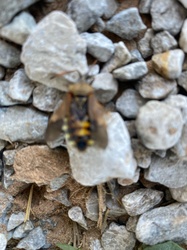
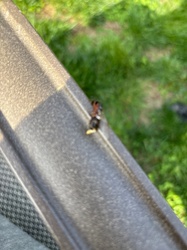
Identify the Cicada Killer Wasp by its large size and rust-and-yellow marked black body.
Read the full Cicada Killer Wasp encyclopedia entry →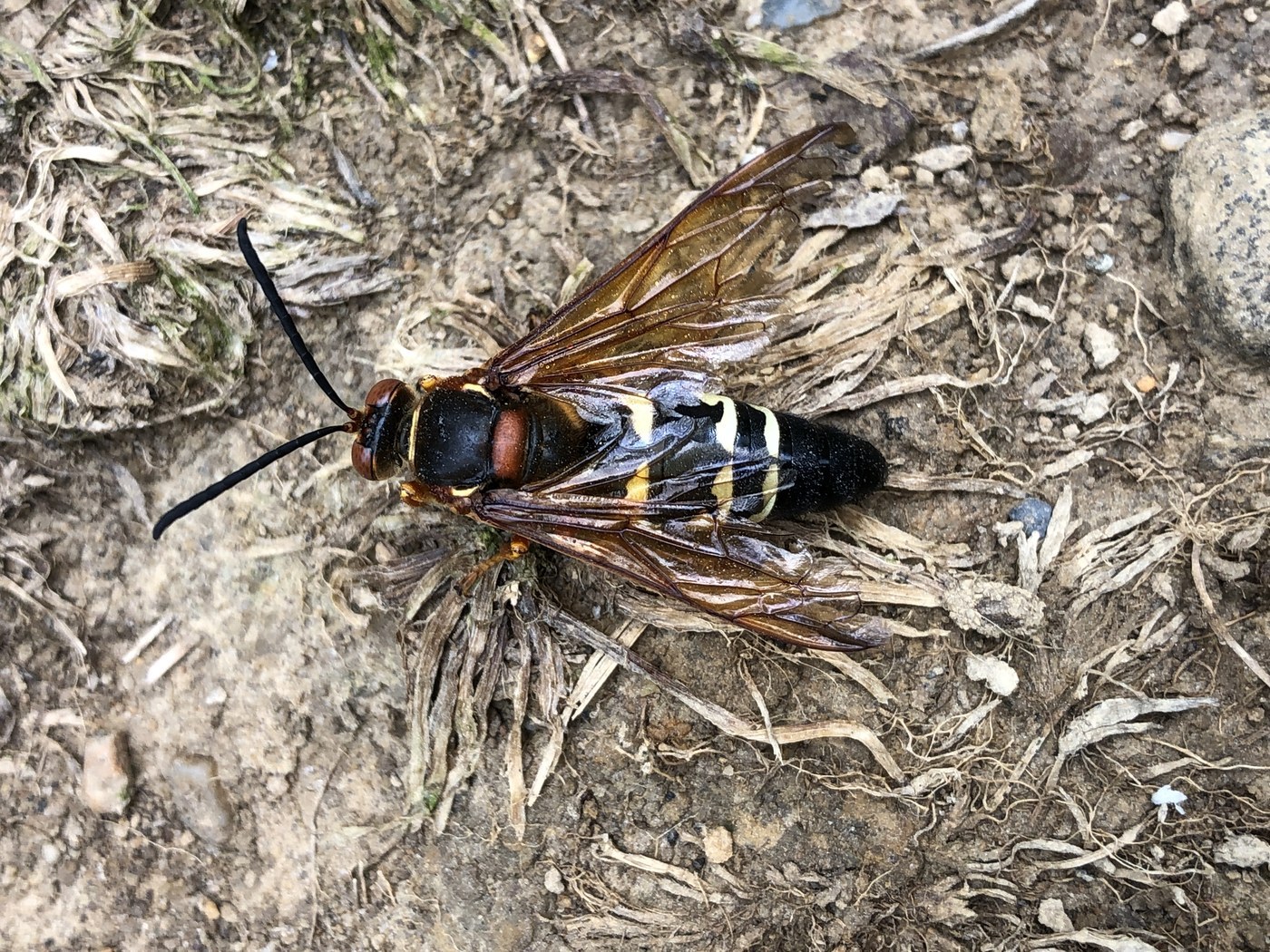
Key Visual Features
- One of the largest wasps in North America, with females reaching 3.5-5 cm (1.4-2 inches) in length; males are somewhat smaller.
- Body is predominantly black or dark rust-brown with pale yellow markings forming irregular spots or bands across the abdomen.
- Head and thorax often show a rusty-orange tint, while the wings are smoky amber and translucent.
- Legs are long and reddish-orange, and the body has a robust, heavy-bodied appearance compared to smaller wasps.
- Eyes are large and set on a broad head, with short elbowed antennae.
Where and When You're Likely to See It
- Found in North America (with related species elsewhere), favoring open, sunny areas with well-drained, sandy or loose soil, such as lawns, garden borders, sports fields, and roadsides.
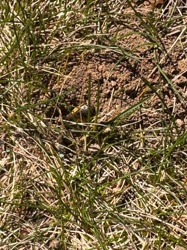
- Adults are solitary (not colonial) and dig individual burrows in the ground, often visible as small mounds of excavated soil with a burrow entrance.
- Most active in mid to late summer, coinciding with the emergence of annual cicadas, which the females hunt to provision their burrows.
- Active during warm, sunny days, often seen patrolling low over bare soil or perched near burrow entrances.
- Males frequently establish and defend small territories, hovering and darting at other passing insects.
Similar-Looking Species
- European Hornets are similarly large but have a more uniform reddish-brown-and-yellow pattern rather than the blotchy black-and-yellow marks of the cicada killer, and they nest in cavities rather than digging ground burrows.
- Yellowjackets are much smaller and more slender, with crisp uniform banding rather than irregular blotches.
- Great golden digger wasps are a similar size but show a more golden-orange thorax and a smoother, less rust-toned abdomen pattern.
- Bumblebees are rounder and densely furry, lacking the smooth, elongated wasp-like body of the cicada killer.
Quick ID Checklist
- Very large size (up to 2 inches), heavy-bodied wasp.
- Black or rust-brown body with irregular pale yellow markings.
- Reddish-orange legs and smoky, translucent wings.
- Burrow entrance in bare, sandy soil, often with a mound nearby.
- Seen low over open ground in mid-to-late summer.
Frequently asked questions
Why is this wasp called a Cicada Killer?
Females hunt cicadas and carry them back to underground burrows to provision their nests, which is how the species gets its common name.
How can I tell a Cicada Killer Wasp from a European Hornet?
Cicada killers have a blotchier black-and-yellow pattern and dig burrows in open soil, while European Hornets have a more uniform reddish-brown-and-yellow pattern and nest in hollow cavities.
Where do Cicada Killer Wasps make their nests?
They dig individual burrows in sunny patches of loose, well-drained soil such as lawns, garden edges, or sandy areas rather than forming a shared colony nest.
When is the best time of year to spot a Cicada Killer Wasp?
They are most visible in mid to late summer, when annual cicadas emerge and adult wasps are actively digging burrows and hunting.
Cicada Killer Wasp identified by the community
Recent Cicada Killer Wasp finds identified with Bug Identifier.