
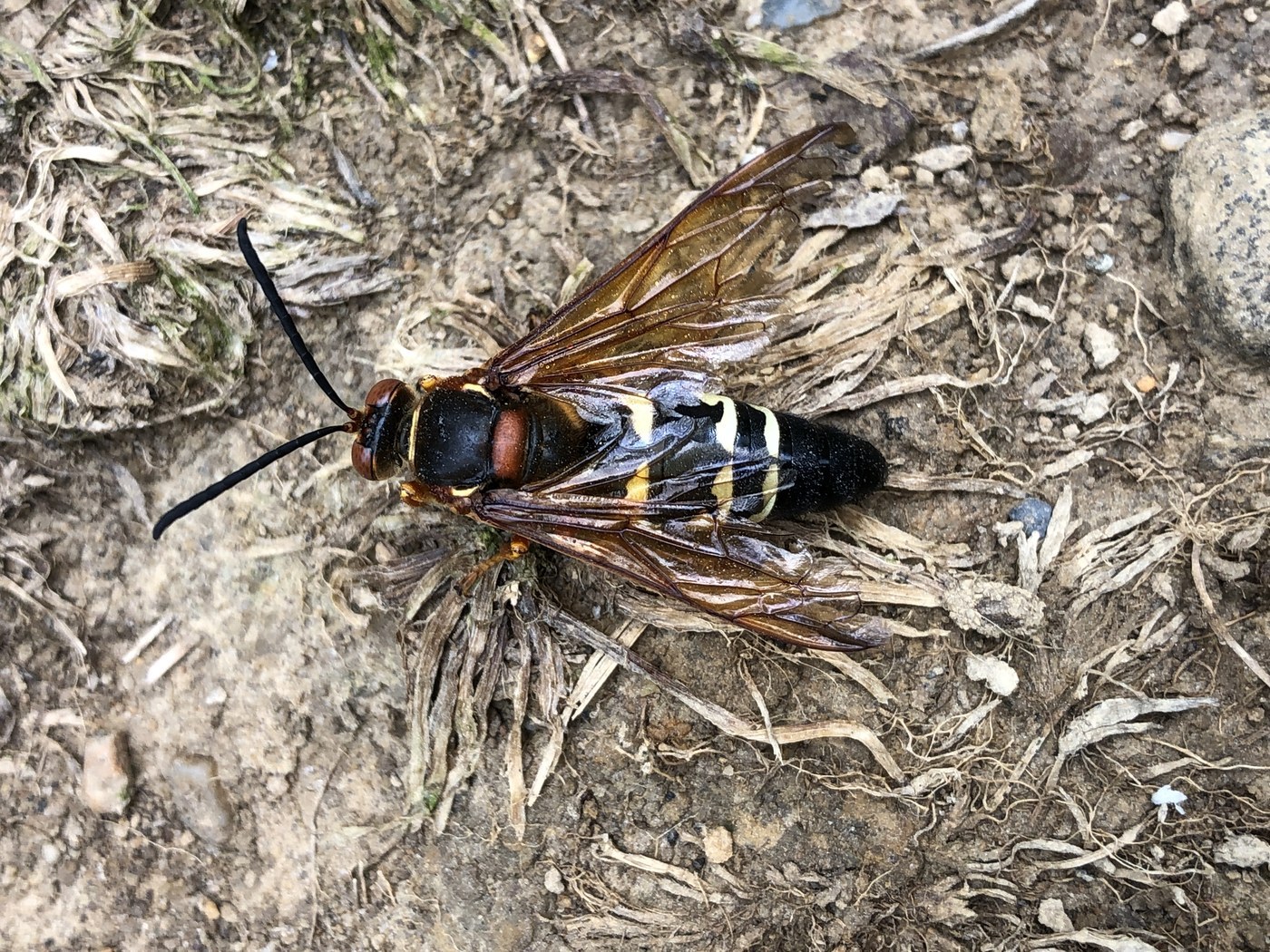
Cicada Killer Wasp
Sphecius speciosus
One of the largest wasps in North America, a robust rust-and-black or yellow-marked digger wasp that excavates burrows in bare soil and specializes in hunting cicadas to provision its underground nest.
- Size
- 1.5–2 in
- Habitat
- Sandy or bare soil, lawns, garden edges, sunny slopes
- Danger
- Stings
Spotted a bug like this?
Identify any bug or insect from a photo, free.
Overview
The cicada killer wasp is a large solitary wasp in the family Crabronidae (digger wasps), notable for being among the biggest wasps found in North America. Unlike social wasps such as yellowjackets or hornets, cicada killers live and nest individually, with each female excavating and provisioning her own underground burrow rather than cooperating in a shared colony.
As the common name suggests, this wasp specializes in hunting annual cicadas, which the female paralyzes with a sting and then drags or flies back to her burrow to serve as living food for her developing larva. Despite their large size and loud buzzing flight, cicada killers focus their energy and stinging behavior almost entirely on subduing cicada prey.
Ecologically, cicada killers play a role in regulating cicada populations and are notable for their impressive provisioning behavior, in which a female wasp can carry prey nearly her own size or larger back to a burrow, sometimes gliding from height to compensate for the weight.
How to Identify
- Large, robust body with a black or dark rust-colored thorax and abdomen marked by bold yellow spots or bands.
- Reddish-brown to amber-tinted wings, proportionally large for the body.
- Head is broad with large eyes, and legs are long and reddish in color.
- Females are noticeably larger than males and possess a stinger used to subdue prey.
- Lookalikes include European hornets and other large wasps, but the combination of very large size, yellow-spotted (rather than banded) abdomen, and habit of digging burrows in bare soil is distinctive; often confused with the invasive northern giant hornet, though ranges and markings differ.
Habitat & Range
Found throughout much of the United States east of the Rockies and into parts of Mexico and Central America, favoring areas of well-drained, sandy, or bare soil such as garden edges, sunny slopes, sports fields, and along sidewalks or driveways where females excavate nesting burrows. Adults are active during the warmer months of summer, coinciding with the seasonal emergence of annual cicadas.
Behavior & Diet
Females are solitary hunters that dig branching underground burrows, then seek out and sting cicadas to paralyze them before hauling the prey back to provision individual brood cells within the burrow. Males, though often seen patrolling and defending territory around nesting areas with aerial displays, lack a stinger. Adults also feed on nectar and plant sap for their own energy needs, making them occasional visitors to flowers.
Life Cycle
Each female wasp digs a burrow and provisions individual cells with one or more paralyzed cicadas, laying a single egg on the prey in each cell before sealing it off. The egg hatches into a larva that feeds on the provided cicada, then spins a cocoon and overwinters as a pupa within the burrow. Adults emerge the following summer, timed to coincide with the annual emergence of cicadas, completing one generation per year.
Frequently asked questions
Why are there holes with mounds of dirt in my lawn?
These are often burrow entrances dug by female cicada killers in areas of bare or sandy soil, used to provision cells with captured cicadas.
How is it different from the giant hornet sometimes reported in the news?
Cicada killers have a yellow-spotted rather than banded abdomen and a solitary, burrow-digging lifestyle, distinguishing them from social hornet species.
Can male cicada killers sting?
No, males lack a stinger; they patrol nesting areas but are not physically capable of stinging.
What do cicada killer wasps eat as adults?
Adult wasps feed on nectar and plant sap, while only the larvae consume the paralyzed cicadas provided by the female.
Cicada Killer Wasp guides
In-depth guides for identifying, understanding, and living alongside Cicada Killer Wasp.
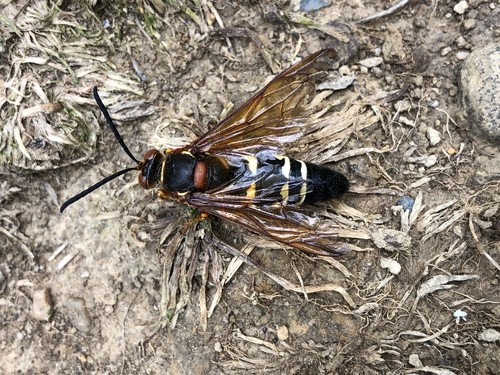
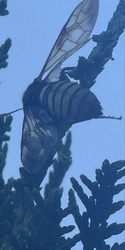
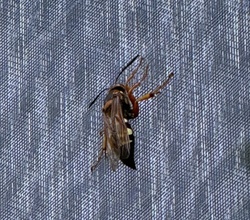
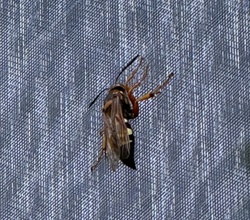
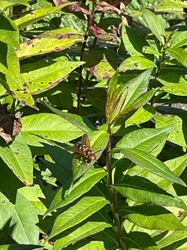
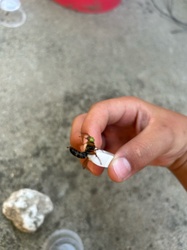
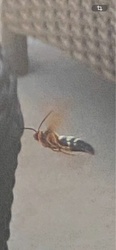
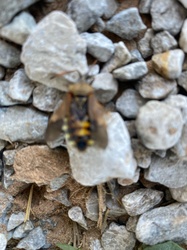
Cicada Killer Wasp identified by the community
Real finds identified with Bug Identifier.
Other bugs you may enjoy
Bald-faced Hornet
Woodland edges, shrubs, and tree branches across North America
Asian Giant Hornet
Forested lowlands and mountains of East and South Asia; low tree hollows
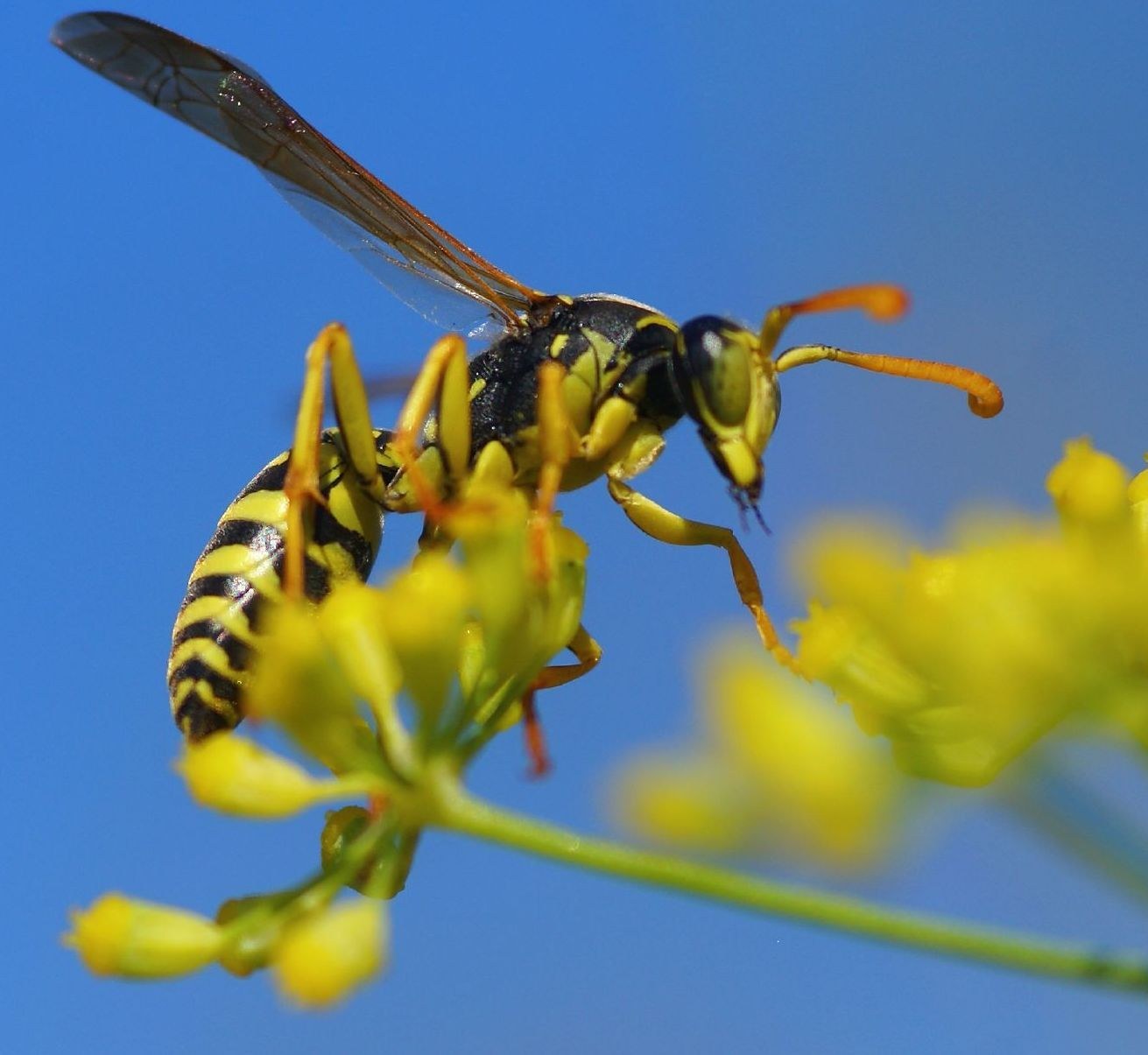
Yellowjacket
Underground nests, wall voids, gardens, picnic areas
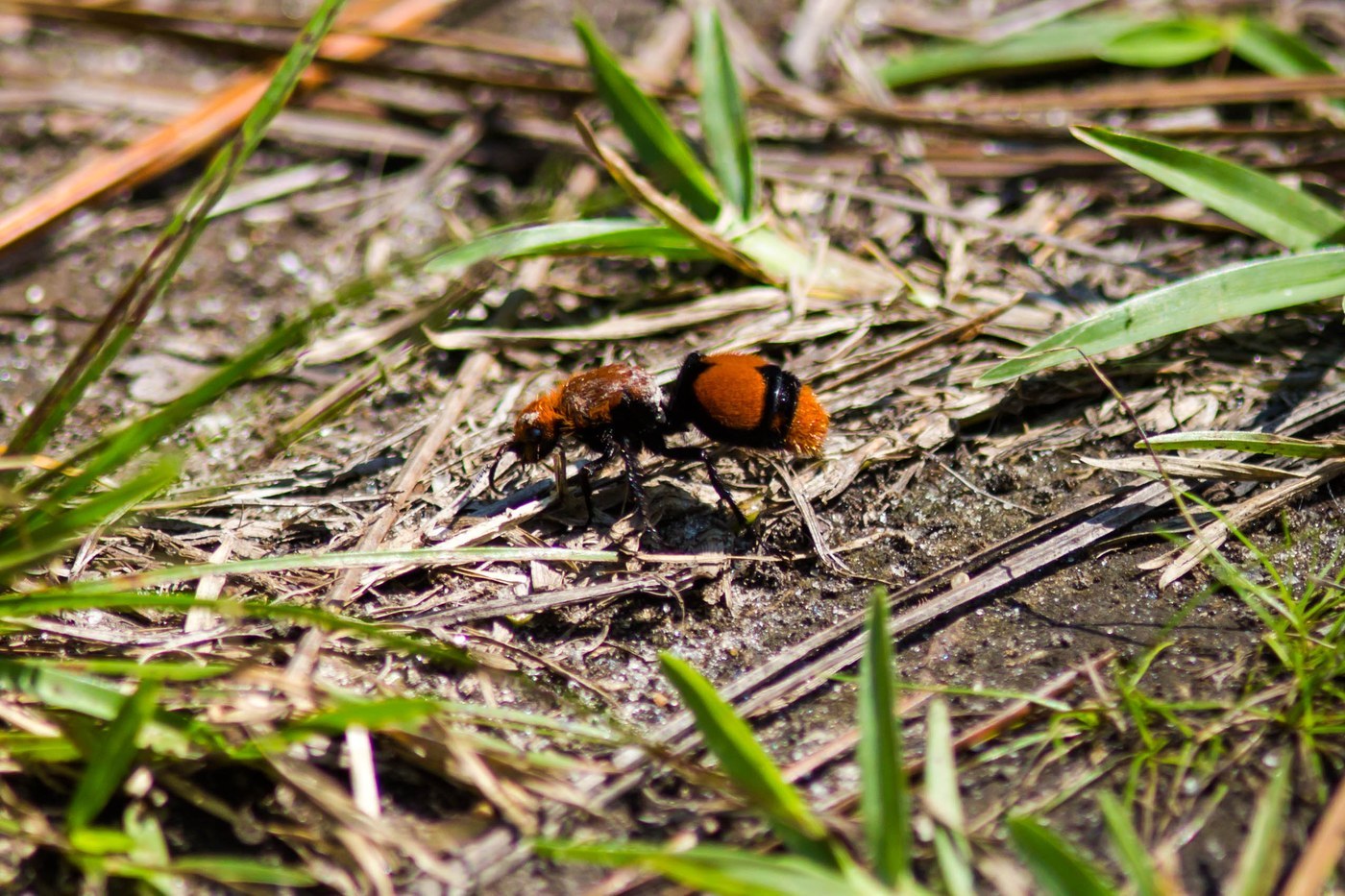
Velvet Ant
Sandy soils, open fields, dunes, roadsides in warm regions
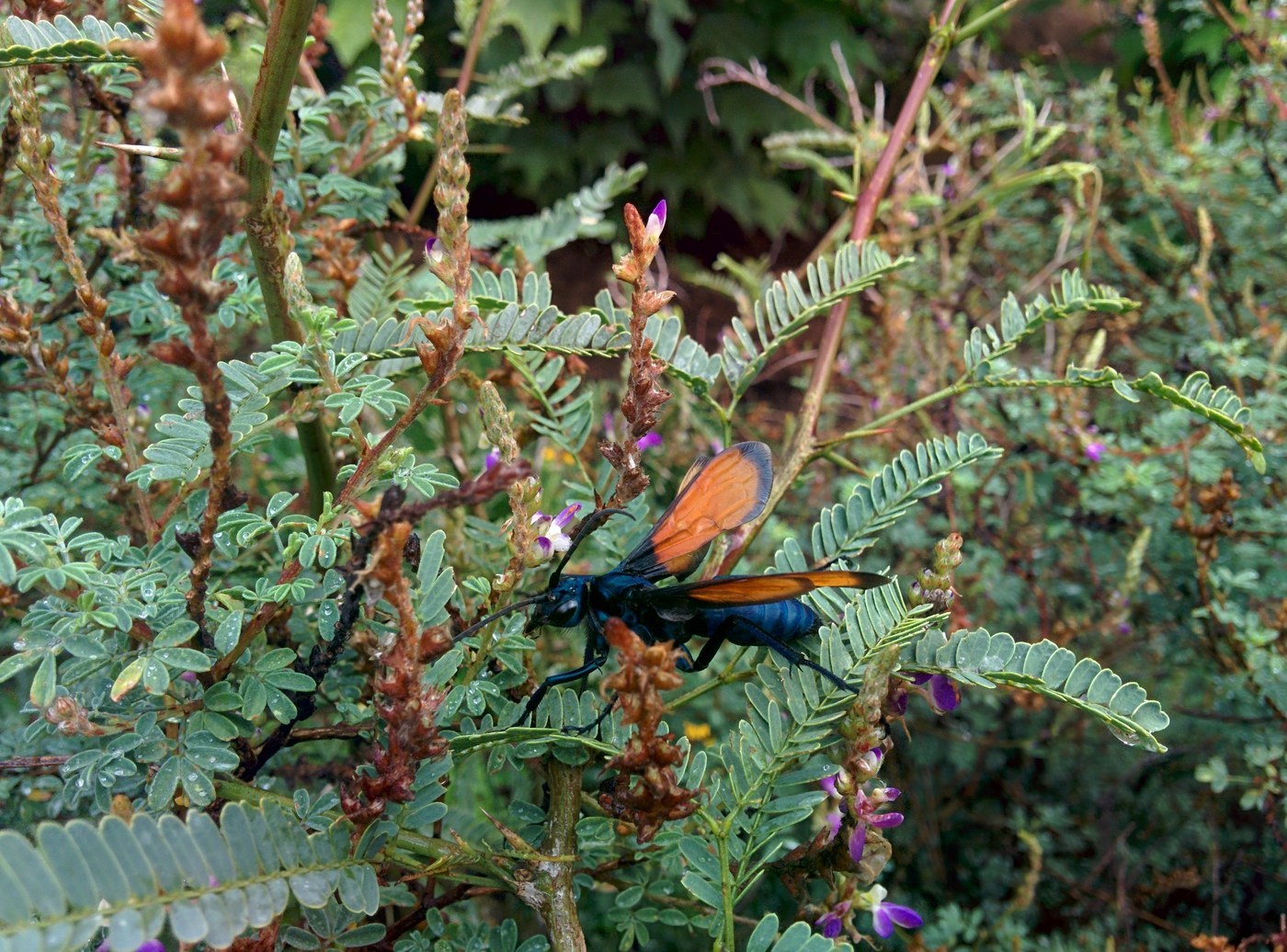
Tarantula Hawk
Deserts, arid scrublands, and dry grasslands
Tarantula Hawk Wasp
Deserts, grasslands, and scrub of the Americas
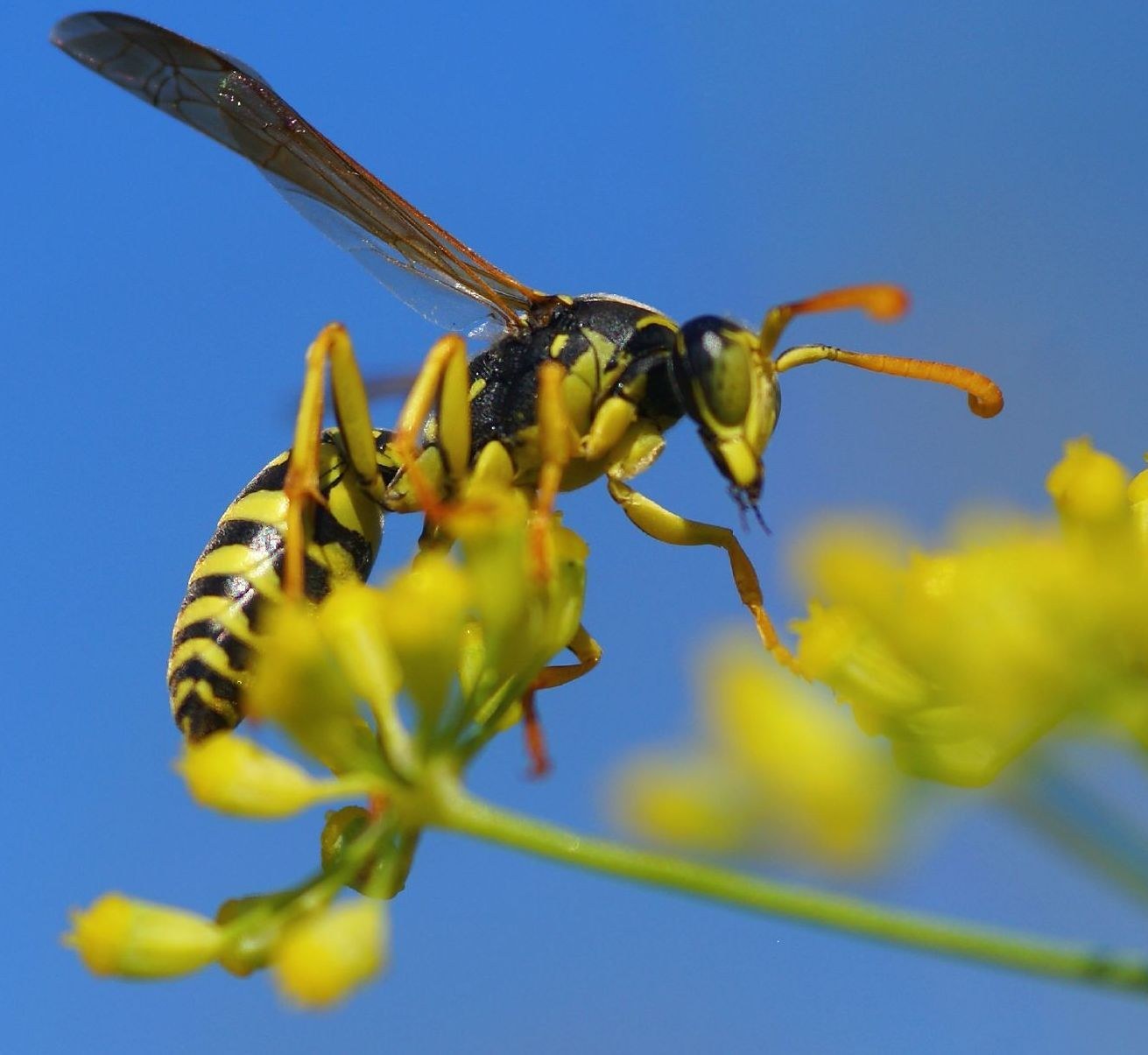
Wasp
Gardens, woodlands, eaves, and urban areas worldwide
Spider Wasp
Gardens, grasslands, and sandy open areas worldwide
Yellow Jacket
Ground nests, wall voids, parks, and areas near food sources
Sawfly
Gardens, woodlands, and orchards on host foliage
Red Paper Wasp
Eaves, porch ceilings, sheds, open woodland edges, gardens
Trichogramma Wasp
Fields, gardens, and crops worldwide