Cicada Killer's Prey Cicada Identification Guide
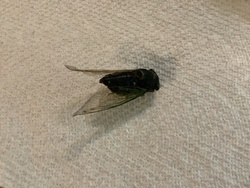
Recognize the large annual cicada targeted by cicada killer wasps by its bulky body, clear wings, and loud summer buzzing song.
Read the full Cicada Killer's Prey Cicada encyclopedia entry →Key Visual Features
The large annual (or "dog-day") cicadas that cicada killer wasps hunt are some of the biggest and loudest insects encountered in summer.
- Size: Robust body typically 3.5-5cm (1.5-2 inches) long, among the largest common insects seen in gardens and woodlands.
- Color: Body patterns vary by species but often combine black, green, or brown tones across the thorax and abdomen.
- Body shape: Thick, wedge-shaped body with a broad head and short, stout legs.
- Wings: Two pairs of large, clear, membrane-like wings with prominent greenish or amber veining, held roof-like over the body at rest.
- Eyes: Large, wide-set, often reddish-brown or dark compound eyes positioned prominently on the sides of the head.
- Sound: Males produce a loud, sustained buzzing or droning call from tree canopies, one of the most recognizable sounds of a summer afternoon.
Where and When You'll See It
These cicadas spend the vast majority of their life underground as nymphs feeding on root fluids, emerging as adults in mid-to-late summer after several years underground. Once above ground, adults cling to tree trunks and branches, particularly on hot, sunny afternoons, when their calls are loudest. They are found in wooded areas, parks, and shaded yards with mature trees, and it's this predictable summer emergence that draws cicada killer wasps to hunt them.
Similar-Looking Bugs
- Periodical cicadas: Generally smaller, with a black body and strikingly red eyes, and they emerge in massive synchronized broods every 13 or 17 years rather than appearing every summer.
- Cicada killer wasp (the predator): A large yellow-and-black-banded wasp with a narrow waist, entirely different in shape from the bulky, wide-bodied cicada it hunts.
- Large moths: Some bulky moths can be mistaken for cicadas at a glance, but moths have fuzzy bodies and scaled wings rather than the cicada's clear, veined wings.
Quick ID Checklist
- Large, thick-bodied insect around 3.5-5cm long
- Clear, heavily veined wings held roof-like over the body
- Wide-set, prominent eyes
- Loud droning call from tree canopies on hot afternoons
- Found clinging to tree trunks and branches in mid-to-late summer
Frequently asked questions
How can I identify the cicada that cicada killer wasps hunt?
Look for a large, thick-bodied insect roughly 1.5-2 inches long with clear, veined wings and prominent eyes, typically seen clinging to tree trunks and heard buzzing loudly on hot summer afternoons.
What's the difference between an annual cicada and a periodical cicada?
Annual cicadas appear every summer and tend to be larger with green or brown tones, while periodical cicadas are smaller, black-bodied with red eyes, and emerge in huge synchronized broods only once every 13 or 17 years.
Why do cicadas make such loud sounds?
Male cicadas produce their distinctive buzzing or droning call using specialized structures on their abdomen, most active during the heat of summer afternoons.
How long do cicadas spend underground before becoming adults?
Depending on the species, cicada nymphs can spend anywhere from about two to several years underground feeding on root fluids before emerging as winged adults.
Cicada Killer's Prey Cicada identified by the community
Recent Cicada Killer's Prey Cicada finds identified with Bug Identifier.