
Comb-footed Spider Identification Guide
Learn to identify comb-footed spiders by the tiny bristle combs on their hind legs and tangled webs.
Read the full Comb-footed Spider encyclopedia entry →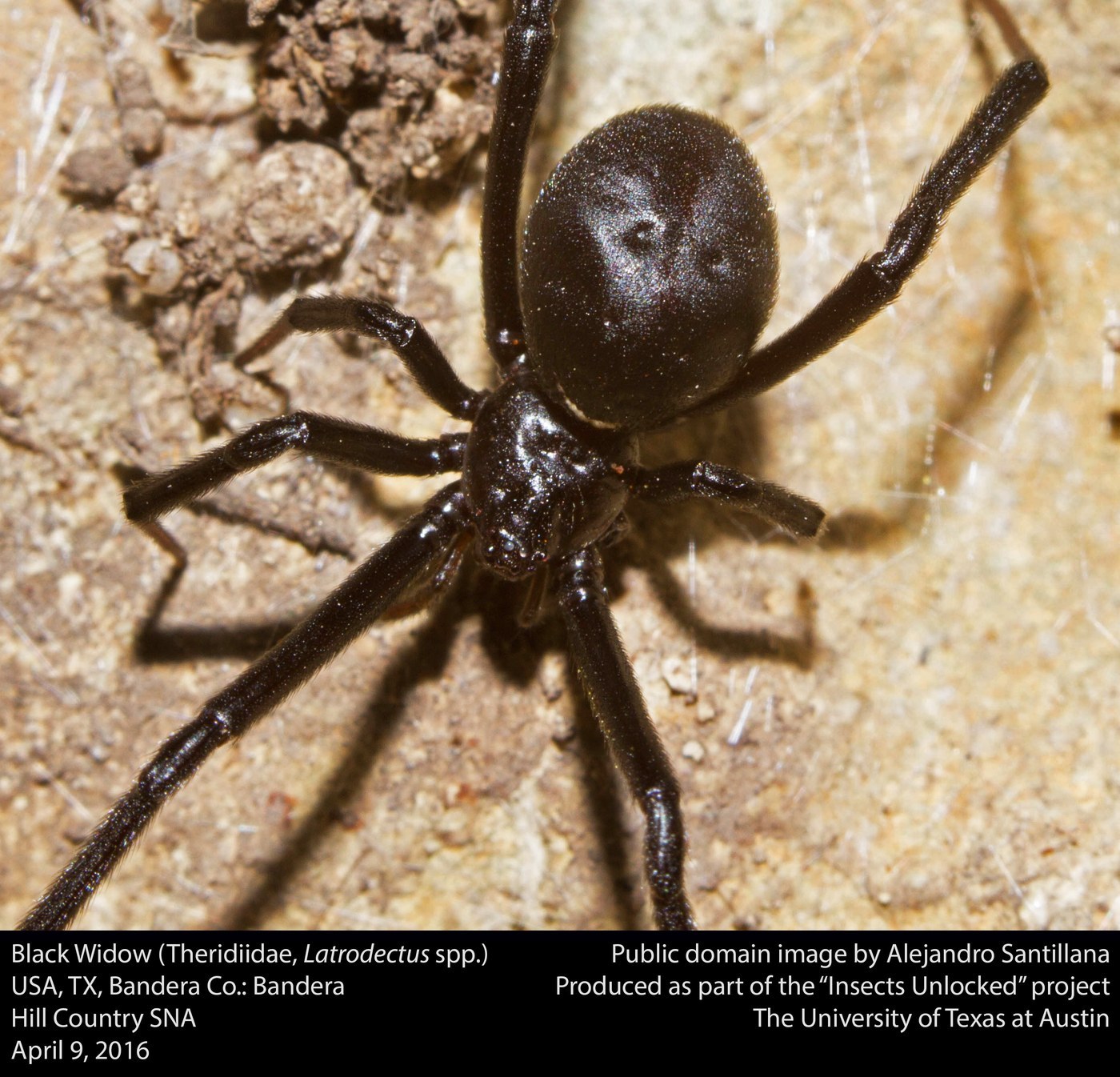
Key Visual Features
Comb-footed spiders (family Theridiidae) get their name from a row of small, curved bristles on their hind legs used to fling silk over prey.
- Size: Small to medium, generally 3 to 10 mm in body length.
- Body shape: Rounded, bulbous abdomen that often overhangs the smaller cephalothorax.
- Color: Varies widely by species, from plain brown or tan to glossy black, sometimes with red, white, or yellow markings on the abdomen.
- Legs: Thin and moderately long, with the namesake comb of stiff bristles located on the tarsi (last segment) of the hind legs — visible only with close inspection or magnification.
- Web: Irregular, tangled, three-dimensional silk structure rather than a neat spiral.
Where and When You'd See One
Comb-footed spiders are found in a wide range of sheltered environments worldwide.
- Corners of rooms, garages, sheds, and under furniture indoors
- Outdoors under rocks, in woodpiles, low shrubs, and debris
- Webs are usually anchored to a fixed structure with sticky trap lines running down to the ground
- Most active and visible from spring through fall, though many persist indoors through winter
Similar-Looking Bugs
- Orb weavers spin neat, circular webs, unlike the messy tangle built by comb-footed spiders.
- Cellar spiders have much longer, thinner legs and a slimmer abdomen shape.
- Wolf spiders do not build a web at all and are found roaming the ground.
- Since "cobweb spider" and "comb-footed spider" both refer to the same family, look-alikes within the group are best separated by web location, abdomen color pattern, and size rather than any single trait.
Quick ID Checklist
- Rounded, bulbous abdomen larger than the cephalothorax
- Tiny bristle comb on the hind leg tarsi (visible up close)
- Irregular, tangled web anchored in a sheltered corner
- Sticky trap lines running from the web down to the ground
- Found both indoors and outdoors in protected spots
Frequently asked questions
What is the 'comb' in comb-footed spider?
It refers to a row of small, stiff bristles on the hind leg tarsi that the spider uses to fling silk over trapped prey; it is only visible with close inspection.
How is a comb-footed spider's web different from other webs?
It is irregular and tangled in three dimensions, often with sticky trap lines running down to the ground, rather than the neat spiral of an orb weaver.
What colors can comb-footed spiders be?
Coloring varies widely by species, ranging from plain brown or tan to glossy black, sometimes with red, white, or yellow markings.
Where do comb-footed spiders build their webs?
They favor sheltered corners such as room corners, garages, sheds, woodpiles, and low shrubs.