Comma Butterfly Identification Guide
A ragged-winged, leaf-mimicking butterfly named for the small white comma mark on its underside.
Read the full Comma Butterfly encyclopedia entry →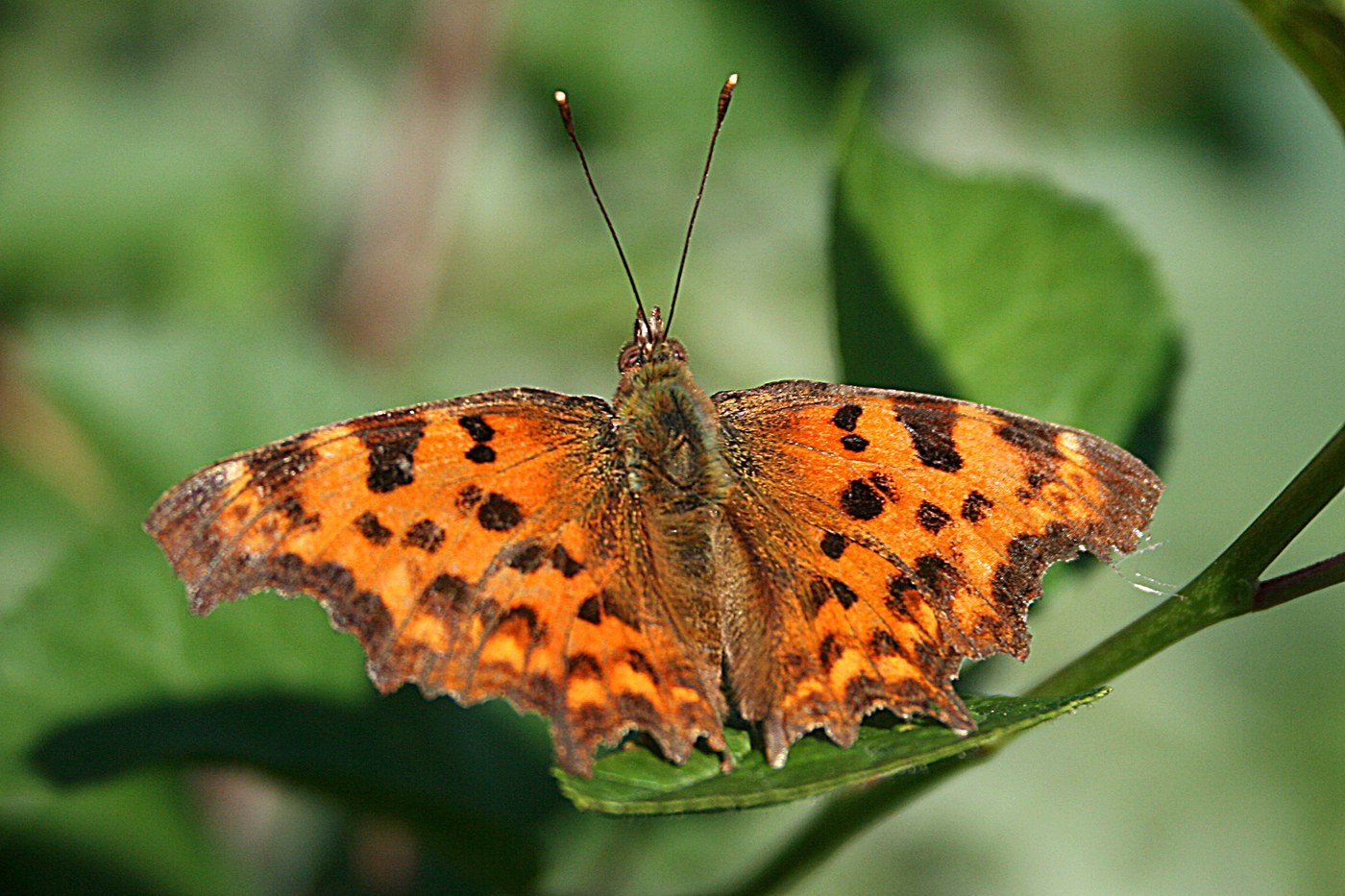
Key Visual Features
The Comma Butterfly (Polygonia c-album) is a medium-sized butterfly with a wingspan of about 1.8 to 2.2 inches, best recognized by its uniquely irregular wing shape.
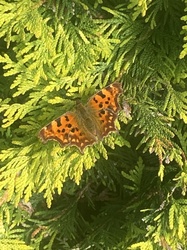
- Upperside is orange with a pattern of black spots and darker markings, similar in tone to some fritillaries at first glance
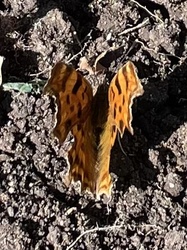
- Wing margins are deeply scalloped, notched, and ragged rather than smoothly curved, giving the whole butterfly a torn-leaf silhouette
- Underside is mottled brown and gray, closely resembling a dead leaf, and provides strong camouflage when the wings are closed
- A small white mark shaped like a comma or the letter C sits in the middle of the hindwing underside, the feature that gives the species its name
- Two seasonal forms exist: a paler, more strongly marked summer form and a darker, more heavily mottled form that overwinters
Where and When to Look
Comma Butterflies are found across much of Europe and temperate Asia in woodland edges, hedgerows, gardens, and scrubby clearings, often basking on bare ground, tree trunks, or fence posts with wings open to soak up sun. Adults overwinter in sheltered locations such as woodpiles, ivy, or tree hollows and can appear surprisingly early on mild days. A fresh brood emerges in mid-to-late summer, and adults feed at flowers, tree sap, and rotting fruit through into autumn before going into hibernation again.
Similar-Looking Species
- Small Tortoiseshell and Peacock: both share bright orange upperside coloring but have smoothly scalloped, not deeply ragged, wing margins, and neither shows the small white comma mark underneath
- Painted Lady: also orange with black markings, but has smoother wing edges and a very differently patterned underside without the comma mark
- Question Mark (in regions where both occur): a close relative with a similar ragged wing shape, distinguished mainly by a slightly different underside mark shape and minor differences in wing outline
The combination of deeply notched wing margins and the small white comma-shaped mark on the hindwing underside makes this species reliably identifiable once the wings are seen closed.
Quick ID Checklist
- Orange upperside with black spotting, similar tone to fritillaries
- Deeply ragged, scalloped wing margins
- Mottled brown, leaf-like underside
- Small white comma or C-shaped mark on hindwing underside
- Found at woodland edges, gardens, and hedgerows across Europe/temperate Asia
Frequently asked questions
Why is it called the Comma Butterfly?
It has a small, distinct white mark shaped like a comma (or the letter C) on the underside of the hindwing, which is the origin of its common name.
What makes its wing shape unusual?
The wing margins are deeply scalloped and ragged rather than smoothly curved, giving the butterfly a torn-leaf outline that helps it blend in when at rest with wings closed.
How can I tell a Comma apart from a Small Tortoiseshell?
The Comma has much more ragged, notched wing edges and a mottled, leaf-like underside with the small white comma mark, while the Small Tortoiseshell has smoother wing margins and a row of blue marginal spots instead.
When are Comma Butterflies active?
Adults overwinter and can appear on mild days in early spring, with a fresh generation flying from mid-to-late summer into autumn.
Comma Butterfly identified by the community
Recent Comma Butterfly finds identified with Bug Identifier.