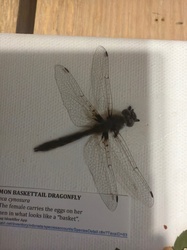
Common Baskettail Identification Guide
An early-season, medium-small dragonfly with a stout, somewhat hairy thorax and a habit of flying in restless patrols over water and nearby clearings.
Read the full Common Baskettail encyclopedia entry →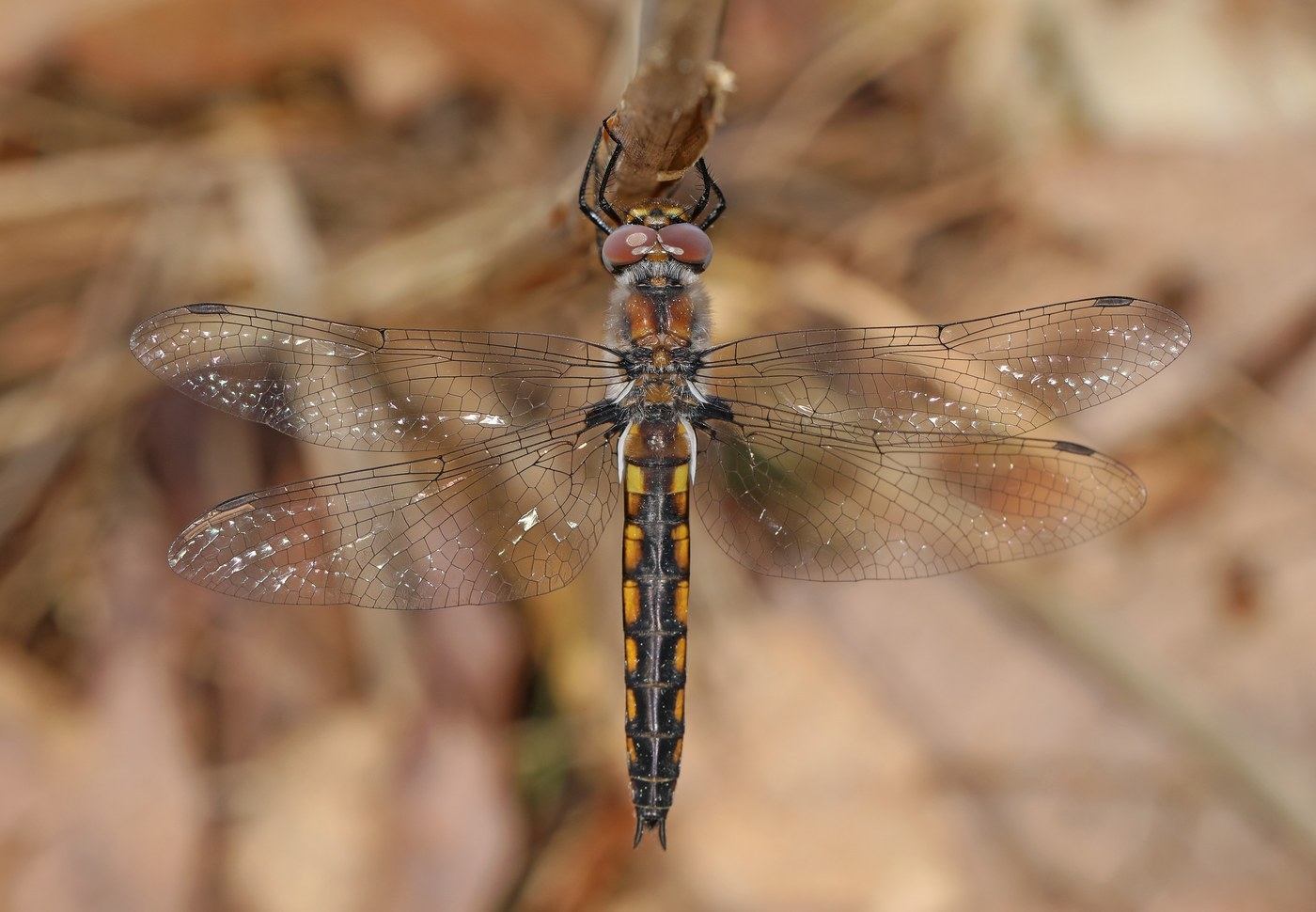
Key Visual Features
- Size: Small to medium, roughly 1.3 to 1.6 inches (33–41 mm) long.
- Color: Thorax is brown, often appearing slightly fuzzy or hairy up close, while the abdomen is dark brown to blackish with small pale yellow spots along the sides in some individuals.
- Eyes: Large eyes that meet broadly on top of the head and often appear greenish in mature adults.
- Wings: Mostly clear, sometimes with a small amber patch or tint at the base of the hindwing, especially in females, and a female's abdomen tip may carry a small ball-like cluster of eggs, which gives the "basket" part of the name.
- Body shape: Fairly stocky and compact compared with darners, with a moderately short abdomen.
Where and When You'll See It
Common Baskettails are among the earlier dragonflies to appear in spring, often on the wing before many skimmers and meadowhawks have emerged. Look for them over ponds, lake edges, and woodland clearings near water, where they fly in fast, erratic patrols, frequently hovering rather than perching for long periods. They are usually seen through late spring into early summer, becoming less common as the season progresses.
Similar-Looking Species
- Prince Baskettail: Larger, with a longer, more slender abdomen and different wing markings.
- Other Epitheca baskettails: Several look-alike species in this genus are best distinguished by close examination of abdominal spotting and, in males, the terminal appendages, making baskettails a genuinely tricky group in the field.
- Blue Dasher: Much bluer as it matures and has a more compact, perch-loving habit rather than the constant patrolling flight of the baskettail.
Quick ID Checklist
- Small to medium, stocky dragonfly with a brownish, slightly hairy-looking thorax
- Dark abdomen with small pale side spots
- Broadly meeting green-toned eyes
- Fast, erratic, hovering flight over water and nearby clearings
- One of the earliest dragonflies to appear each spring
Frequently asked questions
When is the best time of year to see a Common Baskettail?
Late spring into early summer, since it is one of the earliest dragonfly species to emerge each year.
Why is it called a 'baskettail'?
Females carry a small, ball-like cluster of eggs at the tip of the abdomen before laying, which resembles a tiny basket.
Is it easy to identify baskettails to exact species?
Not always — several baskettail species look very similar and are often distinguished only by close inspection of abdominal markings or the male's terminal appendages.
How does its flight style help with identification?
Common Baskettails fly in fast, erratic patrols and hover frequently rather than perching for long stretches, which is a helpful behavioral clue.
Common Baskettail identified by the community
Recent Common Baskettail finds identified with Bug Identifier.