
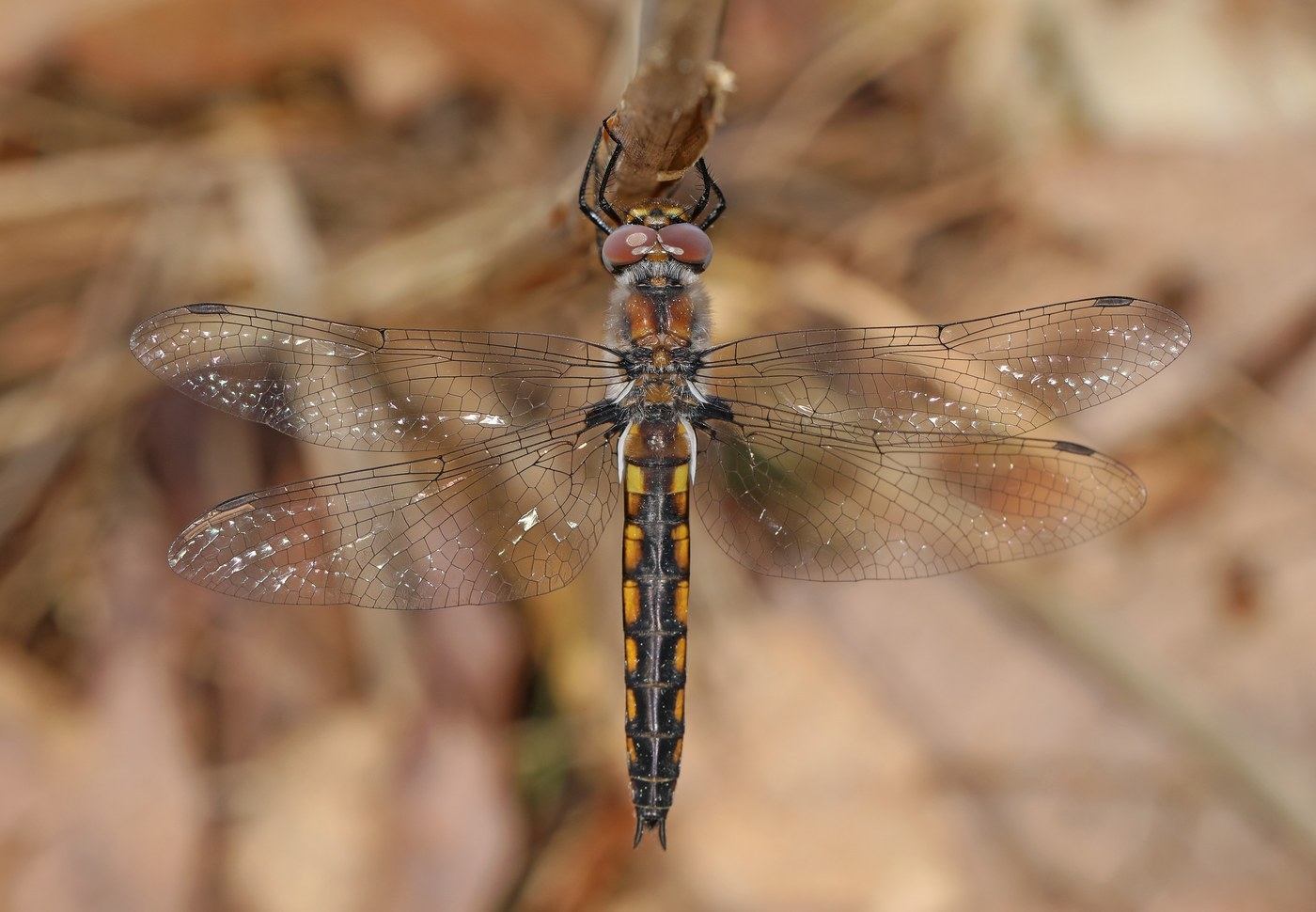
Common Baskettail
Epitheca cynosura
One of the earliest dragonflies to appear each spring, this brown, green-eyed skimmer often swarms in numbers over sunny clearings before most other species have emerged.
- Size
- Body about 1.4–1.7 in (35–43 mm) long; wingspan roughly 2.5–3 in (63–76 mm)
- Habitat
- Wooded ponds and lakes, especially in early spring
- Danger
- Harmless
Spotted a bug like this?
Identify any bug or insect from a photo, free.
Overview
The Common Baskettail belongs to the family Corduliidae, the emeralds, a group generally distinguished by bright metallic-green eyes and a preference for wooded pond and lake habitats. Unlike the bright green thoraxes of true emeralds, the Common Baskettail has a more subdued brown body, but it shares the family's brilliant green eyes.
The species gets its common name from the unusual way females carry their eggs: after mating, the female forms the eggs into a rounded, basket-like mass held at the tip of the abdomen before depositing them, a behavior shared by other baskettail species.
One of the first dragonflies to emerge in spring across much of its eastern North American range, the Common Baskettail is often seen in large foraging swarms well before summer species have appeared.
How to Identify
- Medium-sized dragonfly with a brown body and bright green eyes
- Wings often show a variable amount of brownish patch at the base, sometimes faint or absent
- Slender abdomen compared to bulkier skimmers, with a somewhat clubbed tip in some individuals
- Females can be seen carrying a rounded mass of eggs at the abdomen tip before laying
- Lookalikes: other baskettail species (such as Prince Baskettail and Slender Baskettail) are very similar and often require close inspection of wing spots and abdominal shape to separate with confidence
Habitat & Range
Widespread across eastern North America, the Common Baskettail favors ponds and lakes with some woodland cover nearby, often being one of the very first dragonflies of the year to emerge, sometimes appearing in early to mid spring while many other species are still nymphs. Adults are frequently seen foraging over open clearings, fields, and woodland edges near their breeding waters.
Behavior & Diet
Common Baskettails often forage in loose swarms, especially over sunny clearings and field edges, where many individuals hunt small flying insects together at the same time. This gregarious feeding behavior makes them conspicuous early in the season when few other dragonflies are active. As predators, they help control emerging spring insect populations, while their aquatic nymphs are important consumers of detritus and small invertebrates within pond sediment.
Life Cycle
After mating, the female carries her fertilized eggs as a compact, gelatinous ball at the tip of the abdomen before flying low over water and releasing the entire mass at once onto the surface, where it swells and disperses. The eggs hatch into nymphs that settle into soft pond sediment, where they act as sprawlers, sifting through detritus and preying on small invertebrates as they grow through the following months. Because this species overwinters as a nearly mature nymph, it is able to complete its final molt very early in spring, accounting for its status as one of the first dragonflies of the year to take flight.
Frequently asked questions
Why is it called the Common Baskettail?
Females carry their fertilized eggs as a rounded, basket-shaped mass at the tip of the abdomen before releasing them onto the water.
When can Common Baskettails first be seen each year?
They are typically one of the earliest dragonflies to emerge in spring, often appearing well before many other species.
Why are Common Baskettails sometimes seen in groups?
They often forage together in loose swarms over sunny clearings, taking advantage of concentrated insect prey early in the season.
How do Common Baskettail nymphs live?
The nymphs settle into soft pond sediment as sprawlers, feeding on detritus and small invertebrates while overwintering to complete development early the following spring.
Common Baskettail guides
In-depth guides for identifying, understanding, and living alongside Common Baskettail.
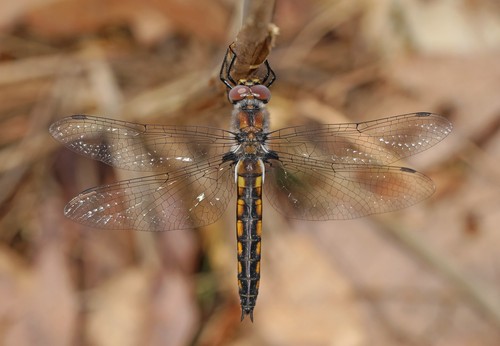
Common Baskettail identified by the community
Real finds identified with Bug Identifier.
Other bugs you may enjoy
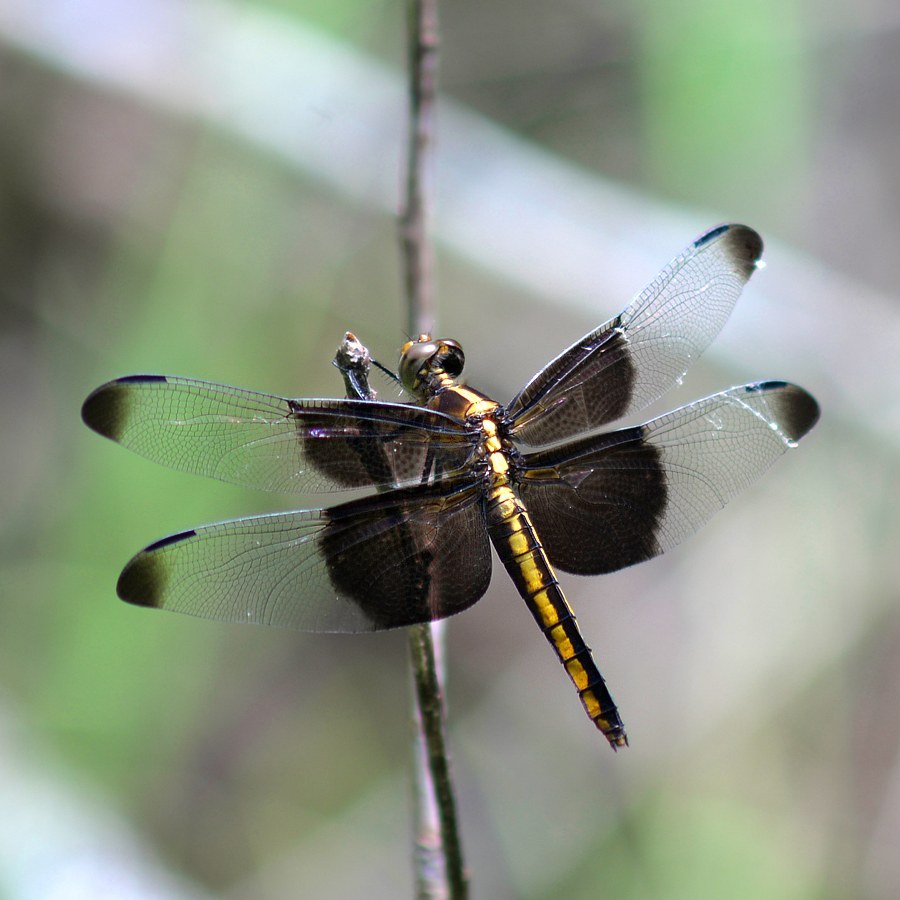
Widow Skimmer
ponds, lakes, and slow-moving streams with open shoreline vegetation across much of the United States
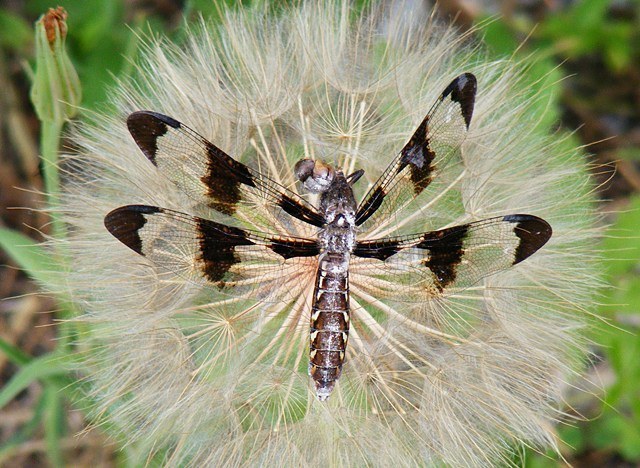
Twelve-spotted Skimmer
Ponds, lakes, and slow streams with open, sunny shorelines
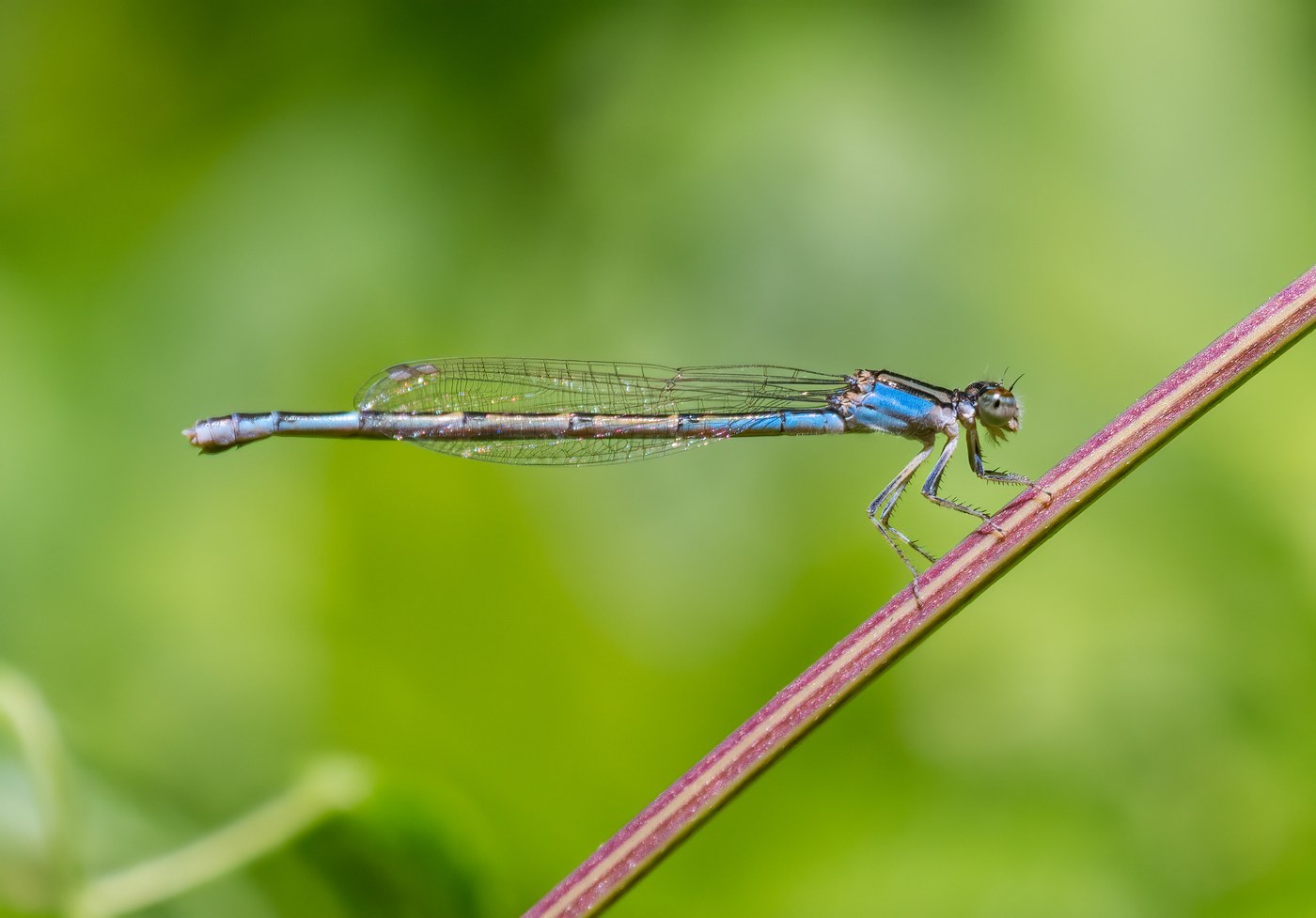
Azure Bluet
ponds, lakes, and slow streams with abundant aquatic vegetation
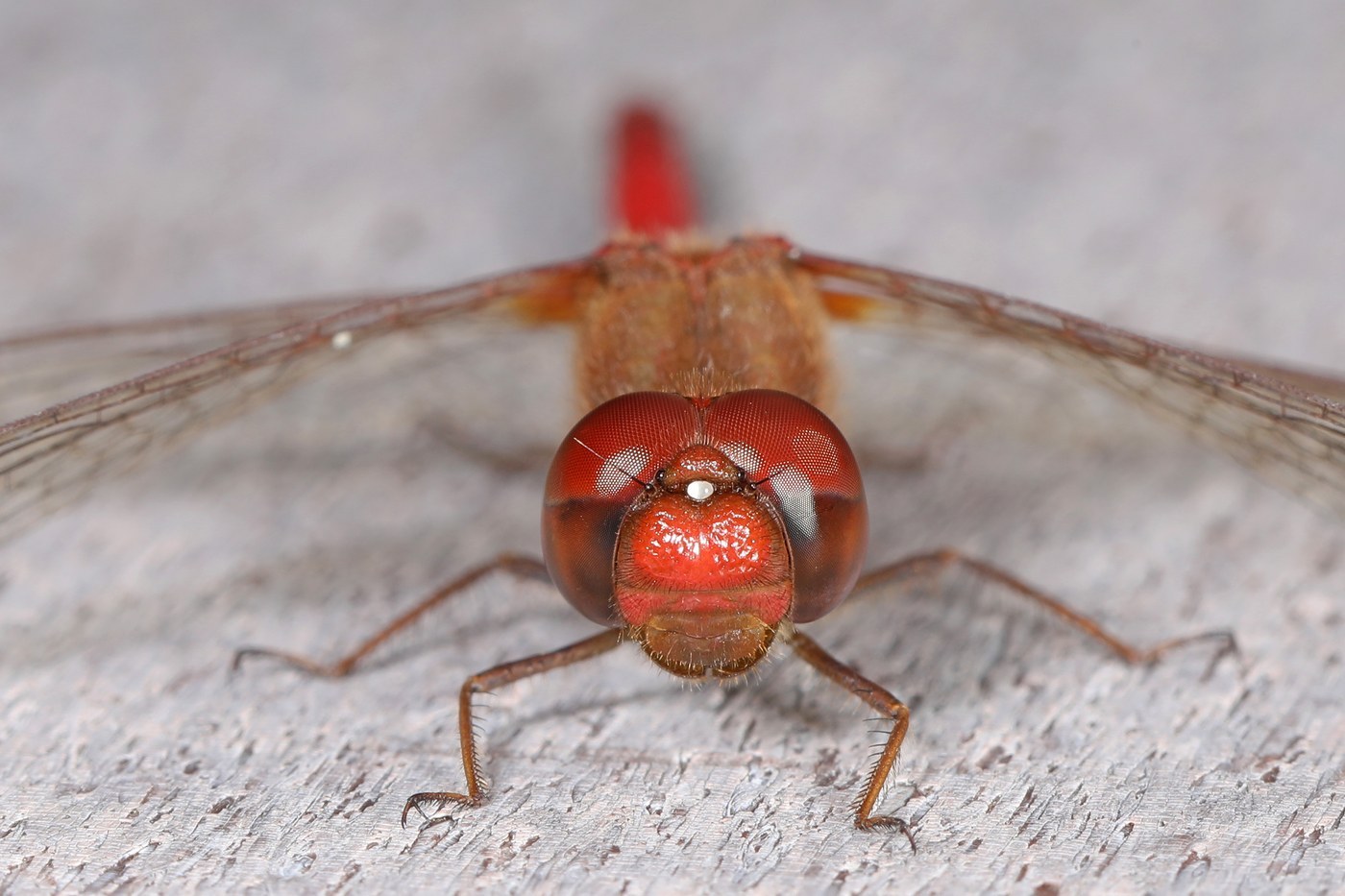
Autumn Meadowhawk
Ponds, marshes, and slow streams, often lingering into late fall
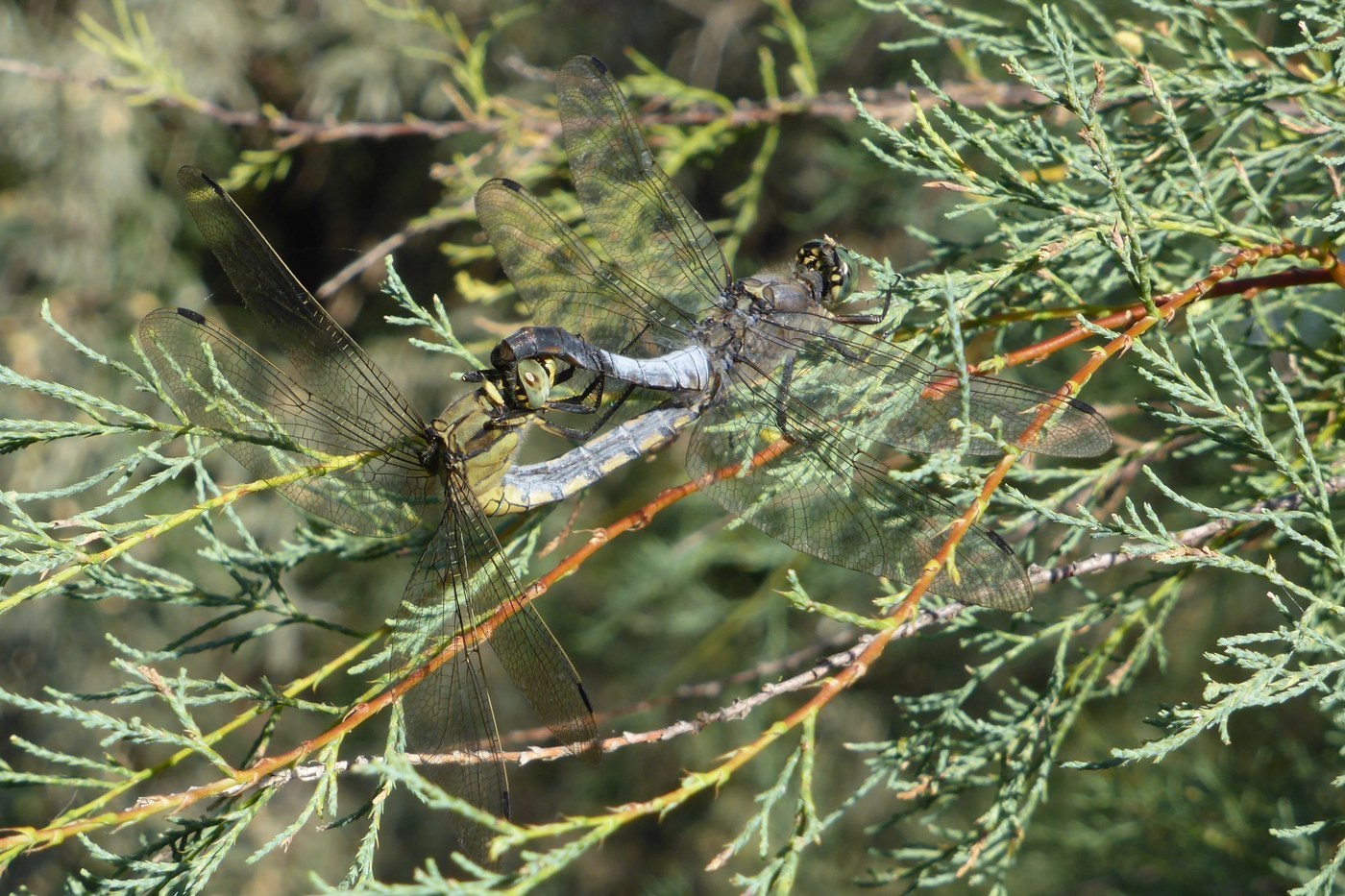
Spangled Skimmer
Ponds, lakes, and marshes with open sunny shorelines
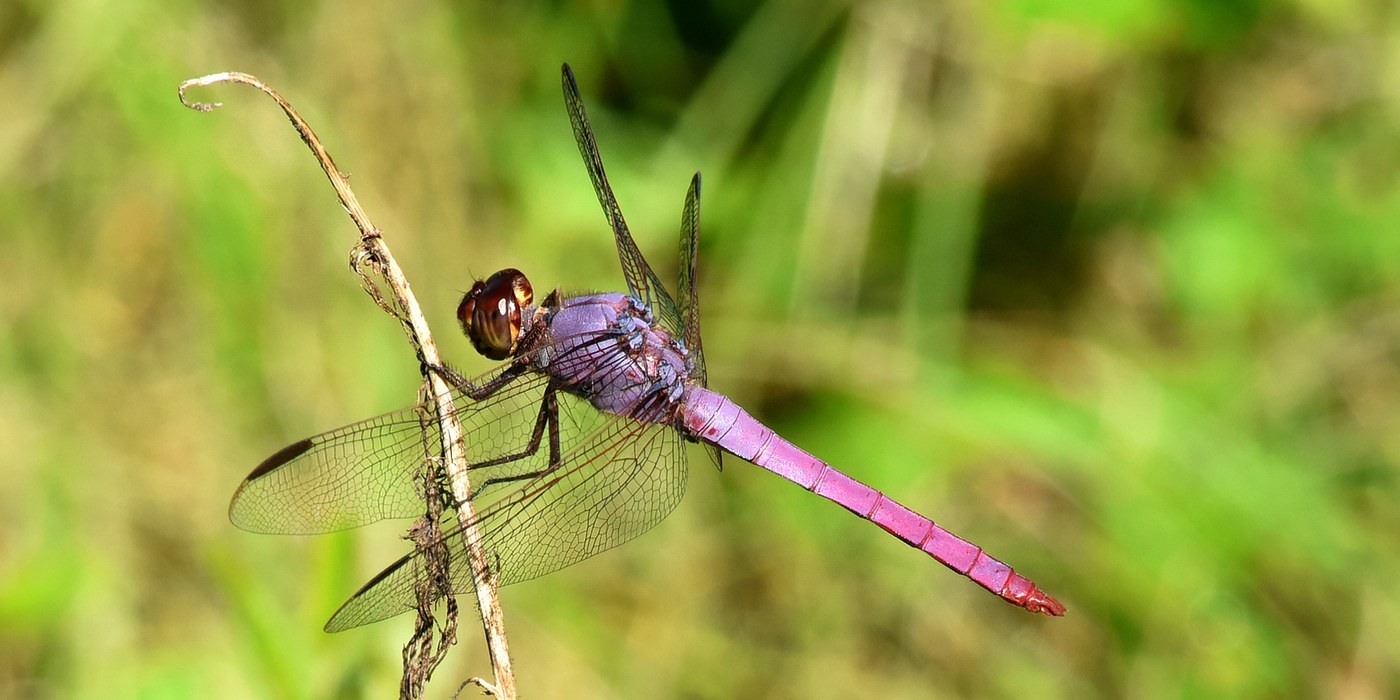
Roseate Skimmer
Ponds, ditches, and canals across the southern United States
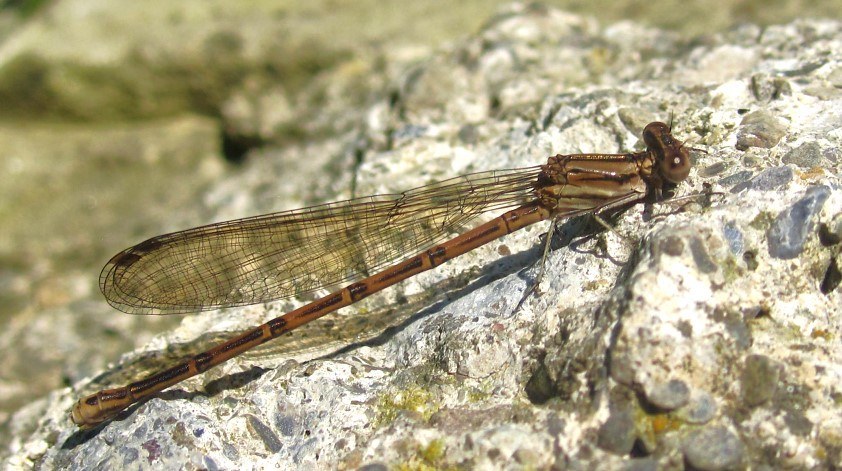
Variable Dancer
streams, rivers, and pond margins, especially in wooded or partly shaded settings
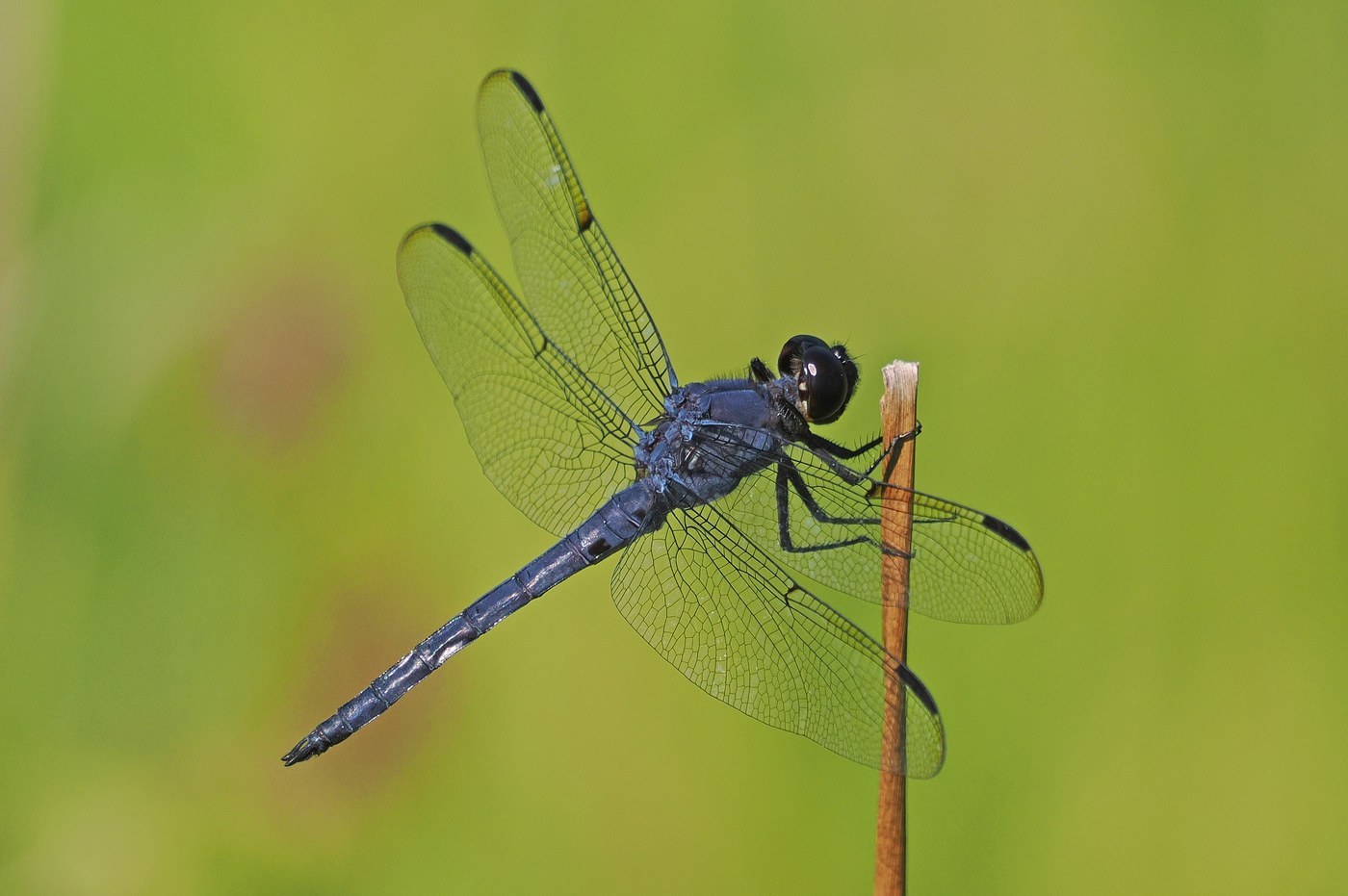
Slaty Skimmer
Still or slow-moving ponds, lakes, and marshes with open shoreline
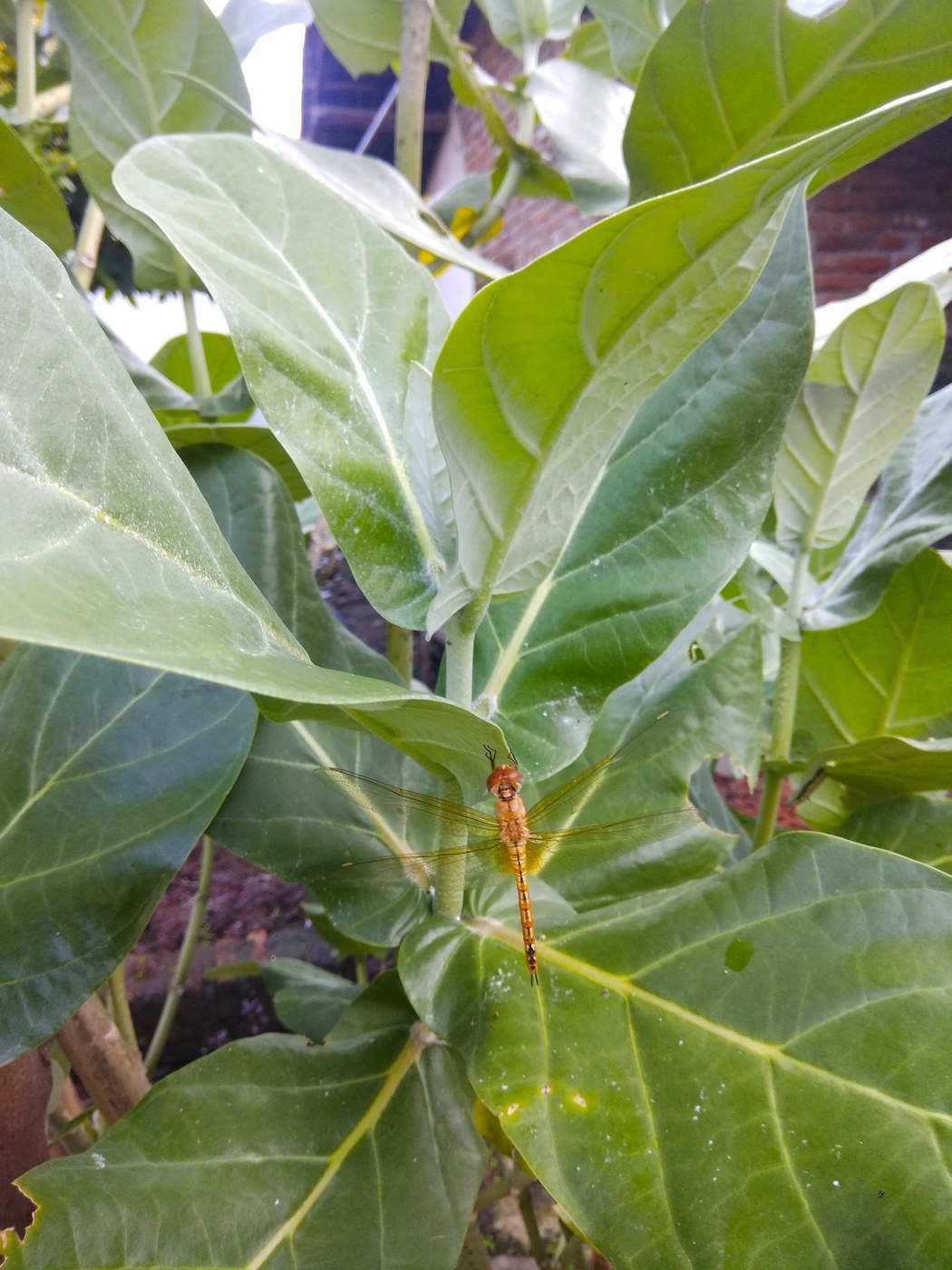
Wandering Glider
Temporary pools, open fields, and coastlines nearly worldwide
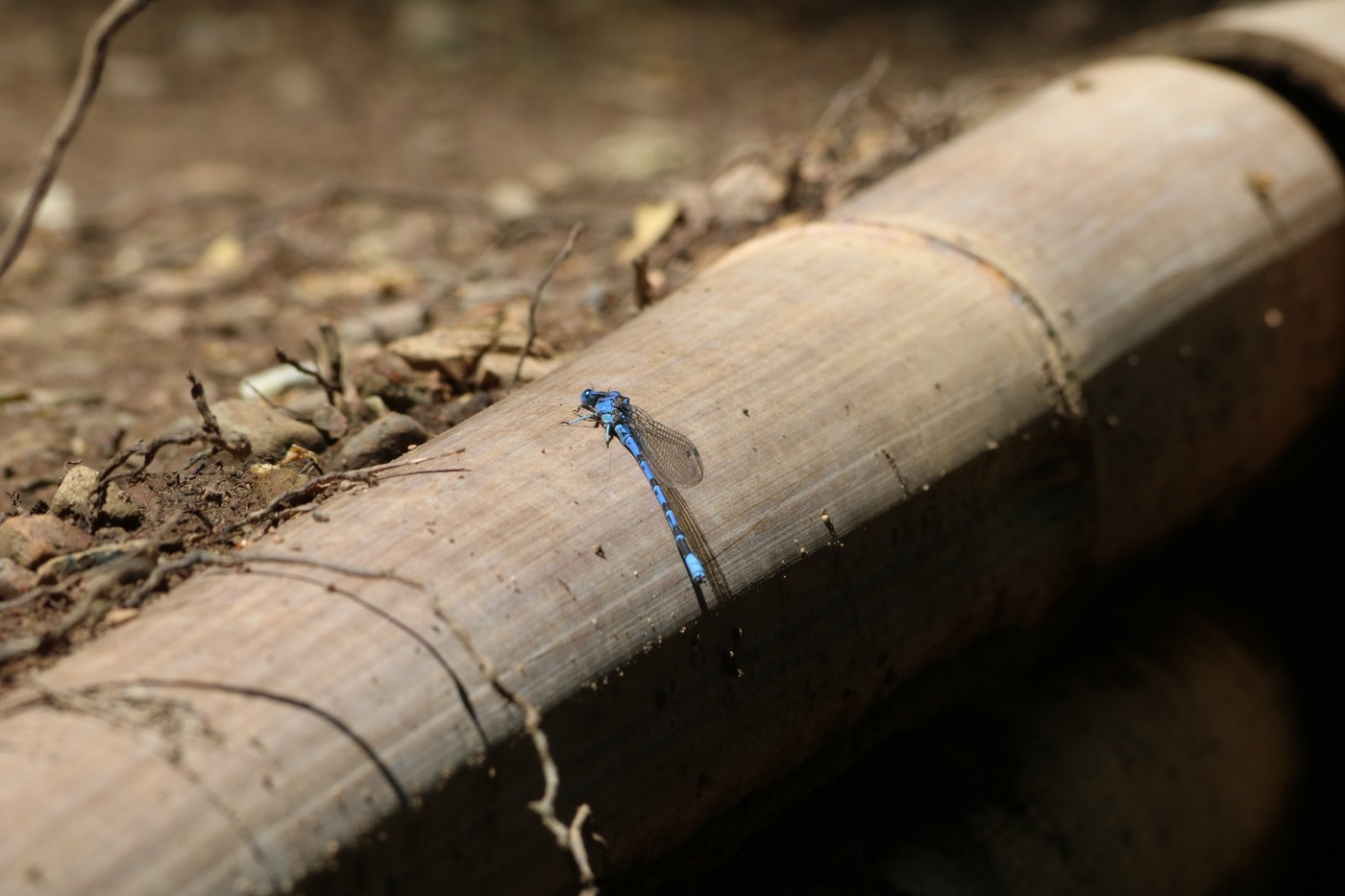
Vivid Dancer
rocky streams, seeps, and spring-fed creeks, often near thermal or warm springs
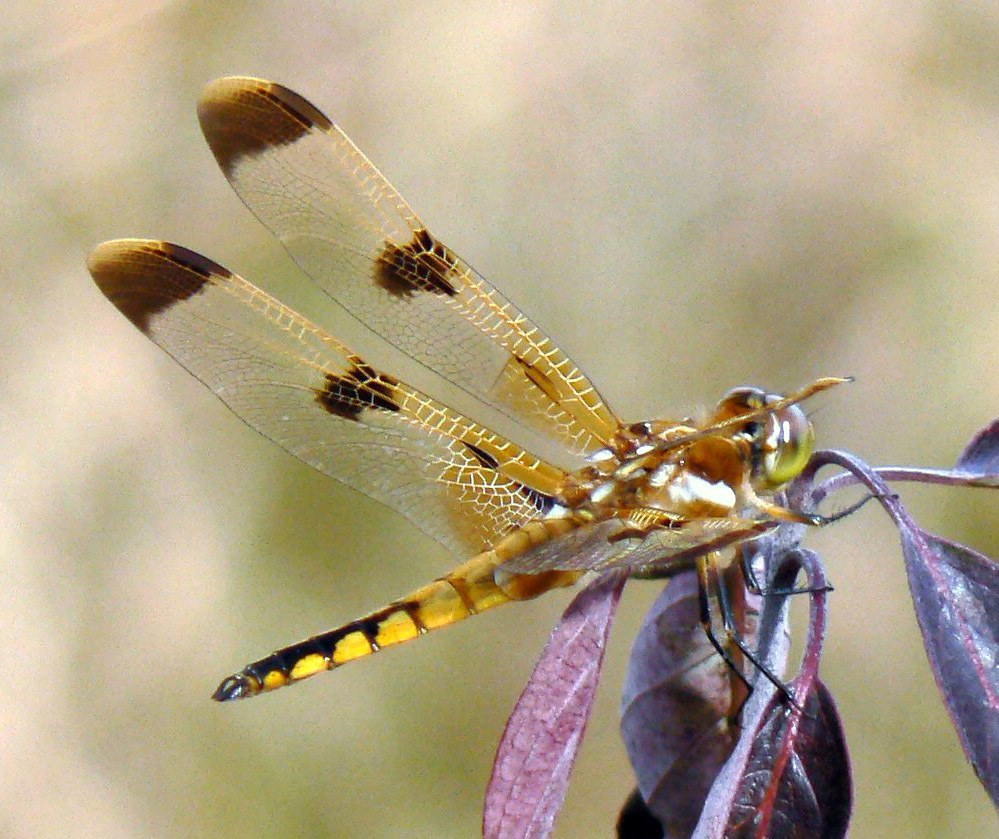
Painted Skimmer
Ponds, marshes, and slow-moving vegetated waters, including temporary pools
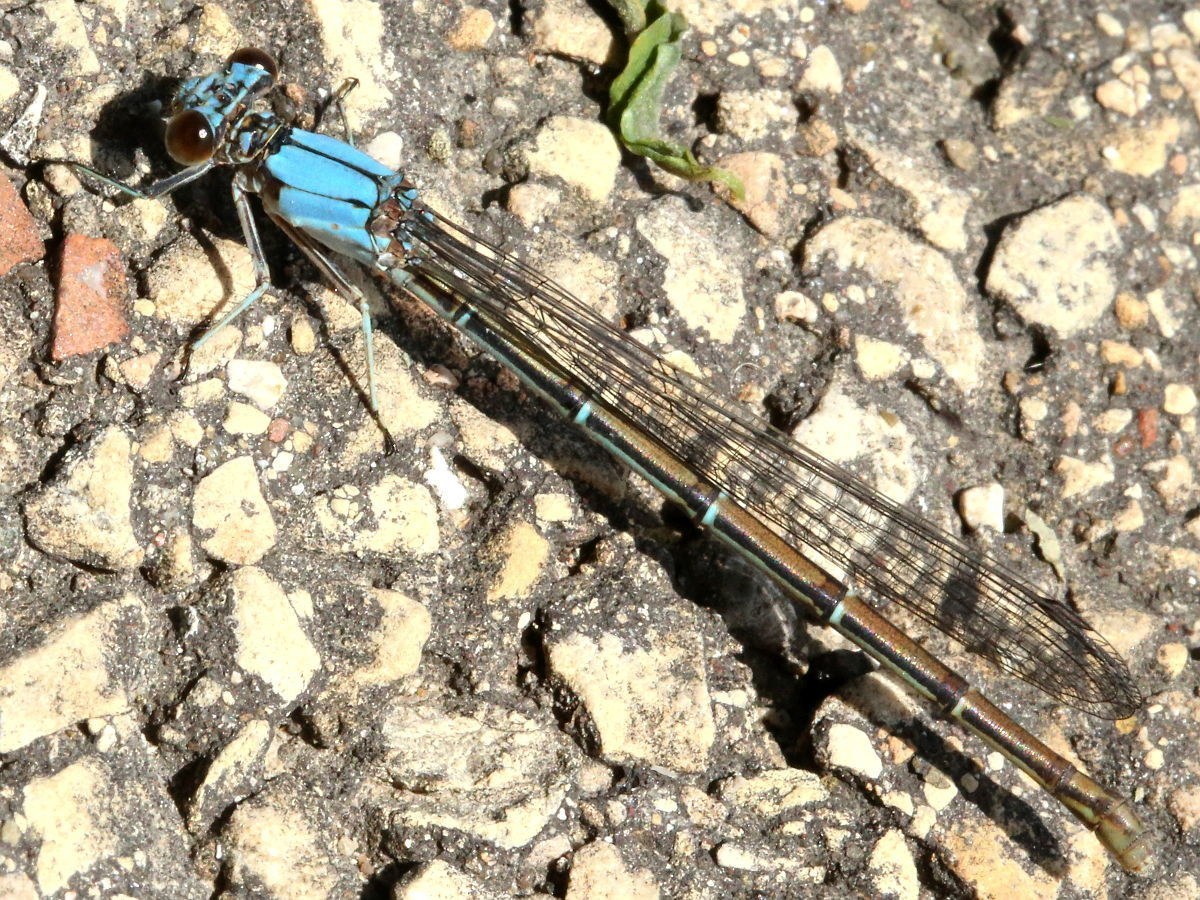
Powdered Dancer
rocky and gravelly rivers, streams, and lake shorelines