Common Clubtail Identification Guide
A pale yellow-green and black dragonfly with a distinctly swollen abdomen tip that gives clubtails their name.
Read the full Common Clubtail encyclopedia entry →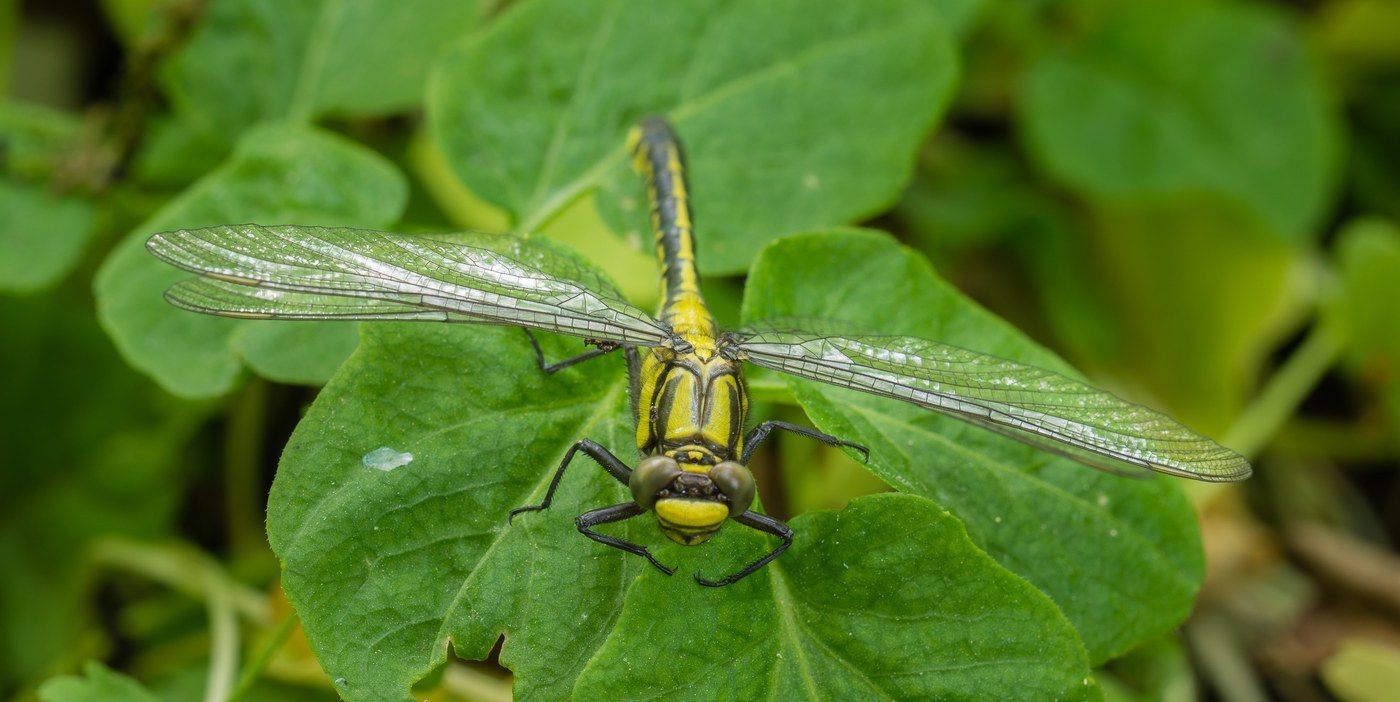
Key Visual Features
The Common Clubtail is a medium to large dragonfly, typically 1.8 to 2.2 inches (45-55 mm) long, belonging to the clubtail family, named for the noticeably widened last few segments of the abdomen.
- Body color: A crisp pattern of pale yellow-green (or greenish-yellow) markings against black or dark brown on the thorax and abdomen, giving a striped, almost jigsaw-puzzle appearance.
- Body shape: The abdomen is slender through the middle and flares outward at segments 7-9 into a paddle-like "club," most pronounced in males.
- Eyes: Unlike skimmers and most other dragonflies, clubtail eyes are clearly separated by a gap on top of the head rather than touching — a key family-level trait.
- Wings: Clear, with a dark stigma and fine black wing veins that contrast against the transparent membrane.
- Legs: Black and relatively long, used for perching rather than active leg-based grooming in flight.
Where and When You'll See It
Clubtails favor moving water — streams, rivers, and their sandy or rocky shorelines — rather than still ponds. Adults often perch flat on the ground, on rocks, or on exposed sandbars rather than hanging from vegetation, basking in full sun. They are generally seen from late spring into summer, with activity concentrated in the warmer parts of the day.
Similar-Looking Species
- Dragonhunter: Much larger and bulkier, with a wider club and heavier build, often perched with wings drooped forward.
- Skimmers (family Libellulidae): Have eyes that meet broadly at the top of the head, unlike the clearly separated eyes of clubtails.
- Other clubtail species: Best distinguished by the fine details of the black-and-pale pattern on the thorax and the shape of the terminal appendages, which can require a close look or photo comparison.
Quick ID Checklist
- Pale yellow-green and black striped pattern on thorax and abdomen
- Abdomen visibly widens into a "club" near the tip
- Eyes clearly separated, not touching, on top of the head
- Perches flat on rocks, sand, or bare ground near streams and rivers
- Found along moving water rather than still ponds
Frequently asked questions
What is the defining feature of a clubtail dragonfly?
The last few abdominal segments flare outward into a paddle-like widening called the 'club,' combined with eyes that are clearly separated rather than touching on top of the head.
Where is the best place to look for a Common Clubtail?
Search along the sandy or rocky shorelines of streams and rivers, where adults often perch flat on the ground or on exposed rocks in full sun.
How do clubtail eyes differ from skimmer eyes?
Clubtail eyes are separated by a visible gap on top of the head, while skimmer eyes typically meet broadly along the midline.
Are male and female clubtails different in appearance?
Males typically show a more pronounced, wider abdominal club than females, though both sexes share the same pale yellow-green and black body pattern.
Common Clubtail identified by the community
Recent Common Clubtail finds identified with Bug Identifier.